 listicle
Best Mushroom Coffee Alternatives 2026: 7 Top Picks
Table of Contents
- Best Mushroom Coffee Alternatives 2026: Quick Comparison
- How We Ranked These Mushroom Coffee Alternatives
- Matcha vs Mushroom Coffee: Caffeine, Taste, and Focus
- Yerba Mate vs Mushroom Coffee: Which Gives Steadier Energy?
- Caffeine-Free Coffee Alternatives for Late Workdays
- Instant Mushroom Coffee Alternatives: What to Check Before You Buy
- The Case for Real Coffee: Crazy Coffee Co's Insomnia Blend
- Conclusion
- Frequently Asked Questions
Last Updated: October 17, 2026
Best Mushroom Coffee Alternatives 2026: Quick Comparison
If you want the short answer: the best mushroom coffee alternatives in 2026 split into three camps, and your caffeine tolerance decides which camp you belong in. This guide from Crazy Coffee Co ranks seven options by caffeine level, taste, serving format, and cost per serving, so you can pick without guessing.
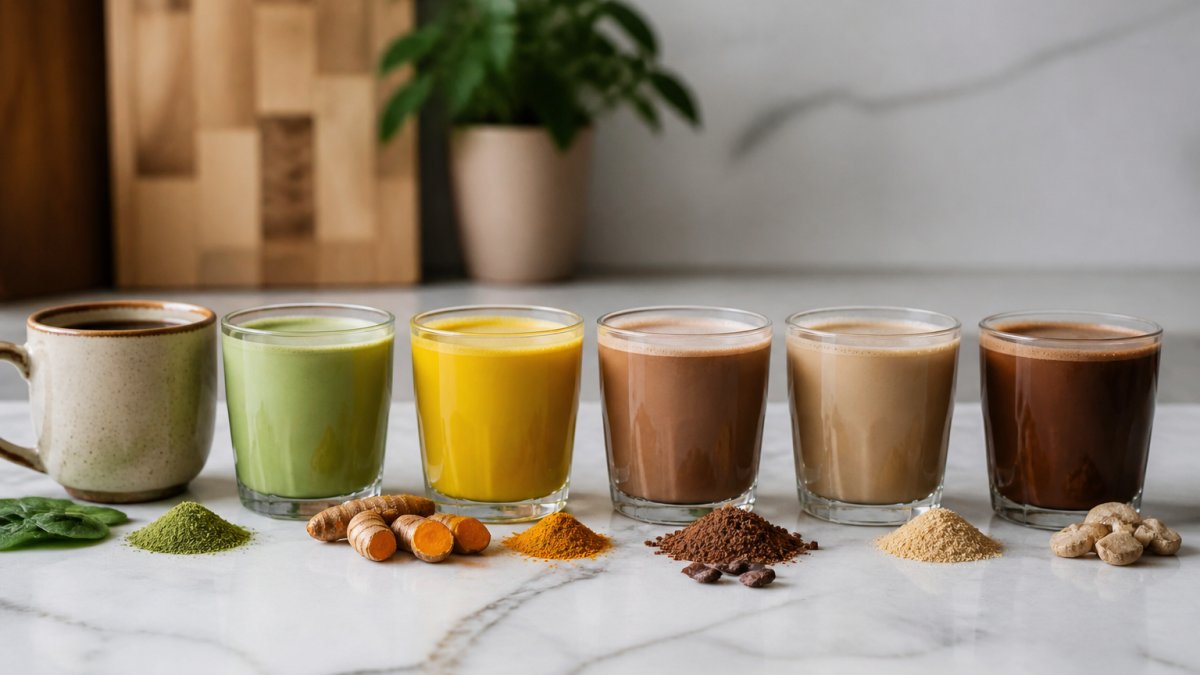
Mushroom coffee alternatives are drinks that replace or reduce conventional coffee using mushrooms, roasted roots, cacao, matcha, yerba mate, or chicory. Some contain coffee as a base; some contain none at all.
Here is the field at a glance:
| Option | Caffeine Level | Format | Best For |
|---|---|---|---|
| Crazy Coffee Co Insomnia Blend | Full coffee | Ground beans | People who want real coffee, done better |
| Atlas+ Coffee Superblend | Reduced | Instant powder | Fast morning prep |
| Shroomi | Reduced | Grounds | Brewing ritual without full caffeine |
| MUD\WTR Original Cacao | Low | Powder | Cacao-forward taste |
| TeecCino Reishi Chicory | None | Powder or bags | Caffeine-free evenings |
| Matcha | Moderate | Powder | Steady, calm focus |
| Yerba Mate | Moderate | Loose leaf | Steadier energy than coffee |
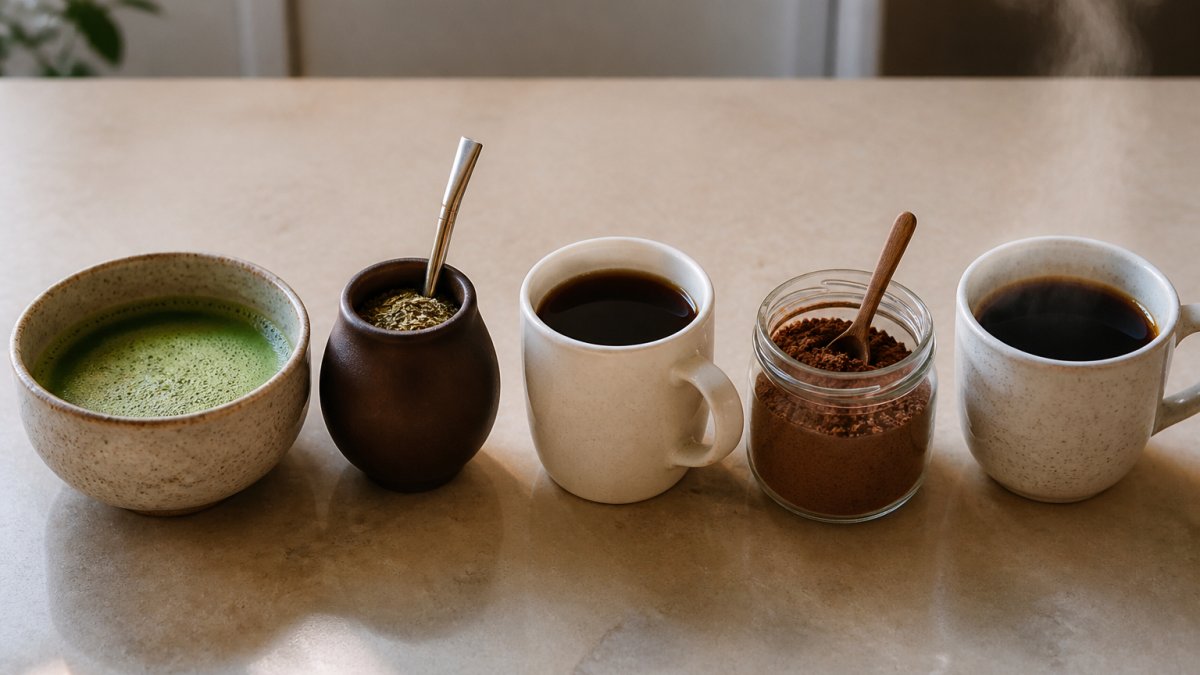
How We Ranked These Mushroom Coffee Alternatives
We scored every option on four things: caffeine transparency, ingredient sourcing, taste, and cost per serving. Caffeine transparency matters most because most blends hide their actual dose behind vague "low caffeine" labels.
A common mistake is buying on mushroom variety alone. Lion's mane, chaga, cordyceps, and shiitake get top billing on the front of the bag, but the back panel often lists a proprietary blend with no milligram amounts. Without an active dose, the mushroom content is marketing.
We also separated real mushroom coffee from non-mushroom alternatives. Matcha, yerba mate, chicory, chai, and cacao belong in the same shopping list, but they are different products with different caffeine profiles. Mixing them without saying so is how comparison guides mislead people.
Matcha vs Mushroom Coffee: Caffeine, Taste, and Focus
Matcha and mushroom coffee get lumped together because both are green-adjacent powders you mix with hot water, but they are different products with different caffeine math. Putting them on the same serving basis is the only honest way to compare them.
Caffeine per prepared serving. A standard bowl of matcha uses about 1 to 2 grams of powder (roughly half to one teaspoon), which typically lands in the 30 to 70 mg caffeine range depending on grade and scoop size. A typical 8 oz brewed coffee runs about 95 mg. Most mushroom coffee blends fall between 0 and 50 mg per serving, and many caffeine-free chicory or cacao blends sit at or near zero.
Why the lift feels different. Matcha carries caffeine alongside L-theanine, an amino acid naturally present in green tea. A review of L-theanine and caffeine research describes the combination as improving attention while softening the jittery edge compared with caffeine alone. That is a real, replicated effect, but it is modest, it does not turn matcha into a sedative, and it does not replace sleep. Readers should not infer from an ingredient list that a matcha latte will "cancel" the caffeine; it smooths the curve, it does not remove the dose.
What the mushroom side actually claims. Lion's mane, reishi, and cordyceps get marketed for focus and calm, but the human evidence is early and mixed. Most studies are small, short, and often use extracts at doses that do not match what is in a retail bag. Treat focus claims as plausible-but-unproven, and treat the caffeine number on the label as the only figure you can plan around.
Taste and prep. Matcha is grassy, slightly bitter, and unforgiving of boiling water, whisk it at roughly 160 to 175°F or it goes harsh. Mushroom coffee blends range from coffee-like to distinctly woody depending on how much actual coffee or cacao they use, and most instant versions just need a spoon and a mug. If your morning ritual has a two-minute ceiling, that gap matters more than the flavor notes.
Who should pick which. If you want a moderate, sustained caffeine hit with a calmer edge, matcha is the better fit. If you are cutting caffeine and want the ritual of a hot drink, a low- or no-caffeine mushroom blend is the better fit. If you are caffeine-sensitive or watching sleep, measure your scoop, matcha is easy to over-pour.
Yerba Mate vs Mushroom Coffee: Which Gives Steadier Energy?
Yerba mate tends to feel steadier than coffee for many drinkers, and the reason is chemical. It contains caffeine plus theobromine and theophylline, compounds that smooth the curve. A NIH summary on yerba mate notes the beverage's stimulant profile differs from coffee's sharp spike.
Mushroom coffee alternatives sit on the other end of the scale. Most deliver modest caffeine or none, so the energy is gentler but shorter-lived.
The practical difference: mate suits long afternoon work blocks. Mushroom blends suit people cutting caffeine without giving up the ritual of a hot drink. Neither replaces a full-pot coffee habit, and pretending otherwise is where most guides lose credibility.
Caffeine-Free Coffee Alternatives for Late Workdays
Chicory root is the workhorse here. Roasted chicory brews dark and bitter, with no caffeine at all, and it has anchored coffee substitutes since wartime rationing. TeecCino Reishi Chicory pairs it with reishi, a mushroom long used in teas.
Cacao is the other caffeine-free path, though "free" needs an asterisk. Cacao contains small amounts of theobromine, a mild stimulant. MUD\WTR Original Cacao leans on this, so it will not wire you at 10 p.m., but it is not inert either.
A warning worth stating plainly: if you take medication or manage a heart condition, check with a clinician before leaning on stimulant-free blends. Herbal ingredients can interact with prescriptions, and no product label replaces that conversation.
Instant Mushroom Coffee Alternatives: What to Check Before You Buy
Instant mushroom coffee alternatives win on convenience and lose on transparency. Before you buy, run five checks, the first three on the label, the last two before you check out.
1. Fruiting body vs. mycelium. Fruiting body is the mushroom itself. Mycelium is often grown on grain, which dilutes the dose and can add starch and filler. A label that says "mushroom" without specifying fruiting body is a yellow flag, not a dealbreaker, but you should know which one you are paying for.
2. Active dose in milligrams. You want a number per serving, not a "proprietary blend." A blend that lists lion's mane, chaga, and cordyceps together with no milligram breakdown tells you nothing about whether any single ingredient is present at a meaningful dose. If the back panel will not give you milligrams, assume the mushroom content is marketing.
3. Third-party testing and the certificate of analysis. "Third-party tested" is a claim, not proof. A useful certificate of analysis (COA) covers three things: identity (is the powder actually the species on the label), potency (are the actives present at the stated dose), and contaminants (heavy metals, mold, yeast, and pesticide residue). Mushrooms absorb what they grow in, so contaminant screening matters more here than in most supplements.
4. Cost per serving, not cost per bag. Divide the bag price by the number of servings, then compare that number across brands. A $30 bag with 12 servings costs $2.50 a cup; a $45 bag with 30 servings costs $1.50 a cup. The cheaper-looking bag is often the more expensive habit. Subscription terms deserve the same scrutiny: check the cancellation window, whether the intro price holds after the first shipment, and whether shipping is included.
5. Dietary restrictions, allergens, and medication. Instant blends commonly include oat or rice milk powder, coconut, cacao, and added sweeteners, all of which matter if you avoid gluten, dairy, or added sugar. Read the allergen line, not just the front of the bag.
Atlas+ Coffee Superblend and Shroomi both appear in 2026 roundups as top picks, and both are worth a look. Note, though, that published reviews rarely show current pricing or full ingredient panels, so verify those yourself before subscribing, and pull the COA if the brand publishes one.
The Case for Real Coffee: Crazy Coffee Co's Insomnia Blend
Here is the contrarian take. Most people shopping for mushroom coffee alternatives are not chasing mushrooms. They are chasing coffee that does not leave them bitter, jittery, or stale by Thursday.
If that is you, the honest answer is better coffee, not a substitute. Our Insomnia Blend is a high-potency, single-origin Colombian roast built for exactly that problem. Single-origin means one growing region, which gives you a consistent flavor profile instead of a blended average. High-potency means it earns its place in your morning rather than asking you to drink two cups to feel one.
It is still coffee, with coffee's caffeine. If you need caffeine-free, chicory or matcha is your lane. If you need real coffee that tastes like something, this is ours.
Conclusion
The hardest part of switching is not finding a mushroom coffee alternative. It is admitting which caffeine tier you actually need, then buying inside it instead of chasing the trendiest bag. If your answer is "real coffee, just better," start with our single-origin Colombian Insomnia Blend and taste what a fresh, high-potency roast does for a long workday. Browse the current lineup at Crazy Coffee Co and pick your roast.
Frequently Asked Questions
Can you get mushroom coffee without caffeine?
Yes, but you have to read the label closely. Many mushroom coffee blends still use coffee beans as their base, so they contain caffeine. To get a caffeine-free option, look for blends built on chicory, cacao, dandelion root, or roasted barley instead of coffee. Products like Teecino Reishi Chicory and MUD\WTR Original Cacao fall into that group. Check the ingredient list for coffee, green coffee extract, or caffeine added as a separate ingredient before you assume a mushroom coffee is caffeine-free.
Is matcha a good alternative to mushroom coffee?
It depends on what you want from the swap. Matcha delivers caffeine plus L-theanine, an amino acid that smooths out the energy curve, so many people report fewer jitters than coffee gives them. In a matcha vs mushroom coffee comparison, matcha wins on taste for people who like vegetal, grassy flavors and loses for anyone who wants a coffee-like cup. Matcha also has no mushroom content, so you lose the lion's mane, chaga, or cordyceps that drew you to mushroom coffee in the first place.
Which instant mushroom coffee is the best?
Instant mushroom coffee alternatives vary widely in what they actually contain, so the best pick depends on your priorities. Atlas+ Coffee Superblend shows up as a top pick in multiple 2026 reviews for convenience. Before buying any instant blend, check three things: whether coffee is the base ingredient, the actual milligram dose of each mushroom, and whether the brand publishes third-party lab testing. Instant formats are the easiest to prepare, but they are also the easiest place for a brand to hide a thin active dose behind a long ingredient list.
What is the best alternative to mushroom coffee if I still want real coffee taste?
If coffee flavor is the reason you drink it, a single-origin coffee beats every mushroom blend on taste. Crazy Coffee Co's Insomnia Blend is a high-potency, single-origin Colombian roast built for people who want a strong, clean cup without the bitterness and staleness of mass-market brands. It is not caffeine-free and it is not a mushroom product, so treat it as the choice for someone who tried mushroom coffee alternatives and decided they wanted the real thing back, done better.
Are there caffeine-free alternatives to mushroom coffee?
Several, and they are worth comparing on more than just caffeine. Chicory root brews dark and slightly bitter with no caffeine at all, which makes it the closest thing to a coffee-like cup without the stimulant. Cacao blends give you a chocolate-forward drink with a small amount of naturally occurring caffeine. Rooibos and roasted dandelion root are two more caffeine-free coffee alternatives to try. If you are cutting caffeine for sleep or medication reasons, confirm with your doctor before relying on any herbal blend.