 blog
Iron Spur Coffee vs Mushroom Coffee: 2026 Comparison
Table of Contents
- Iron Spur Coffee vs Mushroom Coffee: What Actually Separates Them
- Mushroom Coffee vs Regular Coffee: Brewing Method, Flavor, and Ritual
- Mushroom Coffee Caffeine Content vs Iron Spur's High-Potency Roast
- Is Mushroom Coffee Healthy? What the Evidence Actually Supports
- Mushroom Coffee and Fasting: What Breaks a Fast and What Doesn't
- Cost Per Serving and Ingredient Transparency: Side-by-Side
- Which One Fits Your Workday? A Decision Framework
- Conclusion: Picking the Brew That Matches Your Goals
- Frequently Asked Questions
Last Updated: October 12, 2026
Iron Spur Coffee vs Mushroom Coffee: What Actually Separates Them
The iron spur coffee vs mushroom coffee decision comes down to one question: do you want coffee, or do you want something coffee-adjacent? At Crazy Coffee Co, we roast high-potency, single-origin Colombian beans for people who want real coffee with real caffeine. Mushroom coffee blends take a different route. They mix a small amount of ground coffee with dried mushroom extracts, usually lion's mane or chaga, and land somewhere between a health drink and a weak cup of joe.
That difference shapes everything else: caffeine content, flavor, ritual, cost, and how each one fits a workday.
Below, we break down both options side by side so you can pick the brew that matches your goals instead of the one with the louder marketing.
Mushroom Coffee vs Regular Coffee: Brewing Method, Flavor, and Ritual
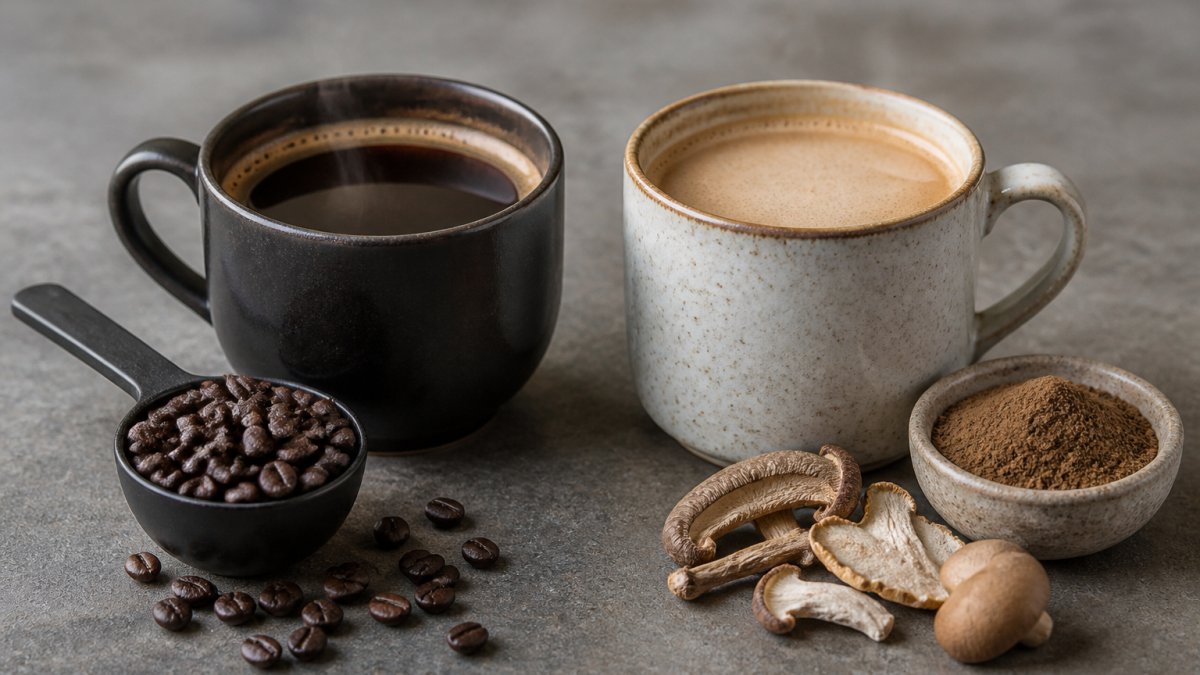
Mushroom coffee vs regular coffee is less a rivalry than a category split. Mushroom coffee is a blend of instant or ground coffee with powdered mushroom extracts, and it typically brews in seconds because most versions are instant. Regular coffee is ground roasted beans, brewed through a drip machine, pour-over, French press, or espresso shot.
Flavor tells the story fast. Mushroom blends tend toward earthy, mild, and slightly woody, with a thinner body than most coffee drinkers expect. A high-potency roast like our Insomnia Blend keeps the bold, full-bodied cup that single-origin Colombian beans deliver.
The ritual differs too. Mushroom coffee fits a quick stir-and-go routine. Traditional coffee asks for a grind, a brew, and a few minutes of attention. For many people, that pause is the point.
Mushroom Coffee Caffeine Content vs Iron Spur's High-Potency Roast
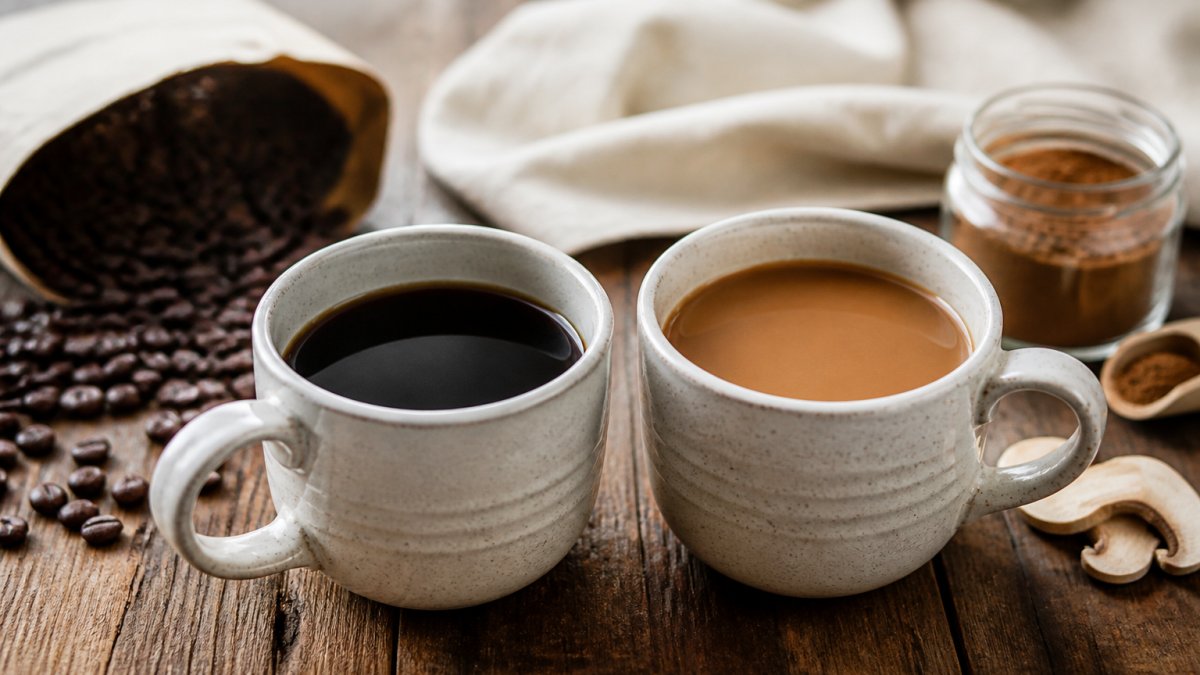
Mushroom coffee caffeine content usually lands far lower than a standard cup, often because the blend is mostly mushroom powder with a small coffee portion. That is the entire selling point for people trying to cut back.
Here is the tradeoff most guides skip: lower caffeine also means less of the sharp, immediate lift that coffee drinkers actually want at 7 a.m. If your goal is to reduce caffeine, mushroom coffee does that job. If your goal is sustained focus through a long workday, a weaker cup works against you.
Our position is simple. We do not dilute our roast to chase a trend. The Insomnia Blend is built as a high-potency roast for people who want their caffeine to count, not a blend designed to apologize for it.
Is Mushroom Coffee Healthy? What the Evidence Actually Supports
Is mushroom coffee healthy? The honest answer is that the evidence is thinner than the marketing suggests, and the gap between what studies test and what a coffee blend delivers is the whole story.
Start with the compounds. Lion's mane (Hericium erinaceus) is studied for its hericenones and erinacines, which are being researched for nerve growth factor (NGF) activity. Chaga (Inonotus obliquus) is studied for its polysaccharides and melanin-derived antioxidants. Reishi (Ganoderma lucidum) is studied for triterpenes and beta-glucans. Cordyceps is studied for cordycepin and adenosine analogs.
That is the dose problem. A typical mushroom coffee stick weighs a few grams total. If coffee is the first ingredient by weight and mushroom extract is listed further down, the actual extract per serving may be a fraction of a gram. Most clinical work on these species uses gram-level extract doses over weeks, not milligrams stirred into hot water.
What the evidence does and does not support:
- Established: Mushrooms are a legitimate food source of fiber, B vitamins, and minerals. Coffee itself has well-documented effects on alertness and, in moderate intake, is associated with lower risk of several chronic conditions in large observational studies.
- Preliminary: Lion's mane and cognitive function, reishi and immune markers, chaga and antioxidant activity. These are small trials, animal models, or in-vitro work. Promising, not settled.
- Not supported: Any claim that a mushroom coffee blend treats, prevents, or cures a disease. The FDA guidance on dietary supplement claims is clear that supplement makers cannot claim a product treats or prevents disease without approval, which is why mushroom coffee marketing leans on words like "support" and "wellness" rather than specific outcomes.
Safety is the part most guides skip. Reishi and other mushrooms can interact with blood thinners and immunosuppressants. Chaga is high in oxalates, which matters if you have a history of kidney stones.
None of this makes mushroom coffee bad. It makes it unproven at the doses typically sold, and it makes label reading non-optional. If you want mushrooms for their own sake, take a third-party-tested extract separately where you can control the dose and see the beta-glucan number. If you want coffee, drink coffee.
Mushroom Coffee and Fasting: What Breaks a Fast and What Doesn't
Mushroom coffee and fasting is a common pairing because both live in the same wellness space, but the answer depends on what is actually in your cup. Black coffee with no additives has negligible calories and generally does not break a fast. Mushroom coffee blends are trickier.
Many versions include added creamers, coconut milk powder, or sweeteners. Those add calories and can interrupt a fast. Plain mushroom powder stirred into hot water is closer to a fast-friendly option, but you have to read the label carefully.
The practical rule: check the nutrition panel, not the front of the bag. If the serving has calories from added ingredients, it counts. If it is just coffee and mushroom powder, it likely does not.
Cost Per Serving and Ingredient Transparency: Side-by-Side
Cost per serving is where the comparison gets uncomfortable for mushroom coffee, and the reason is arithmetic, not opinion.
Run the numbers on a typical mushroom coffee stick. Inside that stick, coffee is usually the first ingredient by weight, mushroom extract is a smaller fraction, and the rest is often creamer, coconut milk powder, or flavoring. So you are paying a premium per cup for a product where the coffee portion is smaller than a standard scoop of ground coffee and the mushroom portion is below the doses used in most research.
Now run the numbers on whole-bean coffee. A 12-ounce bag of specialty single-origin beans brewed at a standard 1:16 ratio yields roughly 30-35 cups depending on your scoop size. You get more coffee per serving, you control the strength, and you are paying for the bean rather than for packaging and flavoring.
Where mushroom coffee can win on cost: if you are replacing a $5 café latte with a $1.20 stick, the per-serving math flips in its favor. The comparison only favors whole bean when you are already brewing at home.
Ingredient transparency separates the two categories further, and this is the part the SERP does not cover:
- Coffee labels should state origin, roast level, and process (washed, natural, honey). A single-origin Colombian bag that lists only "Colombian" without a region, altitude, or process is giving you marketing, not transparency.
- Mushroom blend labels should state mushroom species, whether it is fruiting body or mycelium, the extract ratio, the beta-glucan percentage, and the coffee percentage by weight. Many do not. If the coffee percentage is not listed, assume it is low.
- Serving size is the sleeper issue. A mushroom stick may list a 6-gram serving with 1 gram of coffee. A coffee scoop is roughly 10-12 grams of ground coffee. Those are not equivalent cups, and comparing them per "serving" is misleading.
- Subscription pricing distorts both categories. Mushroom brands often discount 15-25% on subscription, which narrows the gap. Coffee roasters do the same. Compare the subscription price, not the one-time price, if that is how you will actually buy.
Preparation cost matters too. Mushroom sticks need only hot water. Whole bean needs a grinder, a brewer, and a few minutes. If you do not already own that equipment, the true first-month cost of switching to whole bean is higher than the per-cup math suggests.
| Factor | Mushroom Coffee | Iron Spur Coffee |
|---|---|---|
| Base ingredient | Coffee plus mushroom extract powder | Single-origin Colombian beans |
| Typical cost per serving | See brand website | ~$0.50-$0.90 (brewed) |
| Coffee per serving | Often a fraction of the stick weight | Full scoop, ~10-12 g |
| Caffeine level | Typically lower | High-potency roast |
| Flavor profile | Earthy, mild, thin body | Bold, full-bodied |
| Brew method | Mostly instant, stir and go | Drip, pour-over, press, espresso |
| Label clarity | Varies widely by brand | Origin and roast stated |
| Best for | Caffeine reduction, wellness routines | Sustained focus, real coffee taste |
Which One Fits Your Workday? A Decision Framework
Pick mushroom coffee if you want to cut caffeine, you like an earthy flavor, and you treat your morning drink as a wellness habit rather than a coffee ritual. Pick a high-potency roast if you want the real thing: bold flavor, reliable caffeine, and a cup that holds up through a long day.
A simple way to decide:
- Cutting caffeine? Mushroom coffee.
- Need sustained focus for 12-hour days? High-potency coffee.
- Want the coffee ritual? Traditional brewing.
- Chasing a specific wellness claim? Check the evidence first, then decide.
- Watching cost per serving? Compare the coffee percentage on each label.
For most people who actually love coffee, the answer is not either-or forever. It is knowing which one you are drinking and why.
Conclusion: Picking the Brew That Matches Your Goals
The iron spur coffee vs mushroom coffee choice is not about which is objectively better. It is about matching the brew to what you need: lower caffeine and a wellness angle, or a real, bold cup that fuels a demanding day.
If you want the second option, Crazy Coffee Co roasts high-potency, single-origin Colombian coffee built for exactly that. Our Insomnia Blend delivers bold flavor without the bitterness and staleness of ordinary office brews, and our single-origin sourcing means you know what is in the bag.
Get started with Crazy Coffee Co and make your morning coffee work as hard as you do.
Frequently Asked Questions
Does mushroom coffee contain caffeine?
Most mushroom coffee blends do contain caffeine, but usually less than a standard cup of regular coffee. The amount depends on how much actual coffee or green tea extract the brand mixes with the mushroom powder. Some blends are fully decaf, using only mushroom extracts. Check the serving label for exact milligrams per cup. If you want a predictable, higher caffeine hit, a high-potency roast like Crazy Coffee Co's Insomnia Blend gives you a clearer number to work with.
Is mushroom coffee fasting friendly?
Black mushroom coffee without added cream, sugar, or milk is generally considered fasting friendly because it has very few calories. The mushroom extracts themselves add negligible calories. However, some blends include added fats, MCT oil, or sweeteners that can break a fast. Read the ingredient list carefully. Plain black coffee, including single-origin roasts, is also fasting friendly and gives you a more consistent caffeine dose.
What has more caffeine, regular coffee or mushroom coffee?
Regular coffee almost always has more caffeine. A typical 8-ounce cup of regular coffee contains roughly 95 milligrams of caffeine, while most mushroom coffee blends land between 30 and 60 milligrams per cup, depending on the ratio of coffee to mushroom powder. If you need sustained focus for long workdays, a high-potency roast delivers a more reliable caffeine level than a diluted mushroom blend.
Can mushroom coffee replace regular coffee?
It can replace regular coffee if you want less caffeine and enjoy the earthy flavor, but it won't match the same energy curve. Mushroom coffee typically delivers a gentler lift because of its lower caffeine content. If your goal is sharp focus and sustained energy without crashes, a single-origin high-potency coffee gives you more control over your intake. Try both and see which one keeps you productive through your longest days.