 Comparison
French Press vs Drip Coffee: Which Is Better for Beginners
Last Updated: November 21, 2026
Quick Summary
French press suits beginners who want a fuller, heavier cup and don't mind a little cleanup. Drip suits beginners who want a cleaner, more consistent cup with less effort each morning. The main difference is the filter: a French press keeps coffee oils and fine particles in the cup.
- French press uses a coarse grind and a metal mesh filter, leaving oils and fine particles in the cup.
- Steep a French press for 4 minutes at about 200°F with a ratio of 1:15.
- Drip uses a medium grind and a paper filter, producing a lighter, cleaner cup.
- Drip brewers are more repeatable once set up, which suits brewing for several people.
- Using the wrong grind size is the most common beginner mistake with either method.
Table of Contents
- French Press vs Drip Coffee at a Glance
- How French Press Brewing Works
- How Drip Coffee Brewing Works
- Taste, Body and Strength: Which Cup Suits You
- Grind Size and Coffee-to-Water Ratio for Each Method
- Cost, Cleanup, Waste and Health Considerations
- Choosing Your First Brewer and Your First Bag of Beans
- Frequently Asked Questions
Choosing between French press and drip coffee is the first real decision most beginners make, and it shapes everything that follows, from the flavor in your mug to the equipment on your counter. This guide is designed to help you pick the method that fits how you actually drink and brew. Each method has clear strengths, and neither is simply better for everyone.
Our short answer: French press suits beginners who want a fuller, heavier cup and don't mind a little cleanup. Drip suits beginners who want a cleaner, more consistent cup with less effort each morning.
French Press vs Drip Coffee at a Glance
French press steeps coarse grounds directly in hot water, then pushes a mesh filter down to separate them. Drip pours hot water through medium-ground coffee held in a paper or metal filter. The filter is the key difference: a French press keeps coffee oils and fine particles in the cup, while drip filters trap most of them.
| Factor | French Press | Drip Coffee |
|---|---|---|
| Body and mouthfeel | Fuller, heavier, silkier | Lighter, cleaner |
| Sediment | Some fine grounds and oils | Very little |
| Effort per cup | Hands-on, about 4 minutes | Mostly automatic once set up |
| Consistency | Depends on your timing and pour | Highly repeatable |
| Cleanup | Dump grounds, rinse press | Discard paper filter |
| Typical equipment cost | Usually lower, one-time purchase | Varies widely by machine |
If you want a bold, textured cup and enjoy a hands-on routine, French press is a strong first brewer. If you brew for a household, want the same result every morning, or need a machine that runs while you get ready, drip is the easier choice.
How French Press Brewing Works
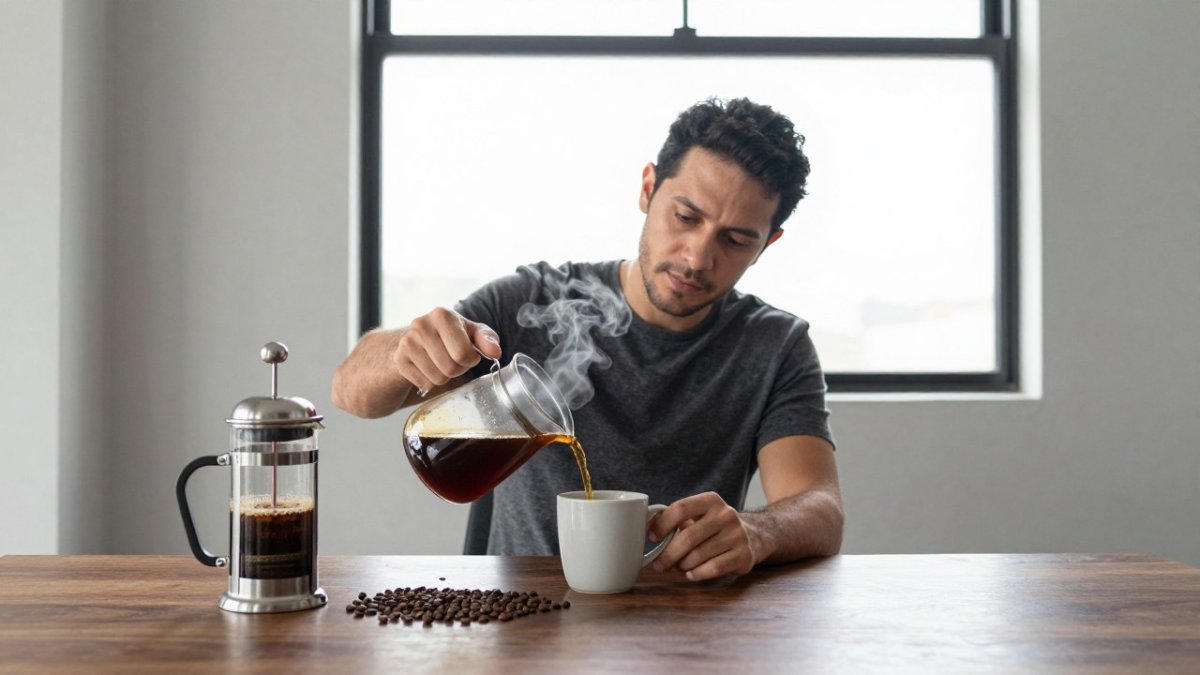
A French press is an immersion brewer. The grounds soak in water for the full brew time, so every particle contributes flavor. When you press the plunger, the metal mesh blocks most grounds while letting the brewed liquid through. Because the mesh is not a paper filter, oils and very fine particles stay in the cup. This is why French press coffee feels heavier on the tongue.
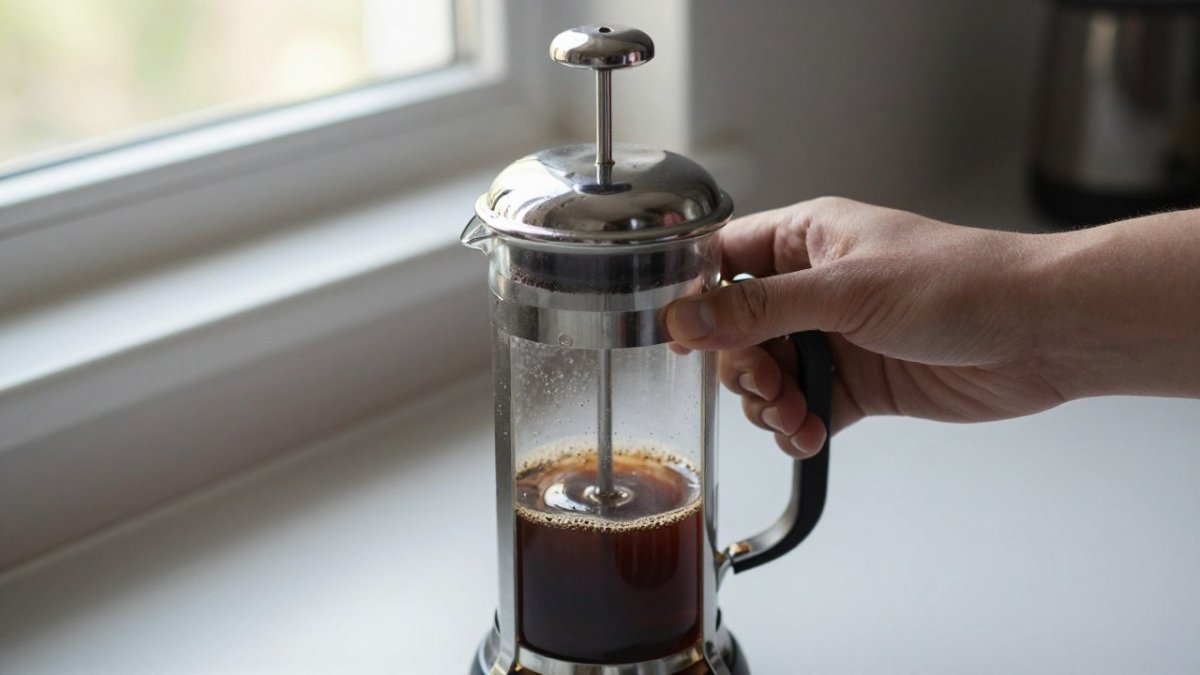
The trade-off is sediment. Some fine grounds always settle at the bottom, and the last sip can taste gritty if you pour too far. Pouring slowly and stopping before the bottom helps.
Step-by-step French press recipe for beginners
- Heat water to about 200°F, just off a full boil.
- Grind coffee coarsely, about the texture of sea salt. Fine grounds will slip through the mesh.
- Add grounds to the press. Use a ratio of about 1:15, which means 1 gram of coffee for every 15 grams of water.
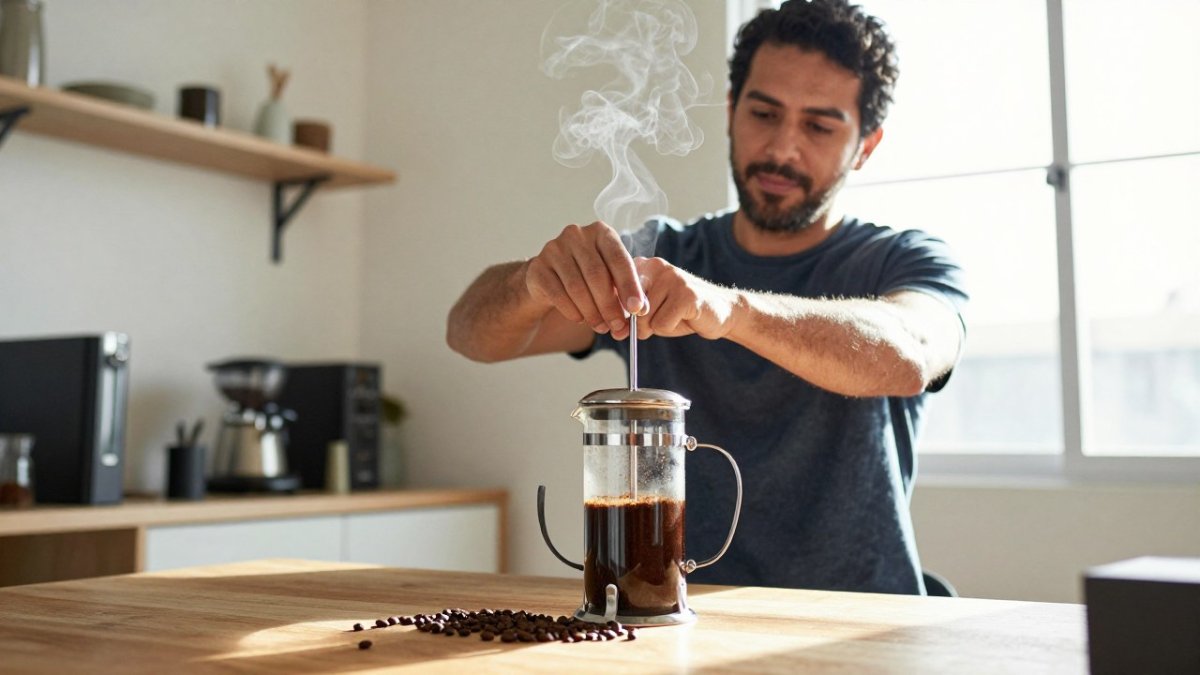
- Pour water over the grounds, stir gently, and place the lid on without pressing.
- Steep for 4 minutes. This is the standard starting point, and most beginners find it balanced.
- Press slowly until the plunger reaches the bottom.
- Pour all the coffee out right away so it doesn't keep extracting.
Watch out: Over-extraction from steeping too long or grinding too fine makes French press taste harsh and bitter.
How Drip Coffee Brewing Works
A drip brewer heats water and sprays it over grounds held in a filter basket. Gravity pulls the brewed coffee into a carafe while the paper filter catches most oils and fine particles. The result is a cleaner, lighter cup where the flavor of the beans comes through more clearly.
Drip is also more forgiving day to day. Once you set the grind and ratio, most machines produce nearly the same cup every time, which matters if you brew for several people.
Step-by-step drip coffee recipe for beginners
- Fill the water reservoir with fresh, filtered water for the number of cups you want.
- Insert a paper filter into the basket and rinse it with hot water to remove paper taste.
- Grind coffee to a medium texture, similar to coarse sand.
- Add grounds using a ratio of about 1:16 to 1:17.
- Start the brewer and let it run until the water is finished.
- Serve promptly and clean the basket after brewing.
Taste, Body and Strength: Which Cup Suits You
Taste is where the two methods differ most, but the difference is easy to misread. French press delivers a full-bodied cup with more oil and a noticeably thicker texture. Drip gives a brighter, cleaner cup that highlights acidity and subtle flavor notes. Neither is wrong. It depends on your palate.
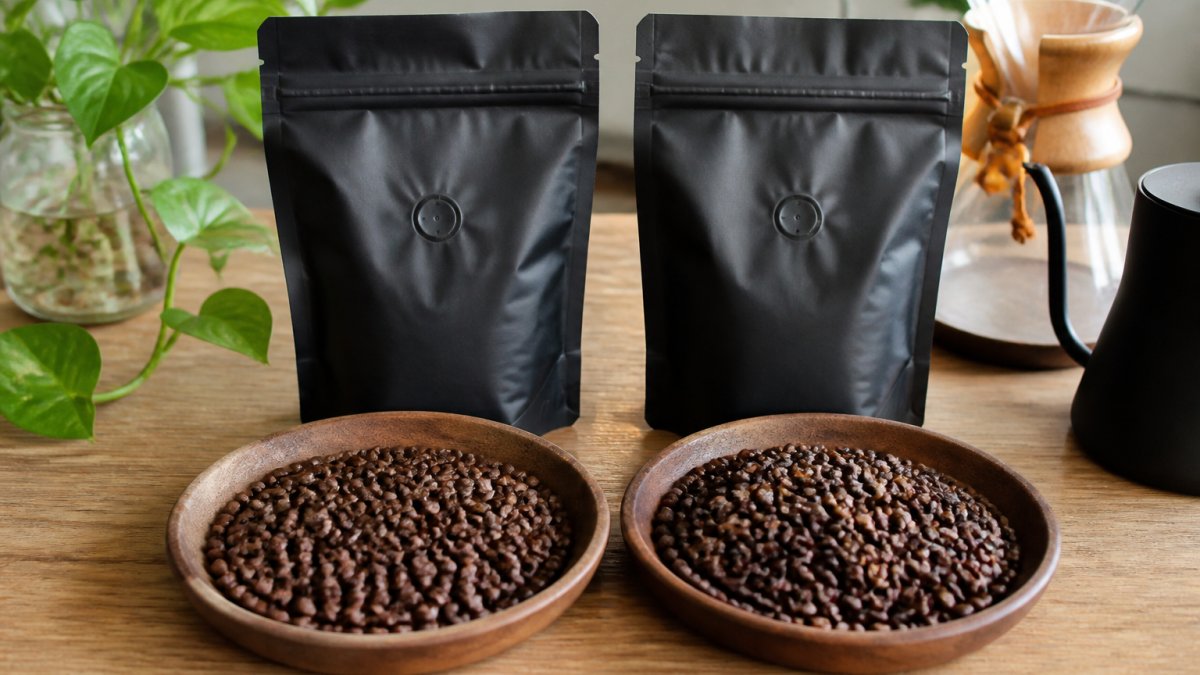
A controlled comparison is the only fair way to judge the methods. If you brew a French press with 20 grams of coffee and a drip brewer with 12 grams, the French press will taste stronger for reasons that have nothing to do with the brewer. To isolate the method, hold these variables constant: the same beans, the same roast level, the same dose in grams, the same water volume, and the same water temperature. Change only the grind and the brew mechanics. When dose and water are matched, the difference between the two methods tends to come down to texture and clarity rather than raw intensity.
Strength is a separate question from caffeine. A French press cup often tastes stronger because it holds more dissolved solids and oils, but the caffeine content depends mainly on how much coffee you use, not the brewing method. If you want more caffeine, use more grounds with either method. Do not assume a heavier cup means a bigger caffeine hit.
Roast level also shifts the comparison.
Watch out: If you compare the two methods on different days with different beans or a different grind, you are tasting the recipe, not the brewer. Brew both on the same morning with the same bag and the same scale, and the comparison will actually mean something.
Grind Size and Coffee-to-Water Ratio for Each Method
Grind size is the most common beginner mistake. French press needs a coarse grind so the mesh filter holds the grounds back. Drip needs a medium grind so water flows through at the right speed. Using the wrong grind is the usual reason a cup tastes too bitter, too sour or too weak.
For ratio, French press typically uses about 1:15, while drip uses about 1:16 to 1:17. A higher ratio means weaker coffee. Start with these numbers, then adjust one variable at a time: grind size first, then brew time or ratio.
Cost, Cleanup, Waste and Health Considerations
Equipment prices vary widely, so compare the cost structure rather than a single sticker price. A basic French press is usually a one-time purchase with no consumables. A drip brewer ranges from budget models to premium units with programmable timers, and the recurring cost is the paper filter if you use one. Over a year of daily brewing, the filter line item is the one that quietly adds up, while the French press has no equivalent recurring cost. Check current prices directly from retailers, as they change often.
Cleanup differs too. French press means emptying spent grounds and rinsing the press each time, which is quick but messy. Drip requires discarding a paper filter and wiping the basket. Paper filters add ongoing waste, while a metal filter for drip reduces that. Grounds disposal is worth planning for either way: spent grounds are heavy and wet, so a small counter compost bin or a dedicated grounds container keeps the routine from turning into a sink-clogging chore.
On health, the key mechanism is filtration. Paper filters trap most of the coffee oils and fine particles that a French press mesh allows through. Whether that matters to you is a question to take up with your doctor. A metal drip filter behaves more like a French press on this point, so the filter material matters as much as the brewer.
Watch out: The same paper that removes oils also removes some of the body and aroma compounds that make French press distinctive, so the choice is a trade-off between filtration and flavor.
Choosing Your First Brewer and Your First Bag of Beans
Pick French press if you want a hands-on routine, a heavier cup and a lower upfront cost. Pick drip if you want a consistent, hands-off morning for multiple cups. If you're unsure, a French press is an inexpensive way to learn how grind size and steeping affect flavor.
Whichever method you choose, fresh beans make the biggest difference. If you're new to single origins, start with a bag and try both methods to see which you prefer. Buying whole beans and grinding them just before brewing gives you the most control over the final cup.
Frequently Asked Questions
Is French press or drip coffee better for beginners?
Drip coffee is usually easier for beginners because the machine controls water temperature and timing, and you only need to add grounds and water. French press asks you to control steep time and press firmly, but it requires no paper filters and rewards a simple recipe with a fuller cup. If you want the least effort and consistent results each morning, start with drip. If you enjoy a hands-on routine and a heavier body, a French press is a good first manual method. Either is a sound choice, and a basic scale helps both.
How long should you steep coffee in a French press?
Most beginner recipes steep coarse-ground coffee in hot water for about four minutes before pressing the plunger slowly down. Steeping much longer, often called over-extraction, pulls bitter compounds and can make the cup harsh. Stopping too early leaves the cup weak and sour. Pour all the water in at once, stir gently, place the lid on without pressing, and set a timer. Pour the coffee out right after pressing so it does not keep brewing in the carafe.
What grind size should you use for French press and drip coffee?
French press needs a coarse grind, similar to sea salt or coarse sand, because the grounds steep for minutes and a fine grind would slip through the mesh and turn the cup muddy. Drip coffee works best with a medium grind, similar to table salt or sand, which suits the paper filter's flow rate. Using the wrong grind is one of the most common beginner mistakes. If your drip coffee tastes sour or weak, try a slightly finer grind. If it tastes bitter, go a bit coarser.
What coffee-to-water ratio should beginners use?
A common starting point for French press is about 1:15, roughly 60 grams of coffee to 900 grams of water, which makes about four cups. For drip, many beginners start near 1:16. Measure with a kitchen scale rather than scoops, since scoop sizes vary widely. Once you have a baseline, adjust by small steps: add a few grams of coffee for a stronger cup or reduce it for a lighter one. Changing one variable at a time makes it easier to see what caused a change in taste.