 how-to
Signs of Stale Coffee Beans Explained
Table of Contents
- What Stale Coffee Beans Actually Taste and Smell Like
- 6 Signs of Stale Coffee Beans You Can Check Today
- Signs of Rancid Coffee Beans (And How They Differ From Stale)
- Coffee Bean Shelf Life: How Long Before Beans Go Bad
- How to Keep Coffee Fresh Longer at Home
- How Your Brewing Method Changes What You Taste
- Conclusion
- Frequently Asked Questions
Last Updated: October 2, 2026
What Stale Coffee Beans Actually Taste and Smell Like
Stale coffee beans have lost their volatile compounds to oxidation and moisture, leaving a flat, papery, lifeless cup. At Crazy Coffee Co, we roast single-origin Colombian beans so flavors peak when they reach you, not months before, because the signs of stale coffee beans show up long before most people notice anything wrong with their morning cup.
The Flat, Papery Flavor Nobody Warns You About
Fresh coffee hits you with layers, chocolate, citrus, caramel, something bright and alive. Stale coffee gives you one note: flat, dull, sometimes papery or cardboard-like. The bitterness in bad office coffee usually isn't the roast; it's time.
Why Aroma Disappears Before Flavor Does
Smell is your first warning sign: volatile compounds escape fast, often within days of opening a bag. By the time flavor fades, aroma is long gone. That's why the bloom matters, if your grounds barely bubble when hot water hits them, the beans already gave up their gas.
6 Signs of Stale Coffee Beans You Can Check Today
The fastest way to spot stale coffee beans is to check smell, surface, and bloom in that order. Each test takes under a minute.
- No smell when you open the bag. Fresh beans release a strong, sweet scent.
- Oily or dull surface. Some shine is normal, but greasy beans mean old oils.
- Beans feel dry and light. Fresh beans have weight and density.
- No bloom when brewing. A weak or missing bloom signals lost carbon dioxide.
- Flat, papery taste. Flavor complexity fades into a single dull note.
- Musty or rancid smell. This means oils have gone bad, not just faded.
The Bloom Test: A Two-Minute Freshness Check
The bloom is the rush of bubbles when hot water meets fresh grounds, carbon dioxide escaping. To run it: add two tablespoons of grounds to a cup, pour hot water just off the boil over them, and watch for 30 seconds. A strong, foamy bloom means fresh beans; a weak or flat bloom means the gas is gone, and so is the flavor.
Signs of Rancid Coffee Beans (And How They Differ From Stale)
Rancid coffee beans smell musty, sour, or like old cooking oil; stale beans just taste flat, while rancid beans can make you feel off. Staleness is a loss, rancidity a breakdown, both come down to oxidation, which heat and light speed up. If your beans smell like a wet basement or old nuts, toss them. No brewing method fixes rancidity.
The Chemistry Behind the Smell
Most guides stop at "oils go bad." Here's what's actually happening inside the bean.
- Staling is the loss of volatile aroma compounds, the pleasant stuff leaving. The bean gets quiet.
- Rancidity is the accumulation of new off-flavor compounds, the unpleasant stuff arriving. The bean gets loud in the wrong way.
Three Variables That Drive Rancidity
| Variable | What It Does | Practical Effect |
|---|---|---|
| Oxygen | Attacks unsaturated fatty acids | Primary driver; sealed storage slows it |
| Heat | Speeds every oxidation reaction | A warm cabinet ages beans faster than a cool one |
| Light | Degrades lipids and volatiles | UV and visible light both contribute |
Moisture is secondary: it doesn't cause lipid oxidation directly, but it enables hydrolysis, water splitting triglycerides into free fatty acids, which are more oxidation-prone. That's why a humid kitchen is worse than a dry one.
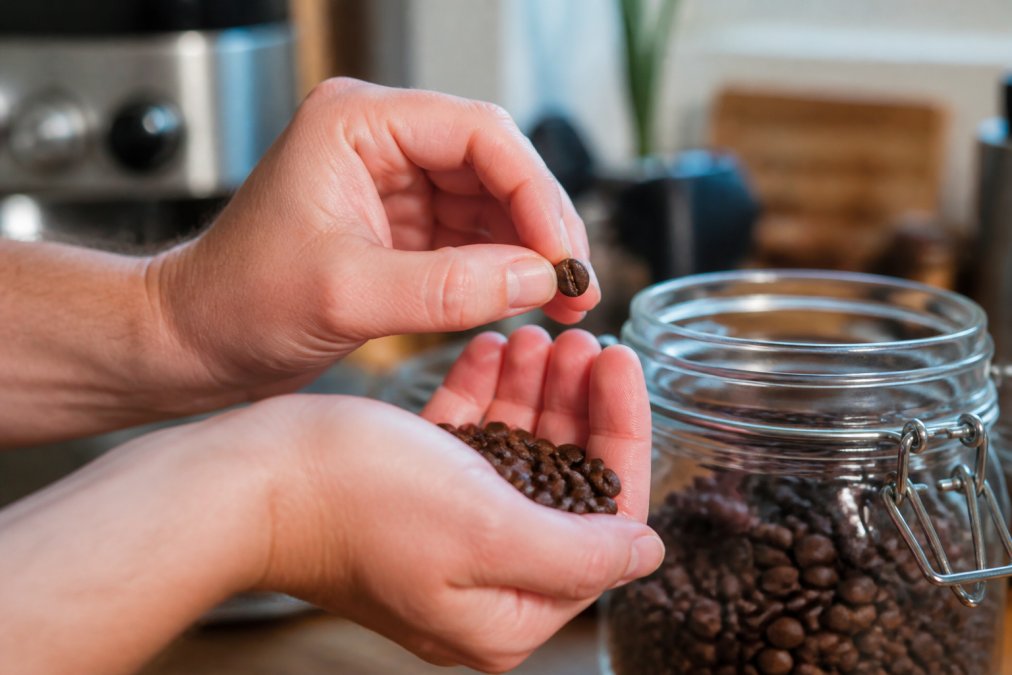
A Concrete Test: The Smell-and-Crush Check
You don't need lab equipment. Crush one bean between your fingers, smell immediately, wait ten seconds, and smell again. Fresh beans release a bright, sweet, roasty hit on the first sniff. Stale beans give a faint version, then nothing. Rancid beans give a second wave, musty, waxy, like the inside of an old pantry, that strengthens as the volatile top notes fade.
Why Rancidity Hits Some Beans Harder
Not every bean ages at the same rate:
- Darker roasts carry more surface oil, so more lipid meets oxygen. They go rancid faster than light roasts.
- Decaf beans are often processed with solvents or water that leave them more porous, and porosity means more oxygen contact.
- Oily, shiny beans that leave residue on your fingers are already partway down the oxidation path; that sheen is lipid migrated to the surface.
- Pre-ground coffee has vastly more surface area than whole beans, so oxidation runs faster by an order of magnitude.
Stale vs. Rancid: A Quick Decision Guide
- Flat, papery, lifeless, but not offensive → stale. Still safe, just disappointing.
- Musty, waxy, sour, or like old oil → rancid. Toss it.
- Both at once → common in beans stored poorly for months. Toss it.
If unsure, trust your nose over the roast date: a bag stamped three weeks ago and stored on a sunny counter can be further gone than one from six weeks ago kept sealed in a dark cabinet.
Coffee Bean Shelf Life: How Long Before Beans Go Bad
Whole beans stay at their best for about two to four weeks after the roast date when stored well; after that, quality drops fast, and ground coffee fades in days. Three things drive that timeline: oxygen breaks down oils and kills aroma, moisture speeds oxidation and invites mold, and light degrades volatile compounds.
Why "Two to Four Weeks" Is a Range, Not a Rule
The four-week figure assumes whole beans, an opaque valve bag, a cool dark cabinet, and a medium roast. Change any of those and the number moves:
| Storage Scenario | Realistic Peak Window |
|---|---|
| Whole beans, sealed valve bag, dark cool cabinet | 2-4 weeks post-roast |
| Whole beans, airtight opaque canister, dark cool cabinet | 3-5 weeks |
| Whole beans, clear glass jar on a counter | 1-2 weeks |
| Whole beans, fridge door | Days to 1 week (moisture cycling) |
| Whole beans, freezer, vacuum-sealed, unopened | 2-3 months |
| Pre-ground, sealed bag | 3-7 days |
| Pre-ground, open container | 1-2 days |
The Degassing Curve: Why "Fresh" Isn't Day One
A detail most shelf-life guides skip: beans right off the roaster aren't at their peak either, they're degassing. Roasting creates carbon dioxide inside the bean, which escapes over the first 24 to 72 hours. Brew during that window and the gas interferes with water contact, giving you uneven extraction, a sharp or gassy cup, and an uncontrollably foamy bloom.
- Days 0-2: Resting. Gassy, uneven, not yet at peak.
- Days 3-14: Peak window for most roasts. Aroma, sweetness, and acidity all present.
- Days 15-28: Gradual decline. Still good, noticeably quieter.
- Days 29+: Stale territory. Flat, papery, increasingly rancid.
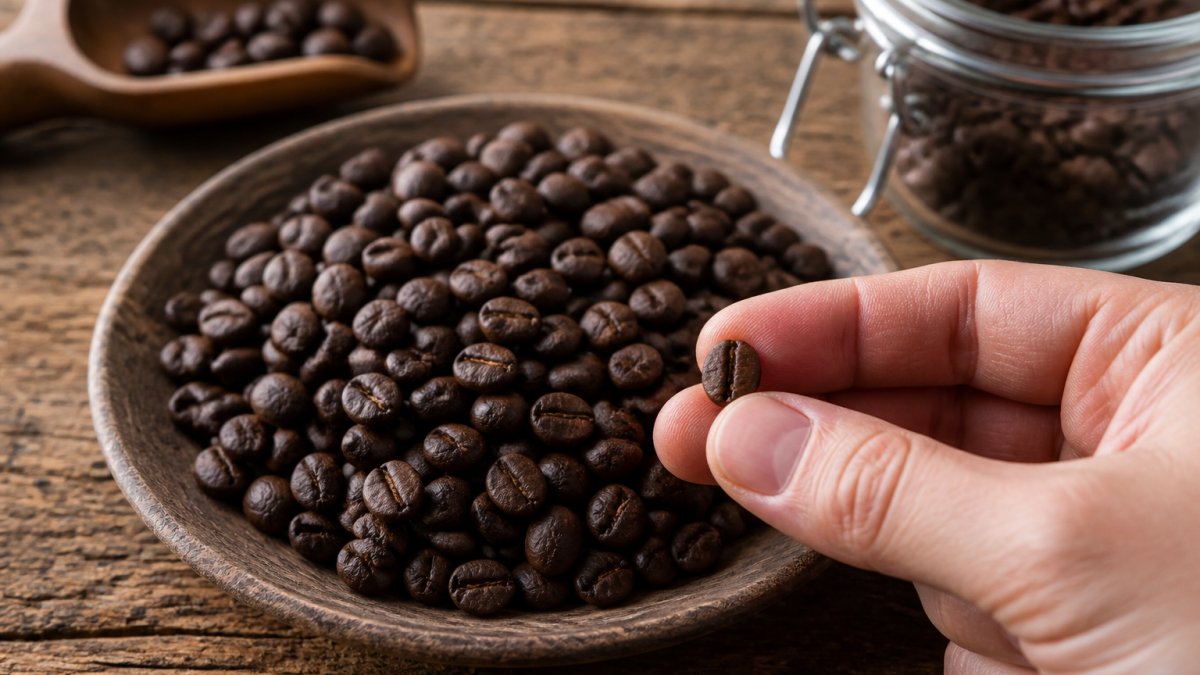
Visual Comparison: Fresh vs. Stale Beans
This is the check most text guides leave out, and it's the fastest one you can run.
Fresh beans (days 3-14):
- Matte or slightly satin surface
- Visible center crack running down the bean
- Uniform color across the batch
- Dry to the touch, no residue on fingers
Stale beans (weeks 4+):
- Dull, dusty, or chalky surface
- Center crack less defined or filled in
- Uneven color, sometimes with pale patches
- Dry and lightweight; beans feel hollow
Rancid beans:
- Visible oil sheen, especially on darker roasts
- Beans stick together slightly or leave a greasy film
- Dark, almost wet-looking patches
- Smell confirms it before you brew
What the Bag Date Actually Tells You
Two dates show up on coffee packaging, and they mean different things:
- Roast date, when the beans were roasted. This is the one that matters.
- Best by date, often set 9 to 12 months out, reflecting food-safety minimums, not flavor peak. A bag with a best-by date a year away tells you almost nothing about freshness.
Stale vs. Roasted-Too-Recently: Two Opposite Problems
Fresh-roasted beans need time to degas; brew them too soon and they taste sharp, gassy, and uneven. Rest beans a few days after roasting, then drink them within their freshness peak. Too fresh and too old both ruin a cup, just differently.
How to Keep Coffee Fresh Longer at Home
The best way to keep coffee fresh longer is to limit air, light, and heat at every step. Buy whole beans, store them right, and grind just before brewing.
A simple routine:
- Buy beans with a clear roast date, not a "best by" stamp
- Move beans to an airtight container
- Store in a cool, dark cabinet, never the fridge
- Grind right before each brew
- Buy smaller bags more often
How Your Brewing Method Changes What You Taste
Your brewing method can hide staleness or expose it, a detail most guides skip. Pour-over and drip show off aroma and acidity, so stale beans fall flat fast. Espresso is less forgiving differently: old beans lose crema and pull thin, sour shots. Cold brew masks a lot, since the slow steep covers faded notes, which is why old beans sneak through in iced drinks.
Conclusion
Stale coffee is easy to miss until your cup tastes wrong. Check the smell, the surface, and the bloom, and you'll know within minutes. Crazy Coffee Co roasts high-potency, single-origin Colombian beans in small batches, so every bag reaches you near its freshness peak. Our Insomnia Blend is built for people who refuse to settle for flat, bitter coffee.
Frequently Asked Questions
How do you tell if coffee beans have lost their flavor?
Start with your nose. Fresh beans release a strong, sweet aroma when you open the bag; stale coffee beans smell flat, papery, or faintly like cardboard. Next, look at the surface: fresh beans have a slight sheen from natural oils, while old beans look dry and matte. Finally, run the bloom test. Pour hot water over a spoonful of ground beans. Fresh coffee puffs up and bubbles as carbon dioxide escapes. If nothing happens, the beans have degassed completely and lost most of their flavor.
Does the roast date matter for coffee freshness?
It matters more than almost anything else on the bag. Coffee bean shelf life runs roughly 2 to 4 weeks after the roast date for peak flavor, though beans stay drinkable for 2 to 3 months if stored well. A 'best by' date tells you nothing about when the beans were actually roasted. Always look for a printed roast date and buy beans roasted within the last two weeks. If a bag has no roast date at all, treat that as a warning sign.
Can stale coffee beans make you sick?
Stale coffee beans themselves won't make you sick. The real risk is mold. If beans were stored somewhere damp, they can grow mold, which produces musty, earthy off-flavors and potential mycotoxins. Signs of rancid coffee beans or moldy beans include a damp basement smell, visible fuzz, or clumping. If you notice any of these, throw the bag out. Dry, properly stored beans that are simply old are safe to drink, just unpleasant.
How should you store coffee beans to prevent staleness?
Keep beans in an airtight, opaque container stored at room temperature, away from the stove, oven, and direct sunlight. The four enemies of freshness are oxygen, moisture, heat, and light. Skip the fridge for daily use because condensation forms every time you open the container. For longer storage, freeze beans in a vacuum-sealed bag and grind them straight from frozen. Buy in smaller quantities you'll finish within two to three weeks rather than bulk bags that sit for months.