 ultimate-guide
Caffeine Content in High Potency Coffee: 2026 Guide
Table of Contents
- What Makes High Potency Coffee Different
- Caffeine Content Chart: Brewing Methods Compared
- Caffeine Safety Limits: What You Need to Know
- Benefits of High Potency Coffee for Focus and Performance
- How to Measure Caffeine Intake at Home
- Decaffeination and Residual Caffeine
- Conclusion
- Frequently Asked Questions
Last Updated: September 14, 2026
What Makes High Potency Coffee Different
High potency coffee is a coffee category engineered and selected for elevated caffeine concentration per serving, typically delivered through specific bean varieties, growing conditions, and roast decisions rather than through added caffeine. At Crazy Coffee Co, we source single-origin Colombian beans, crafted to fuel ambitious mornings and eliminate the bitterness and staleness of ordinary brews.
The difference starts before roasting. It's about what's in the bean when it arrives at the roaster.
Bean Origin and Altitude
Altitude is the most underrated variable in caffeine content. Beans grown at higher elevations develop more slowly, which concentrates caffeine as a natural pesticide. A Colombian bean grown above 1,500 meters typically carries more caffeine by weight than a lowland Robusta blend sold as "strong."
Most guides skip this entirely. They treat caffeine as a fixed number per cup when it's actually a function of where the bean grew.
USDA nutrient database for coffee
Roast Level and Caffeine
Roast level does not meaningfully change caffeine content by weight. This is the most persistent myth in coffee.
What roasting changes is density. Dark roasts lose more mass during roasting, so a scoop of dark roast contains fewer beans by weight than the same scoop of light roast. Measure by weight, not volume, and the caffeine difference between light and dark roast nearly disappears.
Caffeine Content Chart: Brewing Methods Compared
Caffeine content in high potency coffee varies more by brewing method than by bean selection alone. Extraction time, water temperature, and grind size all determine how much caffeine actually ends up in your cup.
Here's how the major methods compare:
| Brewing Method | Typical Caffeine Range | Extraction Time | Grind Size |
|---|---|---|---|
| Espresso shot | 60-80 mg | 25-30 seconds | Fine |
| Ristretto | 40-60 mg | 15-20 seconds | Extra fine |
| Drip coffee | 95-165 mg | 4-5 minutes | Medium |
| Cold brew | 150-200 mg | 12-24 hours | Coarse |
| Pour-over | 95-130 mg | 3-4 minutes | Medium-fine |
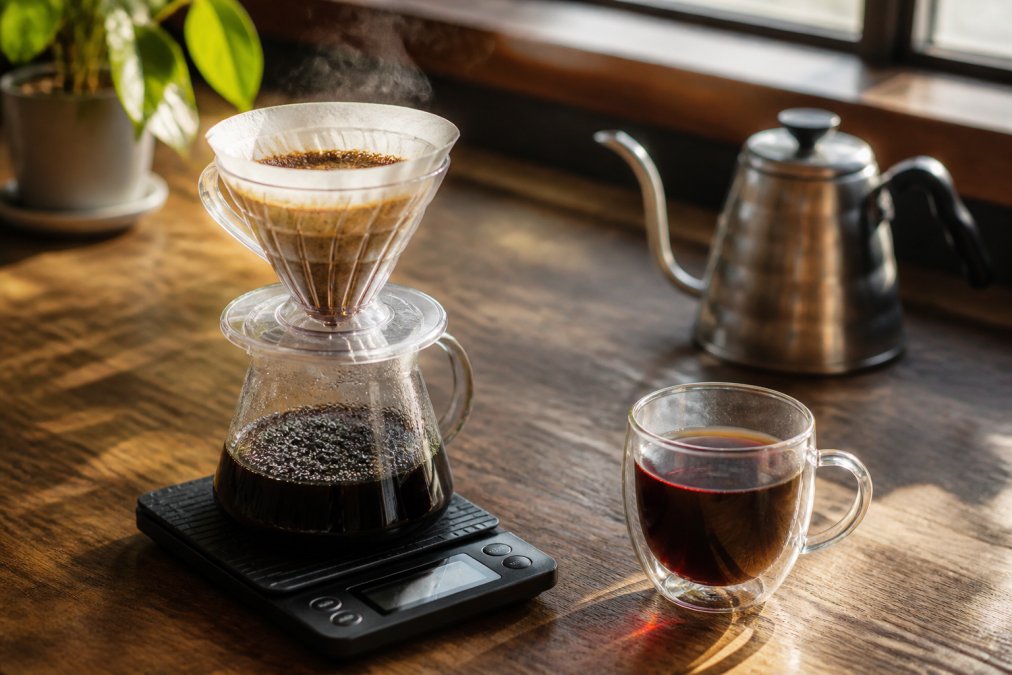
Cold brew wins on total caffeine because of contact time, not concentration. Espresso wins on concentration per ounce. A ristretto pulls less caffeine than a standard shot because less water passes through the puck.
Caffeine Safety Limits: What You Need to Know
The FDA generally recognizes 400 milligrams per day as safe for most healthy adults, roughly four standard 8-ounce cups of drip coffee. That number is a population-level ceiling, not a personal prescription, and it assumes you are not stacking caffeine from other sources.
Here is where high potency coffee changes the math. A single 12-ounce cold brew made from high-altitude beans can land between 200 and 300 milligrams. Two of those and you are already at or past the general limit before lunch. The FDA has not set a separate threshold for "high potency" products, so the 400 mg figure is the only reference point regulators publish.
How Your Body Actually Clears Caffeine
Caffeine has a half-life of roughly three to seven hours in healthy adults, with about five hours being the common midpoint. The practical consequence: if you drink 200 milligrams at 3 PM, roughly 100 milligrams are still circulating at 8 PM, and about 50 milligrams at 1 AM. That residual dose is enough to fragment sleep architecture even when you feel tired enough to fall asleep.
The enzyme primarily responsible for clearing caffeine is CYP1A2, produced in the liver. Genetic variation in CYP1A2 activity is one reason two people can drink the same cup and report completely different effects. So-called "fast metabolizers" clear caffeine in as little as two to three hours; "slow metabolizers" can take eight hours or more. This is the single biggest reason a fixed daily limit does not fit everyone.
Other variables that slow clearance:
- Oral contraceptives and pregnancy. Clearance can slow substantially, which is why the FDA and the American College of Obstetricians and Gynecologists advise limiting intake during pregnancy.
- Liver conditions. Reduced hepatic function extends half-life.
- Certain medications. Fluvoxamine, ciprofloxacin, and some asthma drugs inhibit CYP1A2 and can amplify caffeine's effects.
- Grapefruit and cruciferous vegetables. These interact with CYP enzymes in ways that can modestly shift clearance speed.
Signs You Have Crossed Your Personal Limit
Watch for these signals, which tend to appear in this order as dose climbs:
- Jitteriness or hand tremors
- Racing heart or palpitations
- Difficulty falling asleep despite exhaustion
- Anxiety spikes, especially in the late afternoon
- Digestive upset or acid reflux
- Headache on the back end as the dose wears off
If you hit two or more of these on a regular basis, your effective ceiling is lower than 400 milligrams, regardless of what the guideline says.
The Dose-Stacking Problem
Most people underestimate total daily caffeine because they count cups, not milligrams. A typical day might look like this:
| Source | Typical Caffeine |
|---|---|
| 16 oz drip coffee | 190-260 mg |
| 12 oz cold brew | 150-300 mg |
| Double espresso | 120-160 mg |
| 12 oz energy drink | 110-160 mg |
| 8 oz black tea | 40-60 mg |
| 1 oz dark chocolate | 20-25 mg |
Add a cold brew, a double shot, and an afternoon tea and you are already past 400 milligrams without drinking anything that feels extreme.
FDA guidance on caffeine and safe consumption
Benefits of High Potency Coffee for Focus and Performance
High potency coffee delivers a faster, more sustained focus window than standard commercial coffee because the caffeine dose per serving is higher and more consistent. For people doing deep work, that consistency matters more than the peak.
The mechanism is straightforward. Caffeine blocks adenosine receptors in the brain, delaying the onset of drowsiness. At higher doses, the effect lasts longer, which is why a properly dosed high-potency cup can carry you through a three-hour focus block without a mid-morning crash.
What most people get wrong is chasing the peak. The goal isn't maximum stimulation. It's a steady plateau that matches your work session.
The benefits fade fast if you build tolerance. Cycling down one day per week keeps sensitivity intact.
How to Measure Caffeine Intake at Home
Most guides tell you to "estimate" your caffeine and move on. That is a missed opportunity, because there are real, accessible ways to get closer to an actual number at home, and a few methods that sound scientific but do not work. Here is what actually moves the needle.
The Baseline System (Do This First)
Before any testing gadget, get your inputs consistent. Caffeine per cup is a function of dose, grind, method, and time, change any one and your number moves.
- Weigh your beans. Use 18 grams per 6-ounce cup as a starting baseline for drip, and 18-20 grams in / 36-40 grams out for a double espresso.
- Lock your method. Pick one brewing method for a full week. Espresso, drip, and cold brew extract differently from the same beans.
- Log dose, method, and time. Note when you drink each cup and how you feel at two, four, and six hours.
- Cross-reference published ranges. Bagged coffee rarely lists caffeine content, so use method-based ranges (see the chart above) as your working estimate.
- Adjust weekly. Cut back if sleep quality drops; hold steady if focus is consistent through your work block.
Home Testing Methods That Actually Work
UV-Vis spectrophotometry kits. A small but growing number of consumer-grade caffeine test kits use a colorimetric reaction and a smartphone camera to estimate caffeine concentration in a liquid sample. They are not lab-grade, but they can distinguish a 100 mg cup from a 200 mg cup with reasonable reliability. Expect to spend roughly the cost of a mid-range kitchen scale to a few bags of specialty beans, depending on the kit.
Chlorophyll fluorescence and DIY chemistry. Some home-chemistry enthusiasts use iodine-based titration or chlorophyll fluorescence assays to estimate caffeine. These require careful measurement and produce rough ranges, not exact milligrams. Worth it only if you enjoy the process.
Caffeine half-life tracking. This is the most useful "test" for most people. Log your dose and time, then note when you feel the effect fade. If a 150 mg cup wears off in three hours, you are likely a fast metabolizer. If it lingers past six, you are likely slow. That single data point tells you more about your personal ceiling than any single lab number.
Methods That Do Not Measure Caffeine
Refractometers. A refractometer measures total dissolved solids (TDS), which includes acids, sugars, lipids, and caffeine. It cannot isolate caffeine. A high-TDS espresso can have less caffeine than a lower-TDS drip coffee. Do not use TDS as a caffeine proxy.
"Strength" labels. Terms like "bold," "strong," and "extra dark" are marketing, not measurements. They describe flavor, not milligrams.
Caffeine content on bags. Most roasters do not publish it because it varies by crop, roast, and brew. When it is listed, treat it as a range, not a guarantee.
A Practical Weekly Protocol
If you want a real number instead of a guess, run this for seven days:
- Weigh every dose. No scoops.
- Brew with one method only.
- Log dose in grams, method, time of day, and subjective effect at +2h, +4h, +6h.
- At the end of the week, average your daily milligrams using published method ranges.
- Compare that average against your sleep quality and afternoon energy.
National Institutes of Health information on caffeine
Decaffeination and Residual Caffeine
Decaffeinated coffee is not caffeine-free. Most decaf retains 2-5% of the original caffeine content, which means a "decaf" cup can still deliver 2-15 milligrams depending on the starting bean and process.
The three main decaffeination methods are:
- Swiss Water Process: Soaks green beans in caffeine-free water to draw out caffeine. No chemical solvents.
- CO2 Process: Uses pressurized carbon dioxide to extract caffeine. Preserves more flavor compounds.
- Solvent Process: Uses ethyl acetate or methylene chloride. Less common in specialty coffee.
If you're sensitive to caffeine, Swiss Water decaf is the safest choice because the process is the most thorough. If you're just cutting back, any decaf method will reduce your intake significantly.
Conclusion
Figuring out your actual caffeine intake from high potency coffee takes more than reading a label. It takes weighing your beans, tracking your brewing method, and paying attention to how your body responds over a full day.
At Crazy Coffee Co, our Insomnia Blend is built for people who want a high-potency, single-origin Colombian cup without the bitterness and staleness of mass-market coffee. Every bag is roasted to preserve the natural caffeine density of high-altitude beans, so what you measure is what you get.
If you're ready to stop guessing and start dialing in your morning, try Crazy Coffee Co. Weigh your dose, log your first week, and see the difference a properly sourced high-potency roast makes.
Frequently Asked Questions
Which coffee has the strongest caffeine?
High potency coffee typically refers to beans with higher caffeine concentration, often from specific origins or robusta varieties. Espresso shots deliver the most caffeine per ounce, around 63 mg per 1-ounce shot, while cold brew can reach 200 mg per 16 ounces. Single-origin Colombian beans, like those used in Crazy Coffee Co's Insomnia Blend, offer a balanced potency that supports sustained focus without the crash.
Is 600 mg of caffeine per day considered safe?
The FDA advises most adults limit caffeine to 400 mg daily, roughly four 8-ounce cups of coffee. 600 mg may be safe for some but can cause jitteriness, insomnia, and rapid heartbeat. Individual tolerance varies based on metabolism, medications, and sensitivity. If you're consuming high potency coffee, track your total intake carefully and adjust based on how your body responds.
Does a darker roast mean more caffeine than high-potency light roasts?
No, roast level does not significantly change caffeine content. A common myth suggests darker roasts have more caffeine, but caffeine is stable during roasting. What changes is bean density: light roasts weigh more per scoop, so you might get slightly more caffeine by volume. High potency coffee focuses on bean origin and brewing method, not roast color, to deliver consistent caffeine levels.
How does single-origin coffee affect caffeine potency?
Single-origin coffee comes from one region, which means consistent flavor and caffeine levels. Altitude plays a role: beans grown at higher elevations, like Colombian highlands, often develop more complex flavors. Processing methods and bean variety can influence potency.