 ultimate-guide
How to Choose High Quality Coffee Beans in 2026
Table of Contents
- Why Coffee Roast Date Importance Decides Everything
- Single Origin vs Blend Coffee: Which Wins for Quality?
- Visual Inspection: Spotting Defects Before You Buy
- How to Keep Coffee Fresh Longer After Purchase
- Grading Systems and Certifications That Signal Quality
- Troubleshooting Stale Beans and Reviving Flavor
- Frequently Asked Questions
Last Updated: September 25, 2026
Why Coffee Roast Date Importance Decides Everything
According to Specialty Coffee Association's freshness guidance, roasted coffee begins losing its best flavors within days of hitting the bag, which is why knowing how to choose high quality coffee beans starts with one number: the roast date. At Crazy Coffee Co, we've watched too many people buy "premium" bags that were roasted months ago and wonder why the brew tastes flat.
The Degassing Window
Freshly roasted beans release carbon dioxide for several days, a process called degassing. Brew too soon and the escaping gas disrupts extraction, producing uneven, sour cups. Wait too long and oxidation takes over, flattening the flavor. Most roasters suggest a sweet spot of roughly 4 to 14 days post-roast for peak flavor.
Reading Labels Like a Pro
Check for a printed roast date, not just a "best by" stamp. Look for the roaster's location and roast level. If a bag lists only a vague freshness claim with no date, treat that as a warning sign.
Single Origin vs Blend Coffee: Which Wins for Quality?
Single origin coffee comes from one region, farm, or lot, while blends combine beans from multiple sources. Neither is automatically better, but they serve different purposes, and this is the single origin vs blend coffee question that trips up most buyers.
| Factor | Single Origin | Blend |
|---|---|---|
| Flavor | Distinct, place-specific | Balanced, consistent |
| Best for | Exploring tasting notes | Everyday reliability |
| Consistency | Varies by harvest | Stable year to year |
| Transparency | Traceable to a farm | Often less specific |
When Blends Make Sense
Blends shine for espresso, where a roaster needs to balance sweetness, body, and bitterness across a repeatable shot. If you drink the same cup daily and want it to taste identical each time, a well-built blend delivers that. If you want to taste altitude, varietal, and processing method in the cup, go single origin.
Visual Inspection: Spotting Defects Before You Buy
Quality shows up before you brew. A bean uniformity check, where you look for consistent size and color, reveals whether the roast was handled carefully. Uneven color usually means an uneven roast, which produces inconsistent extraction.
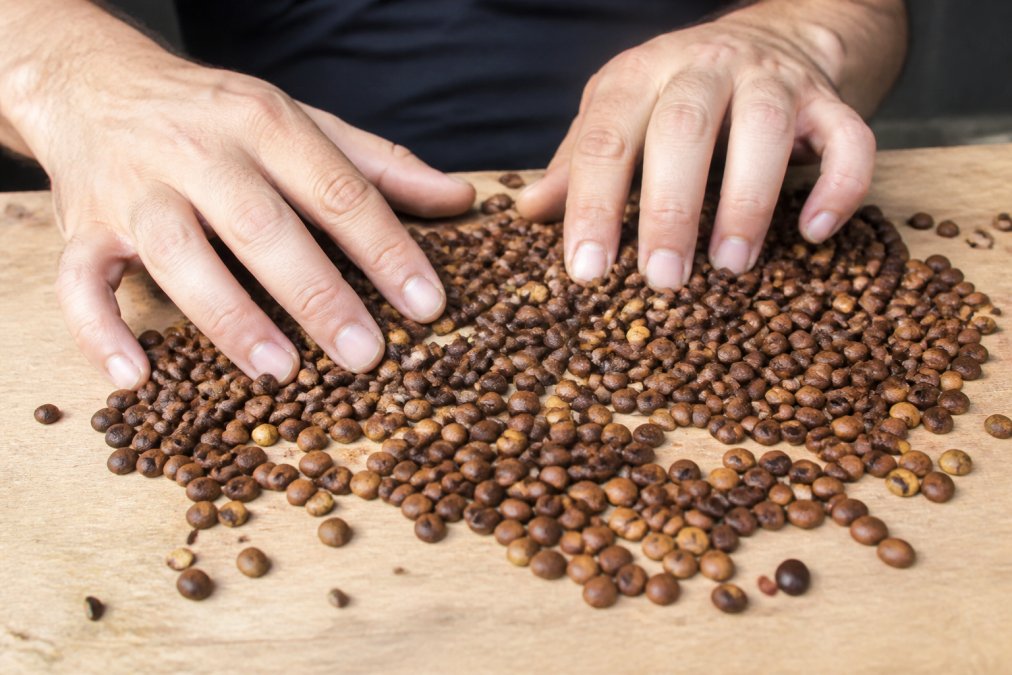
Primary vs. Secondary Defects
Primary defects are the serious ones, full black beans, full sour beans, severe insect damage, and foreign material. Secondary defects are lesser issues, slight insect damage, partial black or sour beans, broken or chipped beans, and shells. The distinction matters because a single primary defect counts far more heavily against a sample than a single secondary one. A bag with a few chipped beans can still be excellent; a bag with multiple full black beans is a sorting failure.
- Defects: black, sour-smelling, or broken beans signal poor sorting. Count them, a scatter of one or two chips is normal, a cluster of full blacks is not.
- Color: a uniform shade across the batch points to a controlled roast. Patchy light-and-dark mottling suggests an uneven roast profile.
- Aroma: fresh beans smell sweet and complex, not flat or papery. If the bag smells like cardboard or hay, oxidation has already started.
- Surface: light sheen is fine, but heavy oil on a light roast can mean staleness or a roast pushed too far.
- Size: wildly mixed bean sizes mean the lot wasn't screened, which usually tracks with uneven extraction.
The Bloom Test: Verify Quality at Home
- Grind a small scoop of beans medium-fine, the way you would for a drip brew.
- Put the grounds in a mug and pour roughly twice their volume of water just off the boil.
- Watch for 30 to 45 seconds.
What you see tells you what you bought:
- A vigorous, domed bloom with lots of bubbling and a thick crust means the beans are still releasing carbon dioxide, they're fresh.
- A weak, flat bloom with little bubbling means most of the gas is already gone. The beans are past their peak, and no grind adjustment will bring the aromatics back.
- A bloom that smells sweet and bready is a good sign. A bloom that smells like wet paper or nothing at all is the clearest stale-bean signal you can get without a lab.
Between a defect scan and a bloom test, you can grade a bag yourself in under five minutes. That's more verification than any label on the shelf provides.
How to Keep Coffee Fresh Longer After Purchase
Learning how to keep coffee fresh longer comes down to controlling four enemies: oxygen, moisture, heat, and light. Store whole bean coffee in an airtight container away from the stove, and keep it out of the fridge, where moisture content swings and odors migrate into the beans.
Storage Containers That Actually Work
An opaque, airtight canister with a one-way valve is your best bet. Clear glass jars on a sunny counter look nice but let light degrade the oils. Skip the freezer for daily-use beans; only freeze if you're storing a sealed bag long-term and won't open it repeatedly.
Grading Systems and Certifications That Signal Quality
Specialty coffee is graded on a 100-point scale, and beans scoring 80 or above earn the specialty label. That one sentence is where most beginner guides stop. The mechanics behind the score are what separate a pro-level buyer from someone reading a marketing claim.
How the 100-Point Scale Actually Works
The scale is administered by licensed Q Graders, trained cuppers who pass a standardized exam and must recalibrate periodically to keep their license. A Q Grader evaluates a sample in two stages: first a green coffee defect count, then a cupping evaluation of the roasted coffee.
The score bands are worth memorizing:
- 90-100: Outstanding. Rare, expensive, and usually sold in small lots.
- 85-89.99: Excellent. The top tier of most specialty roasters' offerings.
- 80-84.99: Very good. This is the bulk of what's sold as specialty coffee.
- Below 80: Not specialty. This is commodity-grade coffee, regardless of what the bag says.
Reading Certifications as a Quality Proxy
Certifications add another layer, and each one answers a different question:
- Fair Trade verifies minimum pricing and working conditions for growers. It says nothing about cup quality.
- Direct Trade is not a single certifying body, it's a term roasters use to describe buying directly from producers, often at above-market prices. Because it isn't standardized, its value depends entirely on the roaster's transparency.
- Organic speaks to growing practices, no prohibited synthetic inputs, not to flavor or freshness.
- Rainforest Alliance focuses on environmental and social criteria across the supply chain.
Troubleshooting Stale Beans and Reviving Flavor
Stale beans can't be fully revived, but you can salvage a flat bag. First, confirm the problem: if the aroma is gone and the cup tastes papery, oxidation has set in. Adjust your grind size finer and brew slightly hotter to coax out what's left, and use the beans in a cold brew or milk drink where subtle flavors matter less.
Frequently Asked Questions
How can you tell if coffee beans are high quality?
Check the roast date first. High quality coffee beans have a roast date within two to four weeks of purchase. Look for uniform color and size, a strong aroma, and no oily sheen on lighter roasts. Single origin beans with clear tasting notes and a known altitude above 1,200 meters often signal higher quality. Avoid beans with no roast date or those sitting in bulk bins exposed to air.
Does the roast date matter when choosing coffee beans?
Yes, roast date is the single most important freshness indicator. Coffee peaks between four and fourteen days after roasting, then declines. Beans roasted more than six weeks ago taste flat and stale. Unlike expiration dates, roast dates tell you exactly when the clock started. Always choose bags with a printed roast date, not just a best-by date.
How do single-origin beans differ from blends in terms of quality?
Single origin beans come from one region, farm, or lot, so they showcase distinct flavors tied to altitude, soil, and processing. Blends combine beans from multiple sources for consistency or balance. Neither is inherently better. Single origin suits drinkers who want to taste specific terroir and varietal character. Blends work well for espresso or when you want a repeatable flavor profile year-round.
What are the visual signs of low-quality coffee beans?
Low-quality beans show uneven color, cracked surfaces, black or sour-smelling defects, and excessive oil on light roasts. Look for broken pieces, foreign matter, and beans of wildly different sizes in the same bag. A dull, matte appearance with no aroma often means old stock. High-quality beans look uniform, smell sweet or fruity, and feel dense when you pick them up.
How long do coffee beans stay fresh after opening?
Whole bean coffee stays at peak flavor for about two weeks after opening if stored in an airtight container away from light, heat, and moisture. After that, oxidation gradually dulls the aroma and introduces bitterness. For longer storage, freeze beans in sealed portions and grind straight from frozen. Never store beans in the fridge, where moisture and odors ruin them fast.
What is the 15-15-15 coffee rule?
The 15-15-15 rule is a brewing guideline, not a bean selection rule. It suggests using a 15:1 water-to-coffee ratio, a 15-second bloom, and a 15-minute rest before drinking. While it helps with extraction, it does not tell you if your beans are fresh. For bean quality, focus on roast date, origin透明度, and storage instead.