 how-to
How to Keep Coffee Fresh at Home: A Step-by-Step Guide
Quick Summary
To keep coffee fresh at home, store it in an airtight container in a cool, dark, dry place away from heat, and keep it sealed between uses. Buy beans in amounts you can finish within a few weeks, and grind only what you need right before brewing.
- Oxygen, moisture, heat, and light break down the oils that give coffee its taste.
- Opened ground coffee holds peak flavor for about 5 to 10 days.
- Press air out of the bag and fold and clip it shut, or use an opaque airtight canister.
- Keep coffee away from the stove, oven, dishwasher, and windowsills.
- Freeze coffee in small airtight portions, and thaw each one sealed before opening.
Table of Contents
- What Actually Makes Coffee Go Stale
- Step 1: Choose the Right Container and Keep Coffee in Its Original Bag
- Step 2: Pick a Cool, Dark, Dry Spot Away from Heat
- How to Keep Ground Coffee Fresh After Opening
- How to Keep Ground Coffee Fresh for Months
- Can You Freeze Ground Coffee to Keep It Fresh?
- Should You Store Coffee Beans in the Fridge or Freezer?
- Your Freshness Routine Starts with Your Next Bag
- Frequently Asked Questions
What Actually Makes Coffee Go Stale
Coffee starts losing its best flavor soon after roasting, so knowing how to keep coffee fresh matters from the start. The main enemies are oxygen, moisture, heat, and light. Each one breaks down the oils and aromatics that give coffee its taste, so the cup ends up flat or bitter.
Freshly roasted beans also release carbon dioxide for days after roasting. This process is called degassing. Some people think that gas is harmful, but it actually protects the beans from oxygen in the early days, which is why a bag with a one-way valve is so useful.
Ground coffee goes stale much faster than whole beans. Grinding breaks open thousands of tiny surfaces that touch the air. That means more oxidation, faster loss of aroma, and a shorter window for good flavor.
Watch out: buying pre-ground coffee and leaving it in the bag for weeks is the most common way people end up with stale coffee. Signs of stale coffee beans can help you spot the early warning signs.
Step 1: Choose the Right Container and Keep Coffee in Its Original Bag
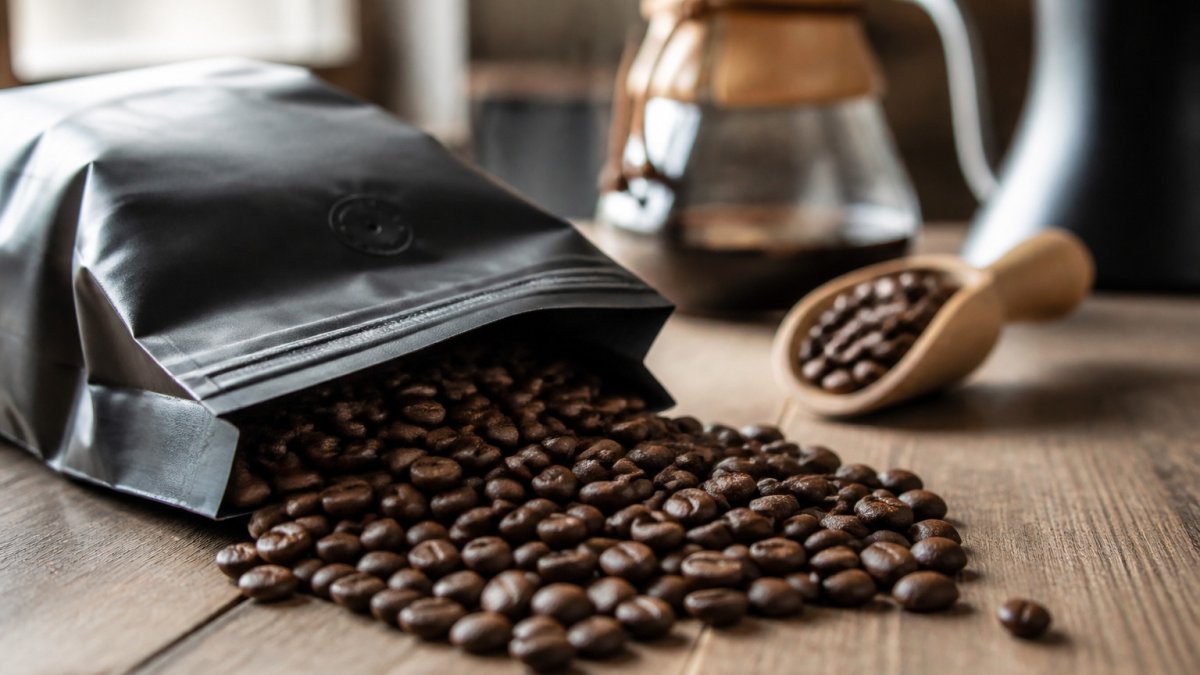
Start with the bag your coffee came in. Many specialty bags are built to protect beans, with a sealed layer and a one-way valve. Keeping beans in that bag is often the simplest way to protect them.
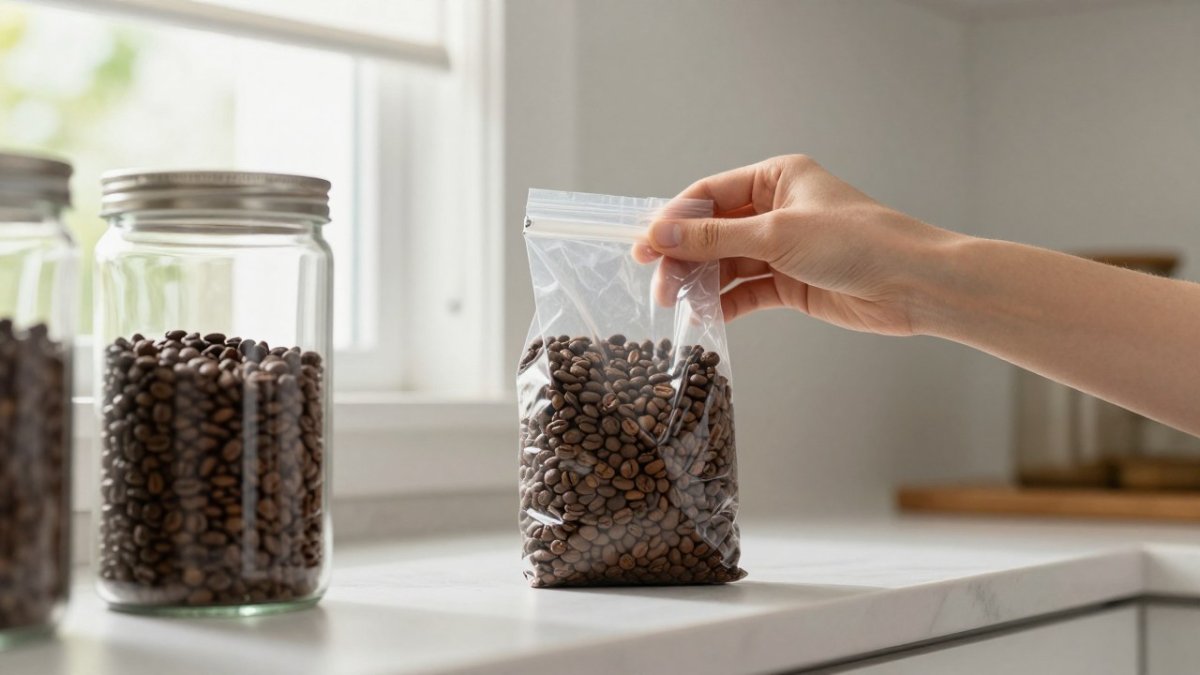
Once you open the bag, press out as much air as you can before you reseal it. Then store it in an airtight container if you want extra protection.
Good container choices include:
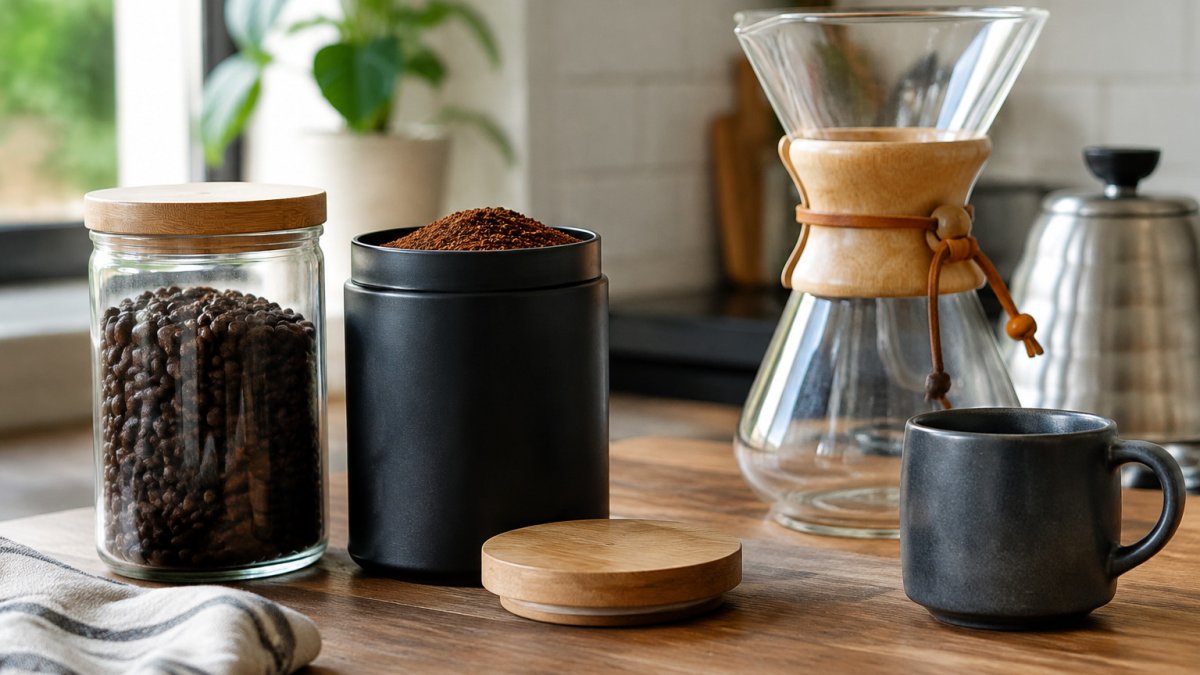
- An opaque airtight canister with a rubber seal
- A ceramic or stainless steel canister with a tight-fitting lid
- The original bag, folded over and clipped shut
Avoid clear glass jars on a sunny counter. Light speeds up flavor loss.
Using the Bag's One-Way Valve
The one-way valve lets carbon dioxide escape from the bag without letting oxygen in. This is why you should keep the valve facing up and the bag sealed.
Do not squeeze the bag to force air out. That can crack the seal and let in oxygen. Instead, press gently from the bottom, then fold and clip the top.
Step 2: Pick a Cool, Dark, Dry Spot Away from Heat
Storage location matters as much as the container. Choose a spot that stays cool, dark, and dry all day. A pantry or lower kitchen cabinet works well for most homes.
Keep coffee away from:
- The stove, oven, and dishwasher, which create heat
- Windowsills and countertops in direct sunlight
- Humid areas like above a sink or near a dishwasher vent
A common mistake is storing coffee right next to the coffee maker. The warmth from the machine can speed up staleness over time.
!Hands placing a sealed bag of whole coffee beans into an airtight canister on a pantry shelf in a bright, modern kitchen
How to Keep Ground Coffee Fresh After Opening
Ground coffee is the most perishable form you can keep at home. Grinding exposes far more surface area to oxygen, so the aromatic oils that carry flavor begin degrading within hours rather than weeks. Most practitioners find that opened ground coffee holds peak flavor for about 5 to 10 days and is noticeably flat by three to four weeks, even in good packaging. That timeline is shorter than most people assume, which is why the habits below matter more than the container alone.
Start by matching your purchase size to your drinking pace. Choose the bag size that fits your drinking pace so you can finish it while it is still fresh.
Daily habits that preserve ground coffee:
- Scoop out only what you will brew in the next day or two, then reseal immediately. Leaving the lid off while you set up the brewer exposes the whole batch to room air.
- Move grounds out of the original bag and into an opaque airtight canister with a rubber gasket once the bag is open. Folded-and-clipped bags let air in every time you reopen them.
- Keep the canister in a lower cabinet away from the stove, oven, and dishwasher. Warm air above 70°F accelerates staling, and a cabinet next to the oven can run noticeably warmer during cooking.
- Do not store the scoop inside the canister. A damp scoop introduces moisture, and moisture is the fastest route to clumping and off flavors.
- Avoid transferring grounds to a clear glass jar on an open shelf. Light breaks down the same oils oxygen does, and clear containers offer no protection.
Watch out: leaving a bag of pre-ground coffee open on the counter between brews is the single most common way households end up with flat coffee within a week.
If you drink ground coffee slowly, split the bag the day you open it. Keep a one-week portion in your counter canister and freeze the rest in small, airtight portions using the method in the freezing section below. This keeps the working supply close to peak while the reserve stays protected.
For households with limited cupboard space or warm kitchens, a sealed canister in the coolest interior cabinet is usually the best available option. Avoid the top of the fridge, which cycles through warmth every time the compressor runs, and avoid any shelf above a sink or dishwasher vent where humidity collects.
The article's advice on ground coffee shelf life and handling comes down to a few key figures and habits:
| Stage | Guideline | Note |
|---|---|---|
| Peak flavor after opening | About 5 to 10 days | Ground coffee loses flavor fast |
| Noticeably flat | By three to four weeks | Even in good packaging |
| Ideal storage temperature | Warm air above 70°F speeds staling | Keep cool and dark |
| Freezer portion size | 1 to 2 ounces per portion | Enough for one or two days |
| Freezer life | Two to three months | With proper packaging |
| Thaw time | About 30 to 60 minutes | Thaw sealed, before opening |
How to Keep Ground Coffee Fresh for Months
Ground coffee does not stay fresh for months at room temperature. If you need to store a larger amount, freezing is usually the best option, which is covered in the next section.
For shorter storage, follow the same rules as above. Use an airtight container, store it in a cool dark place, and keep it dry. Expect the flavor to fade over several weeks.
Can You Freeze Ground Coffee to Keep It Fresh?
Yes, freezing can extend ground coffee well beyond its countertop window, but the method matters more than the freezer setting. The goal is to limit three things: oxygen, moisture, and temperature swings. Handled well, frozen ground coffee can stay drinkable for two to three months; handled poorly, it picks up freezer odors and condensation that ruin the cup.
Portion before you freeze. Divide the bag into amounts you will brew in one or two days, typically 1 to 2 ounces per portion for a single daily drinker. Small portions mean you thaw only what you need and never reopen the main supply.
Packaging that works:
- Use a vacuum-sealed bag if you have a sealer, or a heavy-duty freezer bag with as much air pressed out as possible.
- Double-bag for longer storage. A inner zip bag inside a second freezer bag adds a barrier against moisture and odors.
- Label each portion with the date and the coffee name. Frozen coffee all looks alike after a month.
- Freeze portions flat so they thaw quickly and evenly.
Thawing is where most mistakes happen. Take out one portion and let it come to room temperature inside its sealed bag before opening. Opening a cold bag in a warm kitchen causes condensation to form directly on the grounds, and that moisture accelerates staling. A small portion typically thaws in 30 to 60 minutes on the counter.
Do not refreeze coffee after thawing. Each freeze-thaw cycle draws moisture into the grounds and degrades the oils further. If you thaw a portion and do not finish it, keep it in an airtight container on the counter and use it within a few days rather than returning it to the freezer.
Watch out: freezing coffee in the original bag without pressing out air, then reopening it repeatedly, exposes the grounds to moisture every time and can make frozen coffee go stale faster than countertop storage.
A practical trade-off to know: freezing slows staling but does not stop it, and ground coffee loses aroma faster than whole beans regardless of storage method. If you regularly freeze coffee, buying whole beans and grinding just before brewing will give you a longer peak window than freezing pre-ground. Freezing is best treated as a way to protect a bulk purchase or a backup supply, not as a way to make ground coffee last indefinitely.
Should You Store Coffee Beans in the Fridge or Freezer?
Refrigeration is generally not recommended for coffee. Fridges are humid, and coffee can absorb odors from food. Each time you take coffee out, condensation can form.
Freezing whole beans can work better than refrigeration if you buy in bulk. Portion the beans into small airtight bags, press out the air, and freeze them. Grind the beans straight from the freezer just before brewing.
Watch out: storing coffee in the fridge in an open container is one of the fastest ways to pick up stale or off flavors.
Your Freshness Routine Starts with Your Next Bag
The best way to keep coffee fresh is to buy it fresh. Look for a roast date on the bag and choose beans roasted recently. Buy amounts you can finish in a few weeks.
Then build a simple routine:
- Store beans in their original valve bag or an airtight container
- Keep the container cool, dark, and dry
- Grind only what you need right before brewing
- Freeze extra portions if you buy in bulk
At Crazy Coffee Co, we offer single-origin Colombian coffee, including our Insomnia Blend. Explore our coffee selection to find a bag that fits your routine.
Frequently Asked Questions
What's the best way to keep your coffee fresh?
Keep coffee in an airtight container, away from heat, light, and moisture, ideally in a cool, dark pantry. Leave beans in the original valve bag if it reseals well, or move them to an opaque airtight canister. Buy in smaller quantities so the bag is used within a few weeks of opening, and grind just before brewing for the best flavor. Avoid storing coffee next to the stove, oven, or dishwasher, where temperature swings speed up staleness.
Can you freeze ground coffee to keep it fresh?
Yes, freezing is one of the most effective ways to extend the life of ground coffee if you won't use it within a few weeks. Divide it into small, single-use portions, seal each one in an airtight bag with as little air as possible, and freeze. Take out only what you need and brew it straight from frozen, since thawing and refreezing introduces condensation that dulls flavor. Use frozen portions within about one to three months for the best results.
Should you store coffee beans in the fridge or freezer?
The refrigerator is a poor choice for most households because it is humid and frequently opened, which exposes beans to moisture and odors. The freezer works better for long-term storage, provided beans are portioned into airtight containers and used without repeated thawing. For daily use, a cool pantry in an opaque airtight container is usually the simplest option, and it avoids the condensation problems that come with cold storage.
Is 2-year-old ground coffee still good?
Two-year-old ground coffee will be safe to drink if it was stored properly, but it will have lost nearly all of its aroma and flavor. Signs of staleness include a flat or cardboard-like smell, a dull color, and a brew that tastes hollow or bitter. For the best cup, buy coffee roasted within the last few weeks and use it within about a month of opening.