 how-to
How to Tell If Coffee Goes Bad After the Roast Date
Last Updated: November 1, 2026
Quick Summary
Coffee does not truly expire after the roast date, but it loses flavor steadily. Freshness depends on when the beans were roasted and how they are stored. Most beans start losing their best qualities within weeks of roasting, so the roast date matters more than the calendar date alone.
- Roasted coffee gives off gas for days after roasting, and flavor peaks in the first few weeks.
- Stale coffee tastes flat or cardboard-like, while mold, sour or rancid smells mean it is unsafe.
- Opened whole beans stay at best flavor for about 2 to 4 weeks.
- Oxygen, heat, light, and moisture speed up the decline, so store beans in an airtight, opaque container in a cool, dry cabinet.
Table of Contents
- Stale Versus Unsafe: What the Difference Actually Means
- How Long Coffee Beans Last After Roasting
- How to Read Roast Dates, Best-By Dates and Expiration Dates
- How to Tell If Coffee Beans Are Stale
- How to Store Coffee Beans to Keep Them Fresh
- Start Your Next Bag at Peak Freshness
- Frequently Asked Questions
Coffee does not truly expire after the roast date, but it does lose flavor steadily. Crazy Coffee Co sells single-origin Colombian coffee, so freshness depends on when the beans were roasted and how they are stored. Coffee starts losing its best qualities within weeks of roasting, which is why freshness matters more than the calendar date alone.
Most people assume the roast date is a safety warning. It is not. Your coffee will rarely make you sick just because it is older. What changes is taste and aroma, and that is the part worth caring about.
- Roasted coffee gives off gas (called degassing) for days after roasting
- Flavor peaks in the first few weeks for most beans
- Oxygen, heat, light, and moisture speed up the decline
Stale Versus Unsafe: What the Difference Actually Means
Stale coffee tastes flat, dull, or cardboard-like. Read the full signs of stale coffee beans to see how staleness differs from spoilage. It smells weak. Unsafe coffee is a different problem. Mold, a sour or rancid smell, or visible growth are signs to throw it out.
Stale coffee is disappointing. Unsafe coffee is a reason to toss the bag. Most of the time, the bag you are unhappy with is simply stale.
How Long Coffee Beans Last After Roasting
There is no single expiration clock that starts ticking the moment beans leave the roaster. Shelf life depends on the form of the coffee, whether the package has been opened, and how it is stored. The estimates below reflect common freshness windows most roasters and specialty coffee practitioners work with; treat them as practical ranges, not hard safety limits.
| Coffee type | Sealed, unopened | Opened | Notes |
|---|---|---|---|
| Whole beans | About 3 to 6 months for peak flavor; quality declines gradually after that | About 2 to 4 weeks at best flavor | Whole beans have less exposed surface area, so they hold aroma longer than grounds |
| Ground coffee | About 2 to 3 months for peak flavor | About 1 to 2 weeks | Grinding exposes far more surface area to oxygen |
| Instant coffee | Often 1 to 2 years when kept dry and sealed | Several months if kept tightly closed and dry | Instant coffee is far less sensitive to staling than roasted beans, but it clumps and loses aroma with moisture |
| Single-serve pods | Check the best-by date on the package; often several months | Not applicable once the pod is punctured |
A few caveats matter more than the exact numbers:
- Freshness estimates vary by roast level and packaging. Darker roasts tend to release carbon dioxide faster and can taste flat sooner, while lighter roasts often hold up a bit longer.
- Opened versus unopened is the biggest single variable. Once you break the seal, oxygen and humidity get in, and the clock speeds up dramatically. That is why a sealed bag from months ago can still taste decent while an opened bag from three weeks ago tastes tired.
- Ground coffee fades fastest. If you buy pre-ground, plan to finish it within a couple of weeks of opening for the best cup.
Whole beans keep their flavor longer than ground coffee because less surface area is exposed to air. If you grind only what you need each morning, you will taste the difference right away.
How to Read Roast Dates, Best-By Dates and Expiration Dates
A roast date tells you when the beans were roasted. It is the most useful date for freshness.
A best-by date is a manufacturer's guess at when quality may decline. An expiration date is a safety-related label that is rarely required on coffee in the United States. When you shop, look for the roast date first.
How to Tell If Coffee Beans Are Stale
Check these signs before you brew:
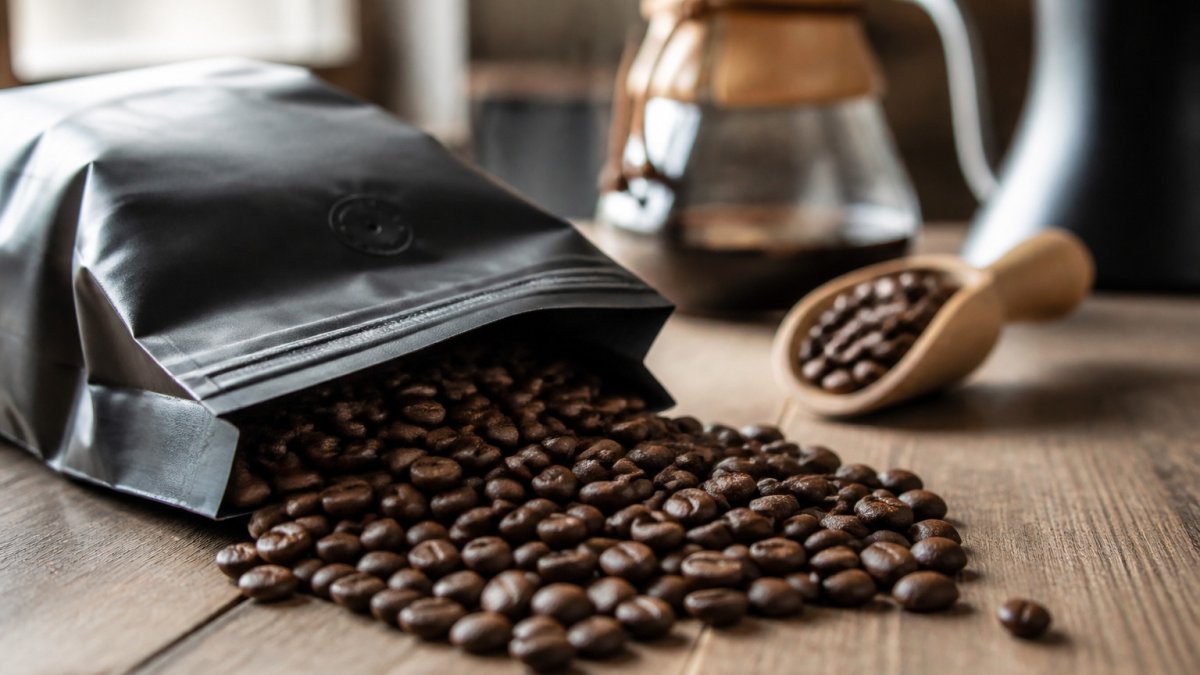
- Smell: Fresh coffee smells rich and fragrant. Stale coffee smells faint or flat.
- Look: Oily, dull beans may have lost some freshness.
- Taste: A brew that tastes thin, bitter, or lifeless is probably past its prime.
If you see mold, or the coffee smells sour, rancid, or musty, do not drink it.
How to Store Coffee Beans to Keep Them Fresh
The four enemies of fresh coffee are oxygen, heat, light, and moisture. Read the full guide to keeping coffee fresh longer for more detailed storage steps. Every storage decision is really a trade-off among those four, and the right choice depends on how fast you will drink the bag.
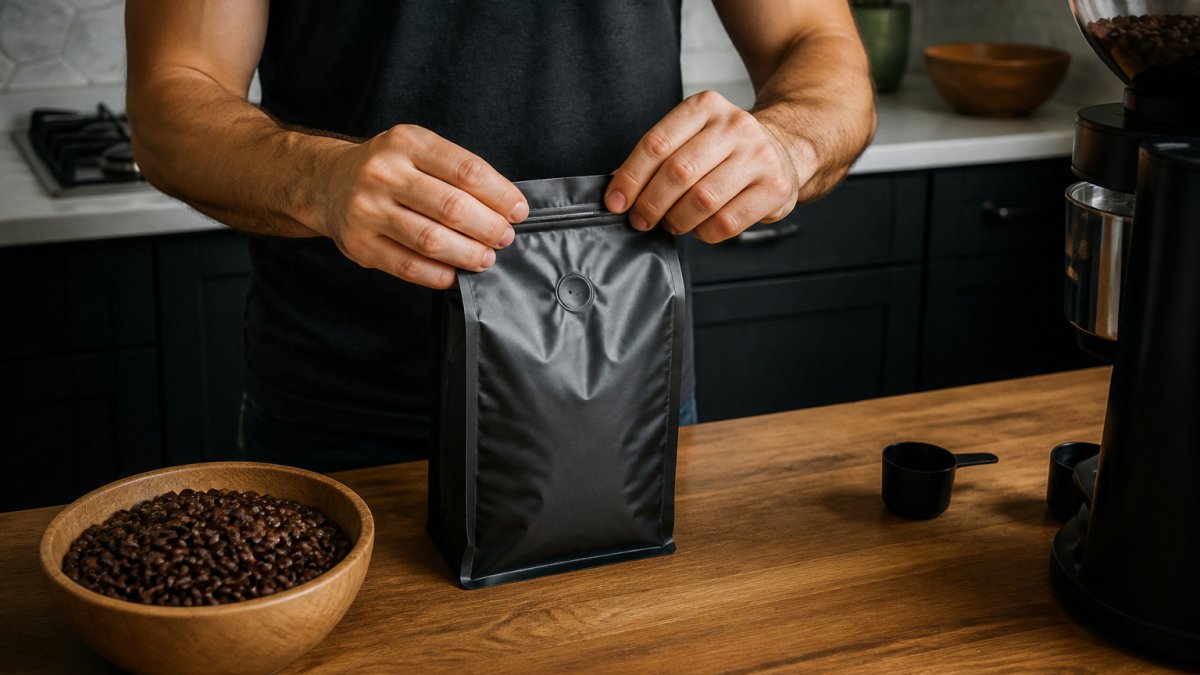
Everyday storage (the default): Keep beans in an airtight, opaque container in a cool, dry cabinet away from the stove, dishwasher, and sunny windows. A ceramic or stainless canister with a tight gasket works well. Clear glass jars look nice but let light in, so store them in a dark cabinet. Avoid the refrigerator for daily use: it is humid, and every time you pull the bag out, condensation forms on cold beans.
Freezing (for longer holds): Freezing is a legitimate option if you buy more than you can finish in a few weeks, but it has to be done right.
- Freeze in an airtight, moisture-barrier bag or vacuum-sealed portion, not the original paper bag.
- Squeeze out as much air as possible before sealing.
- Freeze in portions you will use in one go, so you thaw once rather than repeatedly.
- Let the sealed portion come fully to room temperature before opening it. Opening a cold bag lets humid room air hit cold beans and condense on them, which is the fastest way to ruin a frozen batch.
- Do not refreeze thawed beans. Repeated thawing cycles pull moisture in and out of the beans and degrade both texture and flavor.
Buying strategy: Match bag size to your drinking pace. A household that brews one pot a day will usually finish a 12 oz bag of whole beans within the window where flavor is at its best. Buying in bulk only pays off if you freeze the surplus properly.
Grind timing: Grind right before brewing. Pre-ground coffee exposes far more surface area to oxygen, so it stales much faster than whole beans no matter how well you store it.
Buy amounts you can finish within a few weeks, and store them with the same care you would give any fresh food. The payoff is in the cup.
Start Your Next Bag at Peak Freshness
Choose beans with a recent roast date, and you will taste the difference. Read the buyer's guide to fresh roasted coffee beans before you place your next order. Crazy Coffee Co offers high-potency, single-origin Colombian coffee. Shop freshly roasted Colombian beans and order your next bag now. Visit the Crazy Coffee Co website for current options and pricing.
Frequently Asked Questions
Does coffee expire after the roast date?
Coffee does not become unsafe to drink on a fixed date after roasting, but it does lose flavor over time. Most roasters recommend brewing whole beans within about two to four weeks of the roast date for the best flavor, and ground coffee within a few days to a week. Past that point the coffee tastes flat or stale, though it is generally still safe to drink if it was stored properly and shows no mold, moisture or off smells. The roast date is the most useful freshness marker, more so than a best-by date.
Can you drink coffee beans past their best-by date?
Yes, in most cases. A best-by date on coffee is a quality guideline set by the roaster, not a safety deadline. Beans past that date will usually taste dull, papery or muted, but they are not dangerous. Check the beans before brewing: if they smell sour, musty or rancid, or show any visible mold or moisture, discard them. Otherwise you can still brew them, though you may want to use more beans or add a different brew method to compensate for lost aroma.
How should you store coffee beans to keep them fresh?
Keep coffee in an airtight container, away from heat, light and moisture. A dark, cool pantry or cabinet works well. Avoid the refrigerator and freezer for daily use because condensation can damage the beans when they warm up. If you buy in bulk, freeze the portions you will not use within two weeks, divided into small airtight bags, and thaw only what you need. Keep the bag closed between uses and avoid grinding until just before brewing.
Does ground coffee expire faster than whole-bean coffee?
Yes. Grinding breaks the bean structure and exposes far more surface area to oxygen, so ground coffee loses its aromatic compounds much faster. Whole beans typically stay at peak flavor for two to four weeks after roasting, while ground coffee often fades within a few days to about a week. For the best cup, buy whole beans and grind them just before brewing, then store any leftover ground coffee in an airtight container and use it quickly.