 how-to
How Do You Identify Single-Origin Coffee Flavor Profiles?
Last Updated: November 4, 2026
Quick Summary
To identify single-origin coffee flavor profiles, taste the same bean twice under identical conditions and log what you notice before comparing. Control roast level, processing method, and brew method, since these variables can bury origin character. Then map acidity, sweetness, and body, and compare two origins side by side.
- Weigh beans on a scale; a 1:16 coffee-to-water ratio by weight is a common starting point.
- Slurping sprays coffee across your tongue and pushes aroma into your nose, where most taste comes from.
- A finish that disappears in under 10 seconds reads very differently from one still present after 30.
- Your palate calibrates by contrast, so two cups in one session tell you more than ten separate mornings.
- Start at the flavor wheel's broad center and work outward; a confident red berry beats a guessed raspberry.
Table of Contents
- Why Single-Origin Coffee Flavor Profiles Are Harder to Pin Down Than You Think
- How to Taste Coffee: A Repeatable Five-Step Method
- Using the Coffee Flavor Wheel to Calibrate Your Vocabulary
- Coffee Flavor Profiles by Origin: What Each Growing Region Tends to Deliver
- Single-Origin vs. Blended Coffee Beans: What Changes in the Cup
- Separating Origin From Roast, Processing, and Brewing
- Where Regional Generalizations Break Down
- Build Your Own Tasting Log With Crazy Coffee Co
- Frequently Asked Questions
Why Single-Origin Coffee Flavor Profiles Are Harder to Pin Down Than You Think
Learning how to identify single origin coffee flavor profiles starts with one hard truth: your palate is not the problem.
Coffee is a moving target, and the same bean can taste quite different depending on how it is roasted and brewed.
But most guides skip the hard part. They hand you a list of "Colombia equals caramel" claims and call it done.
You didn't. Three variables sit between the origin and your cup:
- Roast level: light roasts keep fruit and floral notes; dark roasts bury them under roast flavor
- Processing method: washed, natural, and honey processes pull very different sugars and acids forward
- Brew method: grind, water temperature, and ratio change extraction, which changes what you taste
Strip those away and origin becomes readable. For the deeper case on why single-origin coffee is worth the effort, see why single origin coffee is better.
How to Taste Coffee: A Repeatable Five-Step Method
Most people taste coffee the same way they drink it: fast, hot, and distracted. That tells you almost nothing. A repeatable method fixes this.
How to taste coffee properly: taste the same bean twice, in the same cup, at the same strength, and write down what you notice before you compare. Control is the whole game.
Step 1: Set Up a Controlled Tasting
Keep every variable fixed except the one you're testing. Same dose, same grind, same water, same cup.
- Weigh your beans on a scale, not by scoop. A 1:16 coffee-to-water ratio by weight is a common starting point.
- Use the same water temperature every time. Most drip brewers land between 195°F and 205°F; note what yours does.
- Taste at the same time of day, before strong food.
- Keep beans sealed and cool so flavors read accurately; our guide on how to keep coffee fresh covers storage in detail.
- Label each cup so you're not guessing later.
Step 2: Smell, Slurp, and Map What You Find
Smell the dry grounds first. Then smell the wet slurry. Then slurp.
Slurping sprays coffee across your whole tongue and pushes aroma up into your nose. Most of what you call "taste" is actually smell.
Now map it. Ask three questions in order:
- Acidity: does it feel bright and lively, or flat?
- Sweetness: is it sugary, fruity, or more like caramel?
- Body: does it feel thin like tea, or heavy like syrup?
Write one word per question. Don't reach for poetry yet.
Step 3: Note the Finish
Aftertaste is where origin often shows up clearest. Does the flavor fade fast, or linger? A clean, quick finish reads differently from a long, sweet one. Time it roughly: a finish that disappears in under 10 seconds reads very differently from one still present after 30.
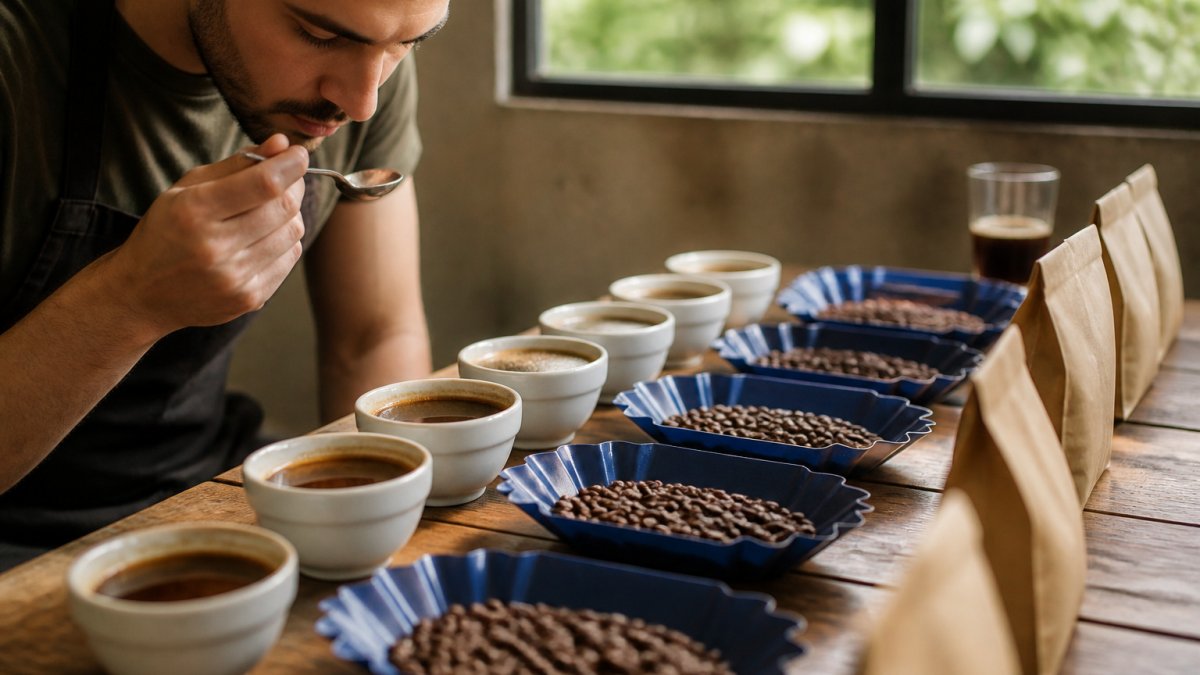
Step 4: Compare Side by Side
Taste two origins in the same session. Your palate calibrates by contrast, not by memory. Two cups tell you more than ten separate mornings ever will.
Run a simple blind protocol to keep expectations out of the cup:
- Have someone else label two cups A and B, or cover the bags.
- Brew both with the same dose, grind, water, and temperature.
- Taste A, write your notes, then taste B and write yours.
- Only then reveal which is which.
A common pattern is that tasters who expect "Ethiopia equals floral" find floral notes in a cup that turns out to be Colombian. Blind tasting is how you catch that.
Step 5: Record and Repeat
Log every tasting. Patterns only appear across several sessions. One cup is an anecdote; five cups is data.
Use a fixed vocabulary so your notes stay comparable across weeks. Instead of "fruity," write the specific reference: blueberry, red apple, lemon, grapefruit.
Watch out: if you change your grinder setting, water, or dose between tastings, you are no longer measuring origin, you are measuring your setup.
Using the Coffee Flavor Wheel to Calibrate Your Vocabulary
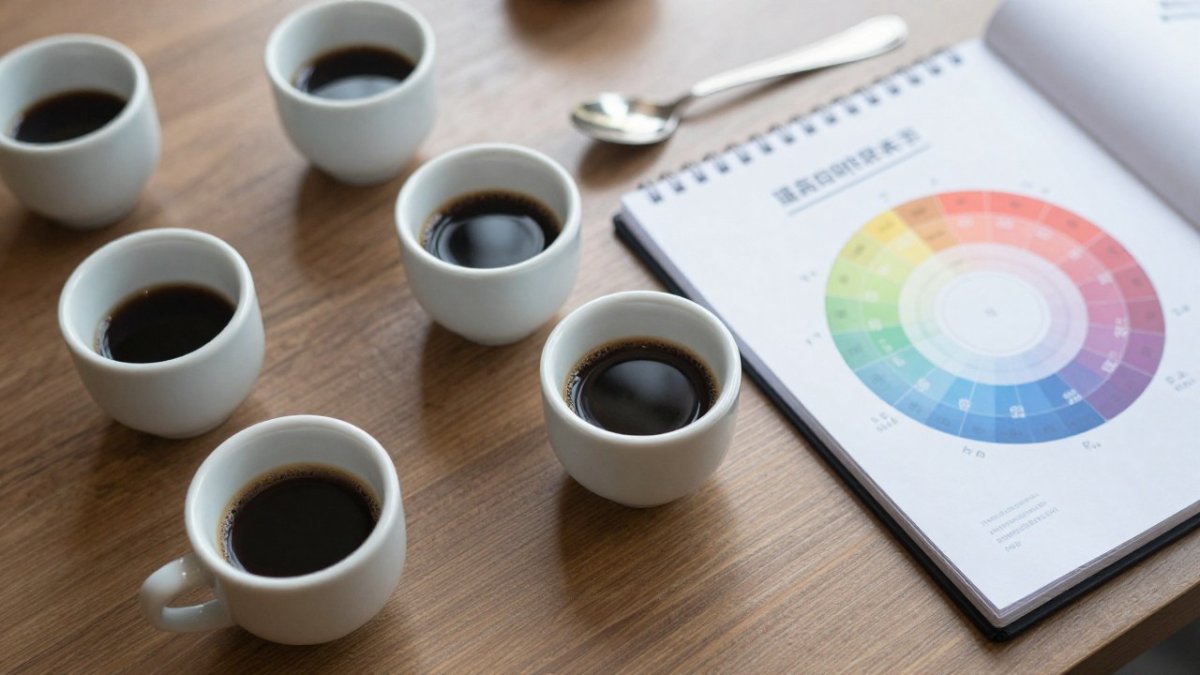
The coffee flavor wheel is a circular reference chart that organizes flavor terms from broad categories down to specific descriptors.
Here's the practical way to use it.
A common mistake is jumping straight to the outer ring. "Blackcurrant and bergamot" is not a starting point. It's a destination.
Use this ladder:
- Broad: "This is fruity."
- Narrower: "This is berry fruit."
- Specific: "This tastes like blueberry."
Stop at the level you can honestly defend. A confident "red berry" beats a guessed "raspberry."
Official sensory references help too. The Specialty Coffee Association's flavor wheel and cupping resources give you standardized descriptors and protocols, which is why professional cuppings use them.
Coffee Flavor Profiles by Origin: What Each Growing Region Tends to Deliver
Regional patterns are real, but they're tendencies, not rules. Here's what coffee flavor profiles by origin usually look like, plus the mechanism behind each pattern.
| Region | Common Acidity | Common Body | Typical Tasting Notes | What Drives the Pattern |
|---|---|---|---|---|
| Colombia | Medium to bright | Medium | Caramel, red apple, citrus, chocolate | Mid-to-high altitude and washed processing keep acidity clean and sweetness structured |
| Ethiopia | High, tea-like | Light to medium | Berry, jasmine, citrus, stone fruit | High elevation and heirloom cultivars concentrate aromatic compounds; washed lots read floral, natural lots read berry-heavy |
| Kenya | High, juicy | Medium | Blackcurrant, grapefruit, tomato-like savoriness | High altitude and dense bean structure slow maturation, concentrating acids and sugars |
| Brazil | Low | Heavy | Nutty, chocolate, caramel | Lower altitude and often natural or pulped-natural processing push sweetness and body over acidity |
| Guatemala | Medium | Medium to full | Cocoa, spice, orange | Volcanic soil and consistent rainfall support balanced sweetness with mild acidity |
| Sumatra | Low | Heavy, earthy | Earthy, cedar, dark chocolate | Wet-hulling (giling basah) processing produces the characteristic low-acid, earthy profile |
Altitude, Climate, and Soil: Why Terroir Shows Up in the Cup
Terroir is the combined effect of climate, soil, and altitude on how a coffee tastes. High-altitude beans usually grow slower and denser, which tends to concentrate sugars and acidity.
This is why a Colombian bean from a high farm can taste nothing like one from a lower valley, even in the same country. Country of origin is a starting label, not a full answer.
How Much Variation Exists Inside One Origin
Country-level profiles overstate consistency. Within a single origin, the same farm can produce lots that taste different year to year, and two farms a few miles apart can read completely differently. The variables that move the cup most are:
- Cultivar: Bourbon, Typica, Caturra, and Gesha carry different built-in flavor tendencies.
- Harvest and seasonality: the same lot changes character across crop years.
- Processing: a washed and a natural lot from the same farm can taste like two different origins.
- Roast and brew: as covered above, these can bury origin entirely.
So treat "Ethiopia is floral" as a hypothesis, not a fact. Taste it, then decide. For more on how origin stacks up against other factors, the Coffee Research Institute's work on coffee flavor and chemistry is a useful reference.
Single-Origin vs. Blended Coffee Beans: What Changes in the Cup
The difference between single-origin vs. blended coffee beans comes down to consistency versus character. A blend mixes origins to hit a stable, balanced flavor. A single origin shows you one place, with all its quirks.
Blends win on reliability. Single origins win on identity. Our explainer on single origin vs blend coffee goes deeper on how the two differ in the cup.
Separating Origin From Roast, Processing, and Brewing
Before you credit the origin, rule out the other three. This is the step most tasters skip, and it's where wrong conclusions come from.
- Roast: dark roast adds smoky, bitter, chocolate notes that mask origin
- Processing: natural process pushes fruit and sweetness; washed process highlights clarity and acidity; honey process lands in between
- Brewing: under-extraction tastes sour and thin; over-extraction tastes bitter and dry
Try this test. Brew the same bean two ways, then taste. If the "origin flavor" disappears, it was brewing. For choosing beans where origin stays readable, see our guide on how to choose high quality coffee beans.
Where Regional Generalizations Break Down
Regional rules fail more often than guides admit. Variation inside a single origin is huge.
- Farm-level differences: two farms in the same region can taste completely different
- Harvest and seasonality: the same lot changes character year to year
- Cultivar: different coffee varieties carry different built-in flavors
- Processing choices: a producer's method can override regional expectations
- Roast and brew: as covered above, these can bury origin entirely
So treat "Ethiopia is floral" as a hypothesis, not a fact. Taste it, then decide. For more on how origin stacks up against other factors, the Coffee Research Institute's work on coffee flavor and chemistry is a useful reference.
Build Your Own Tasting Log With Crazy Coffee Co
A tasting log turns vague impressions into a real skill. Keep it simple and use it every time.
- Date and bean name
- Origin and region
- Roast level and processing method
- Brew method, dose, and grind
- Acidity score (1-5)
- Sweetness score (1-5)
- Body score (1-5)
- Three tasting notes
- One sentence on the finish
Taste the same coffee again a week later. Note what changed. That gap is your palate learning.
If you want a single-origin Colombian to start logging, our Insomnia Blend is a consistent reference bean, which is exactly what a tasting log needs.
Frequently Asked Questions
How can you tell if coffee is single-origin?
Check the bag for a named country, region, farm, or cooperative. Single-origin coffee traces to one growing region, and good roasters print the country of origin, harvest, and processing method on the label. If the bag only lists a vague region or a blend name with no traceable source, treat it as a blend. Crazy Coffee Co, for example, names Colombia as the origin of its single-origin coffee.
What does single-origin coffee taste like compared with a blend?
Single-origin coffee shows the character of one growing region: a Colombian washed lot often lands on caramel, red fruit, and citrus brightness, while a blend is built to taste consistent across bags. Blends trade distinctiveness for balance. If you want to learn to identify flavor profiles, start with single-origin beans because the flavors point back to one place.
How do you identify flavor notes in coffee without guessing?
Taste side by side, not one bag at a time. Brew two single-origin coffees with the same roast level, grind, and brew method, then compare aroma, acidity, body, sweetness, and aftertaste using the coffee flavor wheel. Write down what you taste before reading the roaster's notes. Repeating the comparison a few times trains your palate faster than reading descriptions.
How much does roast level and brewing change a coffee's flavor?
A lot. A light roast keeps more of the origin's fruit and floral notes, while a dark roast pushes toward chocolate and caramel and can mask where the bean grew. Brew method matters too: a pour-over highlights brightness and clarity, while an espresso or French press pushes body and sweetness forward. Hold roast and brew constant when you want to compare origins fairly.
The real challenge isn't finding tasting notes. It's building a method you trust enough to repeat. Crazy Coffee Co roasts high-potency single-origin Colombian coffee for people who want a consistent, bold cup to learn from, with no bitter, stale surprises getting in the way of what you taste. Get started with Crazy Coffee Co and turn your morning cup into a skill you can actually track.