 ultimate-guide
Caffeine Content in Specialty Coffee Beans: A 2026 Guide
Last Updated: October 22, 2026
Quick Summary
The caffeine content in specialty coffee beans depends on species, dose, roast weight loss and extraction, not a fixed number on the bag. Arabica typically runs roughly 0.8% to 1.4% caffeine by dry bean weight, and your cup total comes from dose in grams times that percentage, discounted for extraction.
- Robusta generally carries more caffeine per gram of dry bean than Arabica, often around 1.7% to 2.5%.
- Drip and espresso are commonly assumed to extract roughly 85% to 95% of available caffeine.
- A 20-gram dose of 1.2% Arabica at 90% extraction yields about 216 mg across the full brew.
- Dark roast can contain slightly less caffeine per gram because roasting drives off more mass.
- Weigh your dose in grams instead of scooping by volume so the per-bean guesswork disappears.
Table of Contents
- The Caffeine Content in Specialty Coffee Beans: What Actually Drives the Numbers
- Caffeine in One Coffee Bean: Small Numbers, Big Multipliers
- Arabica vs. Robusta Caffeine: Why Species Comes First
- Light Roast vs. Dark Roast Caffeine: The Weight-Loss Effect
- Coffee Caffeine by Brewing Method: Espresso, Drip, and Beyond
- Specialty Coffee Beans Comparison Table: Caffeine at a Glance
- What Moves Caffeine Beyond Species and Roast
- Frequently Asked Questions
The Caffeine Content in Specialty Coffee Beans: What Actually Drives the Numbers
Ask most coffee drinkers where caffeine comes from and you'll get a shrug: "the beans, I guess." That answer hides the real story. The caffeine content in specialty coffee beans is not a fixed number printed somewhere on the bag.
At Crazy Coffee Co, we source high-potency single-origin Colombian coffee, so we think about these variables constantly. Below, we'll break down what actually drives caffeine numbers, from caffeine per gram of dry bean to the milligrams in your mug.
Caffeine per Gram of Dry Bean vs. Caffeine in Your Cup
Here's the distinction most guides blur: caffeine per gram of dry bean and caffeine per serving are two different measurements. Dry bean caffeine is a concentration, expressed as a percentage of bean mass. Cup caffeine is a total, expressed in milligrams per serving, and it depends on how many grams of coffee you actually brew.
That matters because a high-caffeine bean brewed weak delivers less than a moderate bean brewed strong. The USDA FoodData Central database tracks caffeine in prepared coffee by serving, which is the number that hits your bloodstream, not the number on the green coffee spec sheet.
Caffeine in One Coffee Bean: Small Numbers, Big Multipliers
A single coffee bean contains a tiny amount of caffeine, typically a fraction of a milligram, so the per-bean number is almost useless on its own.
But here is the distinction most guides skip: the caffeine inside a dry bean is not the caffeine that reaches your cup. Those are two different measurements, and conflating them is the single most common source of bad caffeine math.
Caffeine per Gram of Dry Bean Is a Concentration
On a green or roasted coffee spec sheet, caffeine is reported as a percentage of dry bean mass, a concentration, not a serving total.
Concentration lets you compare beans fairly. If Lot A is 1.1% caffeine and Lot B is 1.3%, Lot B carries more caffeine per gram of dry bean regardless of how either is brewed. That is the only apples-to-apples comparison at the bean level.
Caffeine in Your Cup Is a Total, and Extraction Sets It
Caffeine per serving is a total in milligrams, and it depends on three things: how many grams of coffee you brew, the bean's concentration, and how completely the water extracts the caffeine. Extraction is never 100%. A common working assumption among practitioners is that drip and espresso pull roughly 85% to 95% of the available caffeine, while immersion methods like French press and cold brew can land in a similar band given enough contact time. That extraction efficiency is why you cannot simply multiply dose by concentration and call it exact, you multiply, then discount for what stays in the spent grounds.
The practical formula is:
(dose in grams) × (caffeine percentage of the bean) × (extraction efficiency) = caffeine in the brewed cup
A 20-gram dose of a 1.2% Arabica bean at 90% extraction yields about 216 mg across the full brew, not the 240 mg you'd get from dose times concentration alone. That 10% difference is the gap between a bean-level estimate and a cup-level reality.
Why the Per-Bean Number Still Matters
Per-bean caffeine is a useful sanity check even though it's tiny. Bean size and density shift the math: larger, denser beans weigh more per bean, so the same volume scoop can hold different total mass depending on the lot. A dense high-grown Arabica and a lighter, lower-grown lot can differ enough that a level scoop delivers meaningfully different gram doses.
Arabica vs. Robusta Caffeine: Why Species Comes First
Species is the single biggest lever on caffeine content. Arabica and Robusta are different coffee species with different natural caffeine levels: Robusta generally carries more caffeine per gram of dry bean than Arabica, which is one reason Robusta tastes harsher and is often blended into mass-market and instant coffees.
For specialty coffee, this matters because most specialty lots are Arabica. A Specialty Coffee Association resource on green coffee grading helps here: grade and species are stated on the spec sheet, and they set the baseline caffeine range before roast or brew enters the picture.
Where Colombian Single-Origin Lots Land
Colombian Arabica, the backbone of our lineup, sits in the moderate Arabica range: enough caffeine to matter, without the Robusta punch. Origin alone doesn't guarantee a number, though. Altitude, cultivar, and processing all nudge the final concentration, so treat "Colombian" as a starting point, not a fixed caffeine figure.
Light Roast vs. Dark Roast Caffeine: The Weight-Loss Effect
Light roast vs. dark roast caffeine is where the biggest myth lives. The common claim that dark roast has more caffeine is misleading. Roasting drives off moisture and organic mass, so dark-roasted beans lose more weight than light-roasted ones.
Measure by scoop, though, and the picture flips: lighter, denser beans pack more mass into the same volume. The National Coffee Association's guidance on roast and caffeine frames it plainly: roast level changes flavor far more than it changes caffeine.
Coffee Caffeine by Brewing Method: Espresso, Drip, and Beyond
Coffee caffeine by brewing method comes down to extraction and concentration. Espresso forces hot water through fine grounds under pressure, producing a small, concentrated shot.
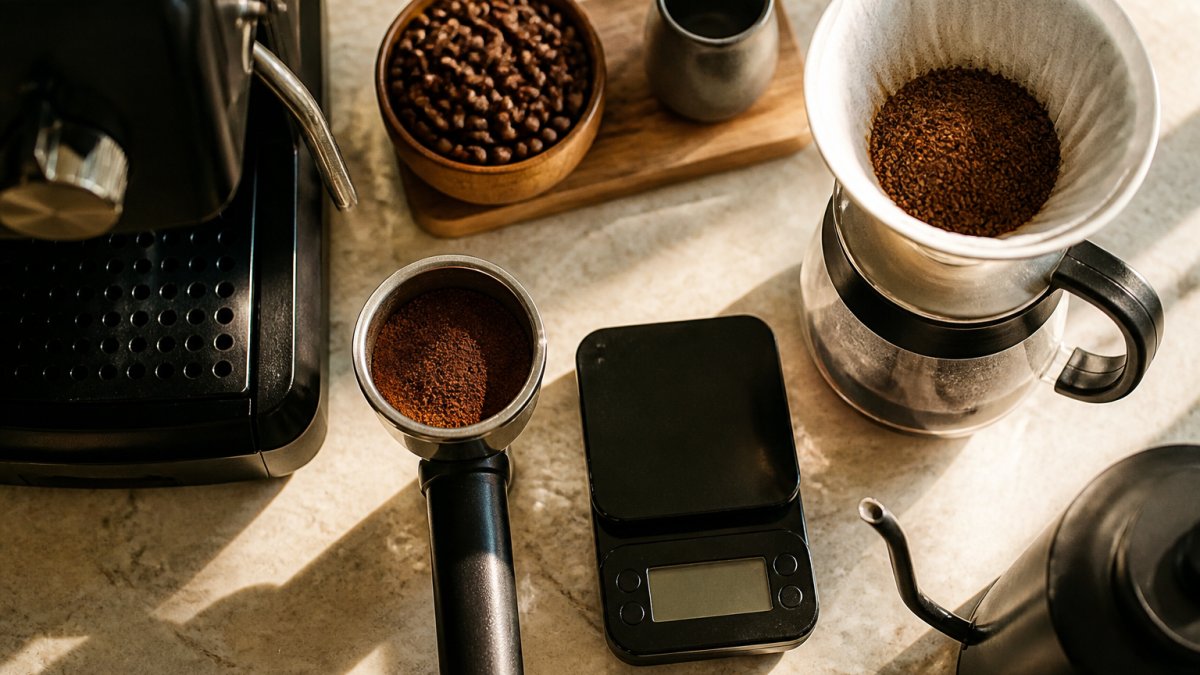
A single espresso shot and a mug of drip can land in a similar caffeine range, even though the espresso is far smaller. Concentration and total volume are different questions.
Dose Math for Common Recipes
You can calculate your caffeine per cup with a simple formula: (dose in grams) × (caffeine percentage of the bean) = total caffeine in the brewed cup, assuming near-complete extraction. For example, a 20-gram dose of an Arabica bean at roughly 1.2% caffeine gives about 240 mg in the full brew, split across however many cups that brew fills.
- Espresso (18 g dose): about 216 mg in the full shot pull
- Drip (30 g dose, two cups): about 360 mg total, roughly 180 mg per cup
- Pour-over (15 g dose, one cup): about 180 mg
These are estimates, not lab results. Adjust by your actual dose and bean spec.
Specialty Coffee Beans Comparison Table: Caffeine at a Glance
Most caffeine tables compare species, roast, and brew method, the same broad variables every guide covers. This one goes a level deeper into what actually distinguishes specialty lots: cultivar, origin, processing, and the dry-bean-versus-cup distinction. The figures below are approximate working ranges drawn from commonly reported Arabica and Robusta composition data; your actual lot will vary, and the point is the relative direction, not a lab certificate.
| Variable | Higher Caffeine (direction) | Lower Caffeine (direction) | Why It Moves |
|---|---|---|---|
| Species | Robusta (~1.7-2.5% dry bean) | Arabica (~0.8-1.4% dry bean) | Robusta synthesizes more caffeine as a natural defense; Arabica trades caffeine for sweetness and acidity |
| Cultivar (Arabica) | Higher-caffeine landraces and some hybrids | Lower-caffeine cultivars such as Laurina and some Bourbon selections | Cultivar genetics set the baseline concentration before origin or roast |
| Origin / altitude | Lower-grown lots tend to run slightly higher | High-grown lots tend to run slightly lower but denser | Altitude and climate affect bean development, density, and composition |
| Processing | Natural / dry-process lots can retain more mass | Washed lots lose more mass to mucilage removal | Processing changes final bean weight, which shifts percentage concentration |
| Roast level (by weight) | Light roast | Dark roast | Roasting drives off moisture and organic mass, so dark beans lose more weight per bean |
| Roast level (by scoop) | Dark roast | Light roast | Lighter, denser beans pack more mass into the same volume |
| Brew method (per serving) | Espresso, cold brew concentrate | Drip, pour-over | Concentration and total volume are different questions; dose decides the total |
| Dose size | Larger gram dose | Smaller gram dose | Dose is the multiplier that turns a percentage into milligrams |
| Grind size | Fine (more extraction) | Coarse (less extraction) | Finer grounds expose more surface area to water |
Reading the Table Correctly
The rows are not additive. A high-caffeine cultivar grown at low altitude and roasted dark does not simply stack every "higher" column, roast weight loss can pull the per-gram number back down even as the cultivar pushes it up. Treat each row as a direction of effect, then calculate your actual cup with dose, concentration, and extraction efficiency.
A Worked Specialty-Lot Example
Suppose you buy a washed Colombian Arabica at a stated 1.2% caffeine, and you brew a 15-gram pour-over. At roughly 90% extraction, the cup lands near 162 mg.
That is the specialty-bean lesson in one example: cultivar, origin, and processing set the concentration, but dose and extraction decide the milligrams. A bag's origin story is a starting point, not a caffeine guarantee.
What Moves Caffeine Beyond Species and Roast
Beyond species and roast, three factors quietly shift caffeine content in specialty coffee beans: growing conditions, processing method, and dose calculation. Altitude and climate affect bean development and density. Processing, whether washed or natural, changes the bean's final composition and weight. And your dose is the multiplier that turns a percentage into a milligram count.
The practical takeaway: buy beans with a stated species and origin, weigh your dose, and brew consistently. That's how you control caffeine rather than guess at it. If you want a high-potency single-origin Colombian coffee built for sustained focus, our Insomnia Blend is where we'd start.
Frequently Asked Questions
Do specialty coffee beans have more caffeine than regular coffee?
Not automatically. Specialty coffee is graded on quality and traceability, not caffeine. Most specialty beans are Arabica, which holds roughly 1.2-1.5% caffeine by weight, while mass-market blends often include Robusta at around 2.2-2.7%. What specialty lots do give you is consistency: known origin, known roast date, and known dose, so the caffeine in your cup is easier to predict and control.
Does light roast coffee have more caffeine than dark roast?
Per scoop, usually yes, but only slightly. Dark roasting drives off moisture and organic mass, so a bean loses weight while its caffeine stays put. A dark roast bean therefore contains a similar total amount of caffeine in a smaller package. Scoop by volume and dark roast can edge ahead; weigh your dose and the gap mostly disappears. Roast level matters far less than species and dose.
Does grinding coffee beans change their caffeine content?
Grinding does not add or remove caffeine, but it changes how much you extract. A finer grind exposes more surface area, so water pulls caffeine out faster and more completely in a given brew time. Coarse grinds can leave caffeine behind if your brew finishes too quickly. Match grind size to your brewing method, and keep your dose weighed so the only variable left is extraction.
How much caffeine is in a cup of specialty coffee?
It depends on dose and method. An 8 fl oz drip cup brewed from 15 g of Arabica typically lands near 95 mg. A double espresso from 18 g can reach 120-150 mg despite the smaller volume, because espresso uses a much higher coffee-to-water ratio. Measure your dry dose in grams, note the brew method, and you can estimate your cup within a reasonable range instead of guessing.
Caffeine control is really dose control, and dose control starts with knowing your beans. Crazy Coffee Co roasts high-potency, single-origin Colombian coffee so you can dial in your morning with consistent, transparent sourcing instead of guessing at a mass-market blend. Explore our Insomnia Blend and single-origin lineup to find the potency that fits your hustle, and brew it by the gram for repeatable results.