 blog
7 Iron Spur Coffee vs Teddy Outdoors Facts You Need
Last Updated: October 25, 2026
Quick Summary
Iron Spur Coffee vs Teddy Outdoors comes down to format and freshness: both brands compete in sealed single-serve convenience, but neither is automatically the better buy. If you want beans and a real brew, you are better served by a single-origin roaster that tells you the origin and roast date.
- Iron Spur Coffee leans into rugged trail branding; Teddy Outdoors skews toward gear-adjacent, ready-to-brew formats.
- A 12 oz bag of ground coffee typically brews about 16 to 20 six-ounce cups at a 1:16 ratio.
- A printed roast date is the single best freshness signal on any coffee bag.
- Single-serve packets run about $1.50 per cup if 10 packets cost $15.
- Decide in this order: format first, then cost per cup, then taste.
Table of Contents
- Iron Spur Coffee vs Teddy Outdoors: The Quick Comparison
- Iron Spur Coffee vs Teddy Outdoors: What Each Brand Actually Sells
- Portable Coffee Brewing Options: Packets, Pouches, and Gear
- The Best Instant Coffee for Backpacking and Long Trails
- The Best Coffee for Camping and Overlanding Mornings
- Single-Origin vs. Blended Coffee Beans: Why the Label Matters Outdoors
- Price, Taste, and Prep: How the Two Brands Stack Up
- Pick Your Bag and Plan Your Next Trip
- Frequently Asked Questions
Iron Spur Coffee vs Teddy Outdoors: The Quick Comparison
Two outdoor-focused coffee brands, two very different approaches to the same problem: how to get a decent cup into the backcountry. Iron Spur Coffee leans into rugged branding and trail-ready convenience. Teddy Outdoors leans into gear-adjacent positioning and broad outdoor appeal.
Here at Crazy Coffee Co, we sell high-potency single-origin Colombian coffee, so we have a stake in this comparison. We will flag that bias where it matters and keep the brand-to-brand analysis straight.
The short version: Iron Spur Coffee vs Teddy Outdoors comes down to format and freshness. If you want sealed single-serve convenience, both brands compete there.
Iron Spur Coffee vs Teddy Outdoors: What Each Brand Actually Sells
Most outdoor coffee coverage stops at "bring instant packets and a titanium mug." That is not a comparison.
Iron Spur Coffee is built around the trail-and-field identity: hunters, hikers, overlanders, and anyone who wants coffee that survives a pack.
Teddy Outdoors positions coffee as one piece of a broader outdoor lifestyle lineup. That means the coffee is often sold alongside gear and apparel, and the product mix skews toward approachable, ready-to-brew formats rather than specialty-roaster depth.
Neither approach is wrong. But the label details are where the two brands actually separate, and those details are what most buyers never check. Here is the framework we use when we evaluate any outdoor coffee brand, applied to both:
- Format: Does the brand sell whole bean, pre-ground, instant, steeped bags, or single-serve packets? A brand that only sells packets cannot serve a French-press camper, and a brand that only sells beans is a poor fit for a fast-and-light backpacker.
- Serving size and yield: How many cups does one packet or one bag actually produce? A 12 oz bag of ground coffee typically brews about 16 to 20 six-ounce cups at a standard 1:16 ratio, while a single-serve packet is one cup by definition. Compare cost per cup, not cost per bag.
- Origin disclosure: Does the label name the country and, ideally, the region? "100% Arabica" is not an origin. A bag that says "Colombia, Huila" tells you far more than one that says "mountain blend."
A common mistake is buying on branding alone. Outdoor coffee packaging is designed to look tough, and both Iron Spur Coffee and Teddy Outdoors lean into that aesthetic. The label details are what tell you whether the coffee inside is any good, and whether it fits the way you actually brew at camp.
Portable Coffee Brewing Options: Packets, Pouches, and Gear
Portable coffee brewing options fall into four practical categories, and the format you pick matters more than the brand name on the bag.
Instant coffee and single-serve packets are the lightest and fastest option. Tear, add hot water, stir, done.
Steeped coffee bags work like tea bags. Drop one in hot water, wait a few minutes, pull it out.
Pour-over travel pouches are lightweight fabric or mesh cones that hold a paper filter and sit on your mug.
The Best Instant Coffee for Backpacking and Long Trails
The best instant coffee for backpacking is the one that dissolves fully in hot water, tastes like coffee rather than syrup, and weighs almost nothing in your pack.
For long trails, weight and waste add up fast. A few practical rules we would follow:
- Repackage into a smaller zip bag to cut packaging bulk
- Choose plain instant over flavored creamer blends, which clump in cold
- Bring a small insulated mug rather than relying on a thin titanium cup in cold weather
Backpackers weighing high-potency coffee for the trail often want to know whether the extra strength is worth it, and that is a fair question. Is high potency coffee worth it? covers the trade-offs in detail.
Watch out: instant coffee that clumps in cold water will not rescue you on a freezing morning. If your stove is slow to boil, bring a format that dissolves in warm water, not just boiling.
The Best Coffee for Camping and Overlanding Mornings
The best coffee for camping is the format that matches your setup, not the one with the boldest packaging. Car camping and overlanding give you weight allowance, so you can brew properly. Backpacking does not.
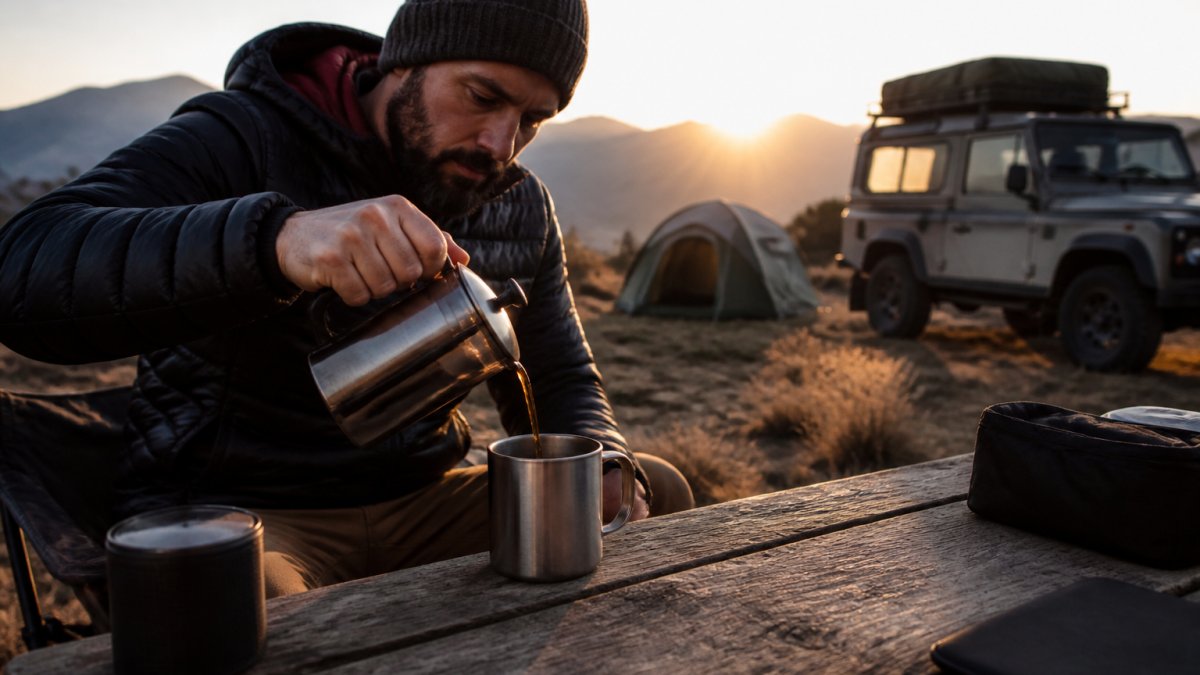
Overlanding setups usually have room for a compact French press, a pour-over cone, or a small percolator. Campers planning morning brews also want to know how much caffeine specialty beans deliver, and our guide to caffeine content in specialty coffee beans breaks that down.
For car camping, we would skip single-serve entirely. You have the space, so buy beans, grind at camp or pre-grind, and brew something worth waking up for.
Single-Origin vs. Blended Coffee Beans: Why the Label Matters Outdoors
Single-origin coffee comes from one growing region, while a blend combines beans from multiple origins.
Outdoors, the label matters for a boring reason: blends hide what you are drinking.
If you want to understand the distinction before choosing, single origin vs blend coffee explained walks through how each is grown, roasted and priced.
Our take: for a morning cup you actually look forward to on the trail, single-origin is the more interesting buy.
Price, Taste, and Prep: How the Two Brands Stack Up
This is the section most outdoor coffee articles skip, and it is the one that actually decides the purchase. Price per serving, taste by format, and prep-and-cleanup time are the three levers that separate Iron Spur Coffee and Teddy Outdoors for a real buyer. Here is how to evaluate both without guessing.
Price per serving, not price per bag
The bag price is a distraction. The number that matters is cost per cup, and you get it by dividing total cost by the number of cups the package actually yields. The math is straightforward once you know the yield:
- Single-serve packets: one packet equals one cup. If a box of 10 packets costs $15, that is $1.50 per cup. Convenience is baked into that number.
- Ground or whole-bean bags: a 12 oz bag brews roughly 16 to 20 six-ounce cups at a standard 1:16 coffee-to-water ratio. A $16 bag therefore lands around $0.80 to $1.00 per cup, often half the per-cup cost of packets, before you count the gear.
- Steeped bags: usually sold in boxes of 10 to 30. Per-cup cost typically sits between packets and bulk beans, and you pay for the no-grounds cleanup.
Neither Iron Spur Coffee nor Teddy Outdoors publishes a single per-cup figure across its whole lineup, so run this math yourself on the specific product you are considering. The brand that wins on price per cup is usually the one selling bulk beans, but only if you already own a brewer.
Taste: format sets the ceiling
Taste is where format shows up hardest, and no amount of branding overcomes it.
- Instant and single-serve packets trade depth for speed. Modern instant is better than it was a decade ago, but it still flattens aroma and body. Plain instant beats flavored creamer blends, which can taste syrupy and clump in cold water.
- Steeped bags land between instant and brewed coffee, more body than instant, less control than a pour-over, and no grounds to manage.
- Ground and whole-bean coffee brewed in a pour-over or French press delivers the most aroma and body, and it rewards a little extra effort at camp. Whole bean ground just before brewing is the freshness ceiling; pre-ground is the convenience compromise.
If taste is your priority, the brand question matters less than the format question. A mid-tier roaster's whole beans will usually beat a premium brand's instant packet in the cup.
Prep and cleanup: the real time cost
Prep time and cleanup are where outdoor coffee decisions get made on a cold morning.
- Packets and instant: tear, add hot water, stir, rinse the mug. Under two minutes, one cup to clean.
- Steeped bags: boil water, steep three to five minutes, pull the bag, rinse the mug. Five to seven minutes, minimal cleanup, and the spent bag packs out easily.
- Pour-over: boil water, set the cone and filter, bloom, pour in stages, discard the filter and grounds. Eight to twelve minutes, and you have wet grounds to pack out.
For a backpacker counting every ounce and minute, packets win. For a car camper or overlander with a stove and a table, beans and a press win on taste and per-cup cost.
If you want a concrete high-potency single-origin option to compare against either brand, our high-potency Colombian Arabica is what we roast and sell, and it is sold as whole bean, so it fits the brew-it-properly camp rather than the tear-and-stir one.
Here is how the main formats compare on cost per cup, taste and prep time.
| Format | Cost per cup | Taste | Prep and cleanup time |
|---|---|---|---|
| Single-serve packets | $1.50 per cup if 10 packets cost $15 | Trades depth for speed; flattens aroma and body | Under two minutes, one cup to clean |
| Ground or whole-bean bags | $0.80 to $1.00 per cup for a $16 12 oz bag | Most aroma and body; whole bean is freshness ceiling | Eight to fifteen minutes depending on brewer |
| Steeped bags | Between packets and bulk beans | More body than instant, less control than pour-over | Five to seven minutes, minimal cleanup |
| Pour-over | Not stated | Most aroma and body with beans | Eight to twelve minutes, wet grounds to pack out |
| French press | Not stated | Most aroma and body with beans | Ten to fifteen minutes, greasy press to rinse |
Pick Your Bag and Plan Your Next Trip
Here is the decision in plain terms. Backpacking and long trails: buy single-serve packets or steeped bags, and keep the weight down. Car camping and overlanding: buy beans, bring a small press or pour-over cone, and brew properly.
The brand question is secondary to the format question. Get the format right and almost any decent roaster will serve you well.
Frequently Asked Questions
What is the difference between Iron Spur Coffee and Teddy Outdoors?
The main difference is format and positioning. Iron Spur Coffee sells whole-bean and ground coffee built around a rugged outdoor identity, while Teddy Outdoors focuses on freeze-dried meals and instant coffee packets for backcountry use. One suits a camp stove and French press, the other suits a jet boil and a spoon. Match the format to how you actually brew before comparing flavor.
Which is better for camping, Iron Spur Coffee or Teddy Outdoors?
It depends on your setup. Car campers and overlanders with a stove, kettle, and grinder get more from whole-bean coffee like Iron Spur's. Backpackers counting ounces per mile are better served by Teddy Outdoors' instant packets, which need only hot water and no cleanup. Decide by pack weight and cleanup time, not brand loyalty.
Does Iron Spur Coffee or Teddy Outdoors offer instant coffee?
Teddy Outdoors builds its coffee lineup around instant packets and single-serve options, which is why it shows up in backpacking and hunting conversations. Iron Spur Coffee leans toward whole-bean and ground formats that need a brewing method. If instant preparation is non-negotiable, that narrows the field fast.
Which coffee is easier to prepare while hiking or hunting?
Instant packets win on prep time. Tear, pour, stir, done, with no filter to pack out. Whole-bean coffee needs a grinder, filter, and a few minutes of brewing, which is fine at a base camp but awkward on a ridge at 5 a.m. For bowhunting and day hikes, single-serve packets cut the ritual down to under two minutes.
Picking the right trail coffee is one decision. Getting a cup that actually wakes you up is another. At Crazy Coffee Co, we roast high-potency single-origin Colombian coffee for people who refuse to settle for bitter, stale brews. Our Insomnia Blend is built for long days and early starts, with a single-origin Colombian profile and a roast designed to keep you sharp. Get started with Crazy Coffee Co and make your next morning count.