 blog
Is Single Origin Coffee Worth the Extra Cost
Last Updated: November 19, 2026
Quick Summary
Single origin coffee is worth the extra cost if you drink it black, brew with filter or pour-over methods, and enjoy tasting distinct flavors. Its higher price reflects smaller lots, selective harvesting, and separate processing. If you drink espresso or take milk and sugar daily, a blend often delivers better value.
- Single origin coffee tastes like its specific place and season, while blends stay consistent.
- Compare price by cost per cup, not by bag price, normalizing for bag weight and dose.
- Single origin suits black coffee and filter or pour-over brewing best.
- Blends are usually the better choice for espresso and daily milk-based drinks.
- Buy a small bag first and check the roast date before committing to a larger one.
Table of Contents
- Single Origin Coffee vs Blend: How They Differ
- Why Single Origin Coffee Costs More
- Cost Per Cup: Single Origin vs Blends at Home
- Is Single Origin Coffee Better for Your Taste and Brewing Habits
- Single Origin Coffee Beans: What to Check Before You Buy
- Choosing Your Next Bag: Where a High-Potency Colombian Fits
- Frequently Asked Questions
Is single origin coffee worth the extra cost? For many people who drink coffee every day, the answer depends on how they brew, what they taste for, and how much they spend each week. We sell single-origin Colombian coffee, so we have a clear stake in this question. We want to give you a fair answer, not a sales pitch.
Single origin coffee is beans grown in one defined place, such as a single country, region, farm, or lot. Blends combine beans from several origins, often chosen to produce a consistent flavor across many bags. The label on a bag usually tells you which one you are buying.
Here is the practical takeaway: a single origin coffee will taste like the place and season it came from, while a blend is designed to taste the same from one batch to the next.
Single Origin Coffee vs Blend: How They Differ
The main difference is consistency versus character. Blends are built to smooth out variation. A roaster can mix beans from several growing regions to hit the same taste profile each time you open a bag.
Single origin coffees express more of their growing conditions. Altitude, soil, rainfall, and processing methods all show up in the cup. Many drinkers describe these coffees as brighter, fruitier, or more floral than a typical blend.
Some roasters also sell single estate or micro-lot coffees, which come from one farm or a small batch within that farm. These are usually limited, so availability changes from season to season.
For drinkers who want a reliable everyday cup, a blend often makes more sense. For drinkers who want to taste distinct flavors, single origin is the better fit. Our 5 Best Single Origin Coffees for Black Coffee Drinkers guide walks through specific beans to try if you want to explore that difference.
Why Single Origin Coffee Costs More
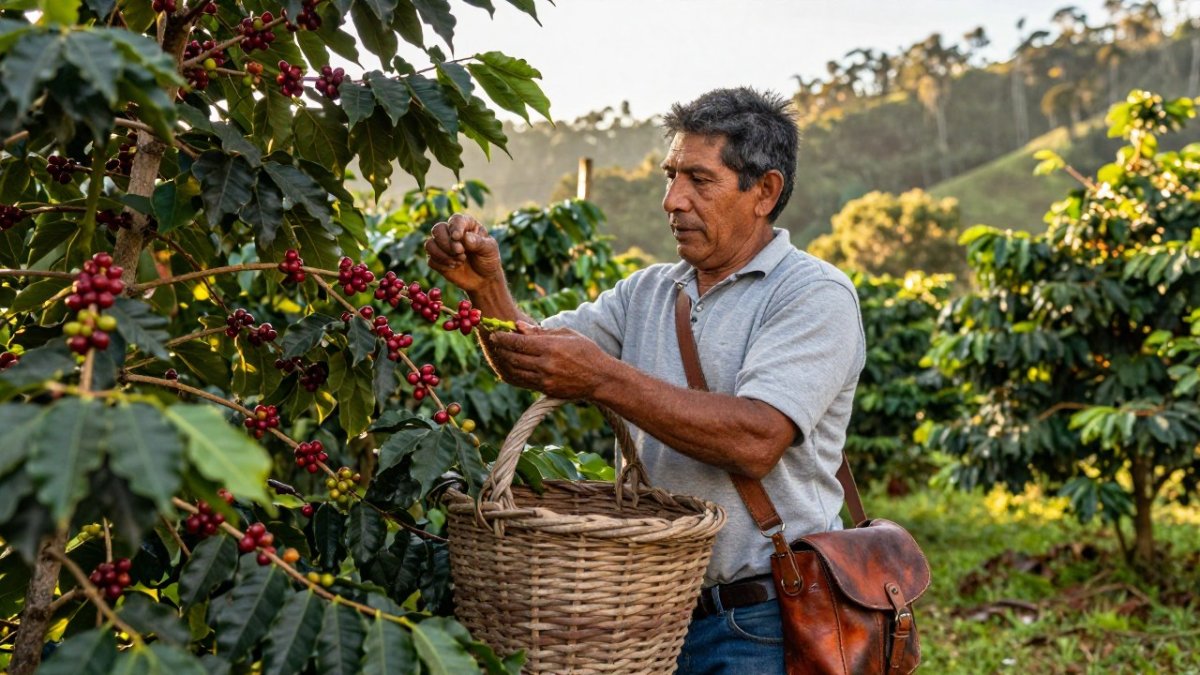
Single origin coffee usually sells for more than a blend, and the reasons are real. Growers and roasters often handle smaller lots, which can cost more per pound to sort, transport, and track. Some lots are harvested selectively and processed separately, which adds labor.
Limited supply also plays a role. A specific farm may produce only a few thousand pounds in a season, so buyers compete for it.
Cost Drivers Behind the Price
The price you pay reflects several stages of the supply chain:
- Harvesting: Selective picking of only the ripest cherries costs more than mechanical or bulk harvesting.
- Processing: Separate washing, fermenting, or drying of small lots requires extra equipment and time.
- Traceability: Tracking a coffee back to its farm or lot involves record-keeping that blends rarely need.
- Roasting: Small-batch roasting of distinct lots is often less efficient than large blend runs.
Price Premiums and Producer Economics
Specialty buyers often pay growers a premium for high-quality lots, and that money can support farm improvements. Whether a particular bag's price reflects a fair premium to the farmer depends on the roaster's sourcing practices. Which origin region suits a beginner's palate is a good place to start if you are still learning what you like. Ask roasters whether they publish farm names, prices paid, or direct-trade relationships. Transparent roasters make these details easy to find.
Cost Per Cup: Single Origin vs Blends at Home
Price per bag can mislead. Price per bag can be misleading, and what matters is the cost per cup, which depends on bag weight, dose size, and how many cups you actually brew.
Start with the formula:
Cost per cup = Bag price ÷ (Bag weight in grams ÷ grams of coffee per cup)
A standard 12-ounce bag holds about 340 grams. At 20 grams per cup, that yields roughly 17 cups. Here is how the math plays out across realistic bag prices, using the same 340-gram bag and the same 20-gram dose so the comparison is fair:
| Bag price (12 oz / 340 g) | Cost per cup at 20 g | Cups per bag |
|---|---|---|
| $12 blend | About $0.71 | About 17 |
| $16 blend | About $0.94 | About 17 |
| $18 single origin | About $1.06 | About 17 |
| $22 single origin | About $1.29 | About 17 |
| $26 single origin | About $1.53 | About 17 |
The real value question is not whether single origin costs more, but whether the difference per cup is worth it at your drinking volume.
Dose size changes the math more than most drinkers expect. A 20-gram dose is a common filter starting point, but espresso uses roughly 18 grams for a double shot, and a strong immersion brew may use 30 grams or more per cup.
Watch out: comparing a 12-ounce single origin against a 16-ounce blend without converting to cost per cup will make the blend look cheaper than it is per serving. Normalize bag weight first, then dose, then price.
A fair, like-for-like comparison also means matching roast level, roast date, and quality tier. Comparing a light-roast single origin against a dark-roast commodity blend tells you little, because roast level and freshness drive flavor as much as origin does.
Run the calculation with the bags you actually compare. The summary below describes the general pattern once you normalize for weight and dose:
| Factor | Single Origin | Blend |
|---|---|---|
| Typical cost per cup | Higher | Lower |
| Flavor consistency | Varies by lot | Stable |
| Best for | Tasting distinct notes | Everyday routine |
| Supply | Often limited | Usually steady |
Is Single Origin Coffee Better for Your Taste and Brewing Habits
Taste is personal, and the best test is a side-by-side tasting. Brew one single origin and one blend the same way, then note acidity, sweetness, body, and aroma. But before you buy, a short decision framework can save you money.
Ask yourself four questions, in this order:
- Do you drink coffee black or with milk and sugar? Heavy additions mute the delicate fruit and floral notes that make single origins distinctive. If you take milk and sugar, a well-built blend often delivers more value because its structure holds up in milk-based drinks. If you drink black, single origins reward the attention.
- Which brew method do you use most? Pour-over and filter methods tend to show off the clarity and brightness of single origin beans. Espresso can mask some of those differences, especially with darker roasts, so a blend may suit espresso drinkers better. Immersion brewing sits in between, it rounds off acidity, so origin differences show up more in body and sweetness than in brightness.
- Do you value consistency or discovery? If you want the same cup every morning, a blend is the safer buy. If you enjoy tasting how a lot changes from harvest to harvest, single origin is the point, not a flaw.
- How much do you brew? At two cups a day, the per-cup premium adds up quickly, so a blend for daily drinking plus a single origin for weekends is a common pattern. At a few cups a week, the premium is small enough that flavor can drive the decision.
Brewing method matters beyond flavor. Espresso is less forgiving of light-roast single origins: they can taste sharp or thin if the grind and dose are not dialed in, and many espresso drinkers prefer a blend or a medium-dark single origin for easier extraction. Filter brewing is more forgiving and shows origin character with less tuning.
Consider a few practical checks:
- Do you add milk or sugar? Heavy additions can hide subtle flavors.
- Do you enjoy black coffee? Single origins reward drinkers who taste without additions.
- Do you brew carefully? Precise brewing brings out differences between beans.
- Do you want the same cup every day, or a new one each bag?
Watch out: a bag labeled "single origin" does not guarantee you will like it. Origin tells you where the coffee grew, not whether its flavor profile matches your preferences. Taste preferences vary, so buying a small bag first is a reasonable way to test before committing to a larger one.
A simple rule of thumb: choose single origin when you drink black coffee, brew filter or pour-over, and enjoy variety. Choose a blend when you drink espresso or milk-based drinks daily, want consistency, or brew enough that the per-cup premium matters.
Single Origin Coffee Beans: What to Check Before You Buy
Before buying, read the label closely. Useful details include:
- Origin: Country, region, and ideally the farm or cooperative.
- Roast date: Fresher coffee usually tastes more vivid. Look for a date rather than only a "best by" date.
- Processing method: Washed, natural, or honey processing each shape flavor differently.
- Tasting notes: Descriptors such as citrus, chocolate, or floral give you a sense of the flavor profile.
- Roast level: Lighter roasts tend to show more origin character than darker ones.
Roast date and storage affect value as much as price does. Coffee stored in a sealed bag away from heat, light, and moisture keeps its flavor longer. Buying a fresh bag you can finish within a few weeks often gives more flavor per dollar than a cheaper bag that sits on a shelf. Our buyer's guide to fresh roasted coffee beans explains how to find and order beans roasted close to when they ship.
Many roasters also share sourcing information, so look for specifics rather than vague claims like "premium" or "artisan."
Choosing Your Next Bag: Where a High-Potency Colombian Fits
If you want a bold, energetic cup, our Insomnia Blend is Colombian coffee positioned for drinkers who want a bold, punchy cup.
Whether it is worth the extra cost for you depends on how you brew and what you taste for. Try a small bag, brew it the way you normally do, and compare the cost per cup against your current coffee. You can see current pricing and order options on our website.
Frequently Asked Questions
What is so special about single origin coffee?
Single origin coffee comes from one identifiable place, such as a specific country, region, farm or lot, rather than a mix of beans from several growers. Because the beans share one growing environment and processing approach, the flavor tends to be more distinctive and traceable. Tasting notes often reflect the terroir, including altitude, soil and harvest season. Many drinkers choose it for a clearer sense of where the coffee came from and what it should taste like. Check the bag for a named origin, harvest date and roast date to confirm you are getting true single origin.
Why is single origin coffee more expensive?
Single origin beans usually cost more because they are harvested in smaller, separately processed lots, which limits supply and makes sourcing harder. Producers often select only the ripest cherries, which raises labor costs, and roasters pay a price premium to secure limited, high-quality lots. Small batches also mean less volume to spread roasting and packaging costs across. Prices vary with quantity, origin and season, so compare the price per ounce rather than the sticker price on the bag.
Is single origin coffee worth the extra cost for daily drinking?
It depends on how you brew and what you taste for. If you brew with a pour-over, French press or drip machine and enjoy noticing flavors like fruit or floral notes, the extra cost can feel justified. Calculate cost per cup by dividing the bag price by the number of 12-gram doses it yields. If you mostly drink coffee with milk or sugar, a well-roasted blend will often deliver similar satisfaction at a lower price per cup.
How can you tell if single origin coffee is high quality?
Look for a named farm or region, a harvest year, a processing method and a roast date printed on the bag. Specialty-grade beans are graded and sorted for defects, and roasters who publish this information are easier to trust. Freshness matters most: beans are typically best within a few weeks of the roast date, so buy in smaller quantities and store them airtight away from heat and light. Tasting notes should be specific and consistent from bag to bag.