 how-to
Why Coffee Loses Flavor After Roasting
Table of Contents
- Why Coffee Loses Flavor After Roasting: The Clock Starts Immediately
- Coffee Degassing After Roasting: Normal Resting vs. Actual Staling
- How Long Coffee Beans Stay Fresh: A Timeline by Roast, Grind, and Storage
- How to Store Coffee Beans So Flavor Lasts
- Best Container for Storing Coffee Beans (and What to Avoid)
- Storage and Brewing Troubleshooting: When Your Coffee Tastes Off
- What Actually Matters Most for Freshness
- Frequently Asked Questions
Last Updated: October 9, 2026
Why Coffee Loses Flavor After Roasting: The Clock Starts Immediately
Coffee loses flavor after roasting because the same chemical reactions that created its aroma keep running once the beans cool, releasing gases and reacting with oxygen until the compounds you paid for are gone. At Crazy Coffee Co, we build our roast schedule around that clock. This guide shows you how to slow it down.
The moment beans leave the roaster, they start spending the flavor they just built. Freshness is not a date on a bag. It is a countdown.
That countdown has four drivers. Two of them you cannot stop. Two of them you control completely.
Below, we break down what actually happens inside the bean, how to tell normal resting from real staling, and how to store coffee beans so the good stuff lasts.
What Happens Inside the Bean During Roasting
Heat triggers two main reactions. The Maillard reaction builds brown color and savory depth. Caramelization creates sweetness. Together they form hundreds of aromatic compounds inside a hard, woody structure made of cellulose and hemicellulose.
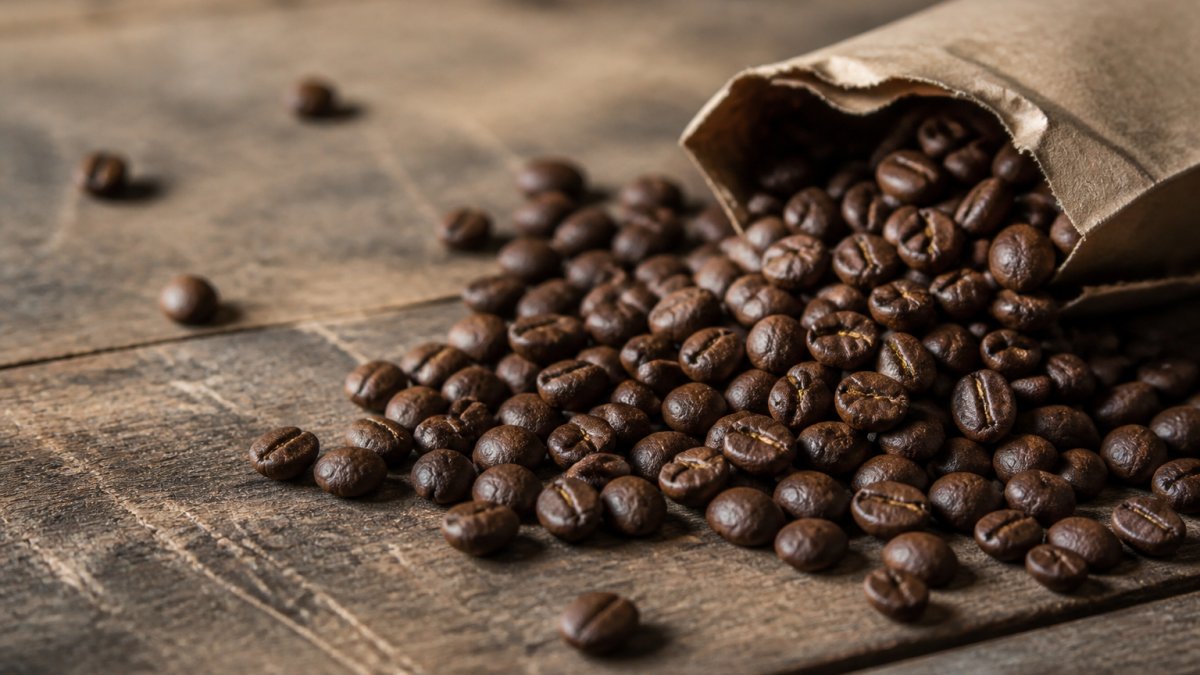
That structure is the problem. Roasting cracks it open. Coffee oils and soluble compounds that were locked inside are now exposed to air. The bean also swells with carbon dioxide, a gas produced during roasting.
So the bean leaves the roaster full of pressure and full of flavor. Both start escaping right away.
The Four Forces That Strip Flavor
Four things destroy roasted coffee: oxygen, moisture, heat, and light. Oxygen causes oxidation, the same reaction that turns a cut apple brown. Moisture makes beans soft and dull. Heat speeds up every other reaction. Light breaks down aromatic compounds directly.
The U.S. Food and Drug Administration guidance on food storage and shelf life explains the same principle for perishable foods: oxygen, heat, and moisture are the three main drivers of quality loss.
Your beans are fighting all four at once.
Coffee Degassing After Roasting: Normal Resting vs. Actual Staling
Coffee degassing after roasting is the release of carbon dioxide trapped inside the bean. It is normal, necessary, and it is not the same thing as staling. Degassing makes coffee taste flat and gassy for a few days. Staling makes it taste like cardboard forever.
That is the whole distinction. One is a phase. The other is the end.
How to Tell Degassing From Staling
Degassing coffee tastes flat but clean. Give it a few more days and sweetness and aroma return. Stale coffee tastes papery, muted, and slightly bitter with no sweetness underneath.
Here is the practical test:
- Smell the bag. Degassing beans smell sweet and roasty. Stale beans smell like dry hay.
- Watch the bloom. Fresh beans puff up and bubble when hot water hits them. Stale beans barely react.
- Taste it black. If sweetness is missing entirely, that is staling, not resting.
A common mistake is dumping a bag during the resting period. Wait it out.
How Long Coffee Beans Stay Fresh: A Timeline by Roast, Grind, and Storage
Coffee beans stay fresh for roughly 2 to 6 weeks after the roast date when stored well, and ground coffee drops to days. The roast date matters more than any "best by" label.
Here is the timeline we use:
| Stage | Time After Roast | What Is Happening |
|---|---|---|
| Resting | 2-7 days | Heavy degassing; flavor still settling |
| Peak window | 7-21 days | Aroma and sweetness at their best |
| Fading | 3-6 weeks | Aromatics thinning, oxidation rising |
| Stale | 6+ weeks | Flat, papery, muted |
Ground coffee skips most of that. Once you grind, the surface area jumps and oxidation accelerates fast. Ground coffee is best within days, not weeks.
Roast Level and Coffee Type Change the Clock
Dark roasts fade faster. The longer roasting time leaves more oils on the surface, and surface oils oxidize first. Light roasts hold onto their acids and aromatics longer.
Decaf behaves differently too. The decaffeination process changes bean structure, so some people find decaf stales a touch sooner.
The rule: the darker and more processed the bean, the shorter the window.
How to Store Coffee Beans So Flavor Lasts
To store coffee beans well, cut off all four enemies at once. Keep beans whole, keep them sealed, keep them cool, and keep them dark.
Do this:
- Buy in small amounts you will finish in 2-3 weeks
- Keep beans whole until you brew
- Use an opaque, airtight container
- Store at room temperature, away from the stove
- Keep the bag's one-way degassing valve if it has one
- Skip the fridge
That last one surprises people. The fridge is full of moisture and food odors, and beans are hygroscopic, meaning they absorb both. Your beans will taste like last night's leftovers.
A USDA FoodSafety.gov guide to safe food storage makes the same point about temperature swings: steady conditions beat cold ones.
Best Container for Storing Coffee Beans (and What to Avoid)
The best container for storing coffee beans is an opaque, airtight canister with a one-way valve, kept in a cool, dark cabinet. That setup blocks light, blocks oxygen, and still lets carbon dioxide escape.
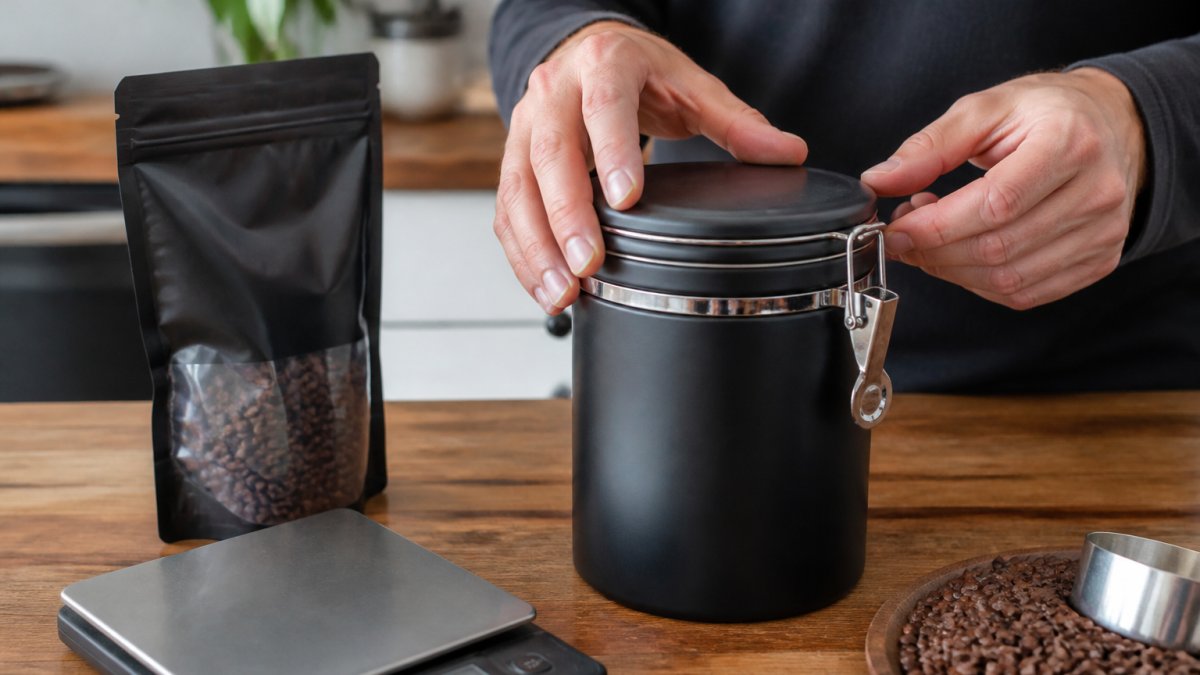
What to avoid:
- Clear glass jars on open shelves (light exposure)
- The original paper bag left open (air exposure)
- Plastic bags twisted shut (no real seal)
- Countertop hoppers (constant air contact)
If you buy in bulk, split the bag. Keep a small working amount out and seal the rest.
Storage and Brewing Troubleshooting: When Your Coffee Tastes Off
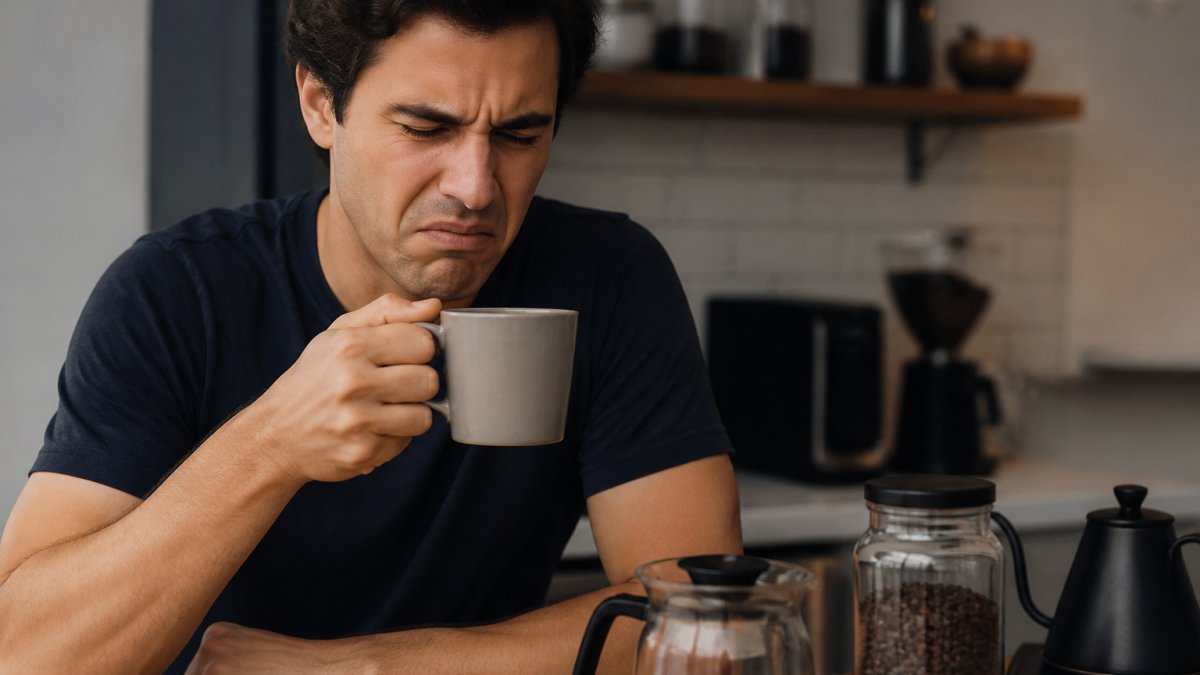
When a cup tastes wrong, most people blame the beans first. Sometimes that is correct. Often it is not. This section gives you a diagnostic order so you stop replacing good coffee and start fixing the actual problem.
Step 1: Rule Out the Bean
Before you touch your grinder, answer three questions:
- Do you know the roast date? If not, assume the beans are past their window and start there.
- How do the beans smell? Sweet, roasty, and slightly fruity means they are probably fine. Dry hay, cardboard, or a flat papery smell means staling has set in.
- Does the coffee bloom? Pour hot water over a small sample. Fresh beans puff and bubble as carbon dioxide escapes. Beans that barely react have already degassed past usefulness.
If the beans fail any of those checks, replace them. No grind setting or brewing tweak will bring back aromatics that have already oxidized away.
Step 2: Separate Stale From Under-Extracted
Stale coffee and under-extracted coffee can both taste flat, but they are different problems with different fixes.
| Symptom | Stale Bean | Under-Extraction |
|---|---|---|
| Aroma | Papery, muted, no sweetness | Faint but present, sometimes grassy |
| Acidity | Flat, lifeless | Sharp, sour, sometimes metallic |
| Body | Thin and hollow | Thin but with a drying finish |
| Bloom | Little to none | Normal or vigorous |
| Fix | Replace beans | Grind finer, raise water temp, extend brew time |
If the bloom is strong and the aroma is sweet but the cup is sour, you have an extraction problem, not a freshness problem.
Step 3: Check Water and Grind
Water temperature and grind size are the two most common extraction variables. Most home brewers should target water between 195°F and 205°F. Below that range, coffee tastes sour and weak. Above it, bitter and harsh.
Grind size should match your brew method:
- Espresso: fine, like powdered sugar
- Pour-over and drip: medium, like table salt
- French press and cold brew: coarse, like sea salt
If your grinder produces inconsistent particle sizes, you will get sour and bitter notes in the same cup. A burr grinder solves this better than a blade grinder, which chops rather than crushes.
Step 4: Check the Brewer Itself
A dirty brewer leaves old oils and residue that turn rancid and contaminate every cup. Descale and clean your equipment on a regular schedule. For drip machines, that means a vinegar or citric acid rinse every few weeks. For espresso machines, backflush and clean the group head according to the manufacturer's guidance.
Step 5: Reassess Storage
If the beans are fresh, the grind is right, the water is right, and the brewer is clean, the problem is usually storage. Review the storage checklist above. The most common culprits are clear containers on open shelves, bags left open, and beans stored near the stove or in the fridge door.
A Quick Diagnostic Flow
- Check roast date and smell the beans.
- Brew a small bloom test.
- If bloom is weak, replace beans.
- If bloom is strong but cup is sour, grind finer or raise water temp.
- If cup is bitter, grind coarser or shorten brew time.
- If cup is weak but bitter, check for old beans combined with too-fine grind.
- If nothing improves, clean your brewer and reassess storage.
Work through the list in order. Most off-flavors trace back to one of these five causes, and the fix is usually simpler than replacing your whole setup.
What Actually Matters Most for Freshness
Freshness beats origin, beats roast style, beats brewing gear. A great single-origin bean stored badly loses to a decent bean stored well. Every time.
So the priority order is simple:
- Buy from a roaster who prints the roast date
- Store it right
- Grind fresh
- Brew within the window
Do those four things and coffee stops being a gamble.
At Crazy Coffee Co, our high-potency, single-origin Colombian coffee is built for people who need real focus, not a stale office pot. Our Insomnia Blend is the pick for anyone who refuses to settle. Order fresh, store it right, and taste the difference.
Frequently Asked Questions
Does coffee lose flavor over time?
Yes. Once roasted, coffee begins losing flavor within days. Carbon dioxide escapes during degassing, oxygen starts oxidizing the coffee oils, and aromatic compounds evaporate. Whole beans keep peak flavor for roughly 2 to 4 weeks after the roast date, while ground coffee drops off in days because more surface area is exposed to air. Storing beans in an airtight, opaque container away from heat slows the process but does not stop it.
How long does coffee stay fresh after roasting?
Whole beans hit peak flavor about 4 to 14 days after roasting, depending on roast level, then hold quality for roughly 2 to 4 weeks total. Ground coffee loses aroma within hours to a few days because grinding exposes far more surface area to oxygen. Freezing whole beans in an airtight container can extend freshness for several months. Always check the roast date, not a vague best-by label.
Why does freshly roasted coffee sometimes taste flat or bitter?
Freshly roasted coffee releases carbon dioxide during degassing, which disrupts water extraction and can make brews taste flat, sour, or uneven. This is normal and usually resolves after a resting period of 4 to 10 days for whole beans. If coffee tastes bitter long after roasting, the cause is more likely over-extraction, stale beans, or water that is too hot rather than the roast itself.
Can you freeze coffee beans without affecting their flavor?
Freezing whole beans in an airtight, opaque container preserves flavor for months, but only if you do it right. Moisture and repeated temperature swings are the enemies. Portion beans into single-use bags or jars, squeeze out air, freeze once, and grind straight from frozen without thawing. Avoid opening the container repeatedly, since condensation degrades the coffee oils and speeds staling.
Most people blame their brewer when coffee tastes flat. The real culprit is usually a bag that sat too long or a jar on a sunny shelf. Crazy Coffee Co roasts single-origin Colombian beans to order at high potency, so you start with more flavor to protect. Our Insomnia Blend gives you a clean, focused lift without the bitter, stale aftertaste of ordinary coffee. Get started with Crazy Coffee Co and taste what fresh-roasted actually means.