 How-to
How Long Single Origin Coffee Stays Fresh After Roasting
Last Updated: November 21, 2026
Quick Summary
Single origin coffee is generally at its best for about 5 to 14 days after roasting, and still tastes good for up to about 4 weeks. Beyond six weeks it is still safe to drink but tastes noticeably stale.
- Peak flavor for most light and medium roasts lasts about 5 to 14 days after roasting.
- Coffee stays good up to about 4 weeks after roasting and usable but dull up to 6 weeks.
- Stale single origin coffee is not unsafe; its aromatic oils oxidize, making the cup flatter.
- Store opened beans in an airtight, opaque container away from heat, light, and moisture.
- Grind right before brewing, since ground coffee loses its character much faster than whole beans.
Table of Contents
- How Long Single Origin Coffee Stays Fresh, by the Numbers
- Peak Flavor, Usable Freshness, and Food Safety Are Different Things
- How Long Do Roasted Coffee Beans Stay Fresh Unopened?
- How Long Do Whole Coffee Beans Last Once Opened?
- How to Keep Coffee Beans Fresh for Months: Storage Workflow
- Freezing Single Origin Coffee: Trade-Offs and Safe Handling
- Decide Which Bag to Buy and How to Use It Before It Fades
- Frequently Asked Questions
How Long Single Origin Coffee Stays Fresh, by the Numbers
Single origin coffee is generally at its best for a few weeks after roasting, when the aromas are most vivid. Knowing the freshness window helps you get the most from every bag.
Single origin coffee is coffee grown in one specific place, from one farm, one cooperative, or one region. Because the beans are not blended, their flavor changes noticeably as they age. Freshness matters even more here than with a blend.
- Peak flavor: about 5 to 14 days after roasting for most light and medium roasts
- Good flavor: up to about 4 weeks after roasting
- Usable but dull: 4 to 6 weeks after roasting
- Past six weeks: the coffee is still safe to drink but tastes noticeably stale
The article gives a rough freshness window for single origin coffee, from peak flavor to past its prime.
| Stage | Time after roasting | Flavor |
|---|---|---|
| Peak flavor | About 5 to 14 days | Most vivid aromas |
| Good flavor | Up to about 4 weeks | Still strong |
| Usable but dull | 4 to 6 weeks | Noticeably flatter |
| Past six weeks | Beyond 6 weeks | Tastes stale, still safe |
Peak Flavor, Usable Freshness, and Food Safety Are Different Things
Many people use the word "fresh" to mean three different things. Peak flavor is the best taste the beans can give. Usable freshness is the point where the coffee still tastes good enough to drink. Food safety is whether the coffee is safe to eat at all.
Stale coffee is almost never unsafe. Roasted coffee does not spoil the way milk or bread does. Instead, its aromatic oils slowly break down and oxidize. The result is a flatter, duller cup, not a health risk.
Watch out: a bag that smells rancid or moldy has a storage problem, not just an age problem. Throw it out and check that the next bag stays dry and sealed.
Keeping these three ideas separate helps you judge your coffee more fairly. A bag that has lost its sparkle is still a usable bag.
How Long Do Roasted Coffee Beans Stay Fresh Unopened?
An unopened bag keeps its flavor longer than one that has been torn open.
Check the roast date on the bag, not the "best by" date, because the roast date tells you where the beans really are in their freshness window.
A common mistake is assuming an unopened bag is frozen in time. Oxygen can still get in slowly through the seal, so even sealed beans lose character over time.
How Long Do Whole Coffee Beans Last Once Opened?
Once a bag is opened, whole beans gradually lose aroma. Oxygen, light, heat, and moisture all speed up that loss, so keeping air and moisture out helps.
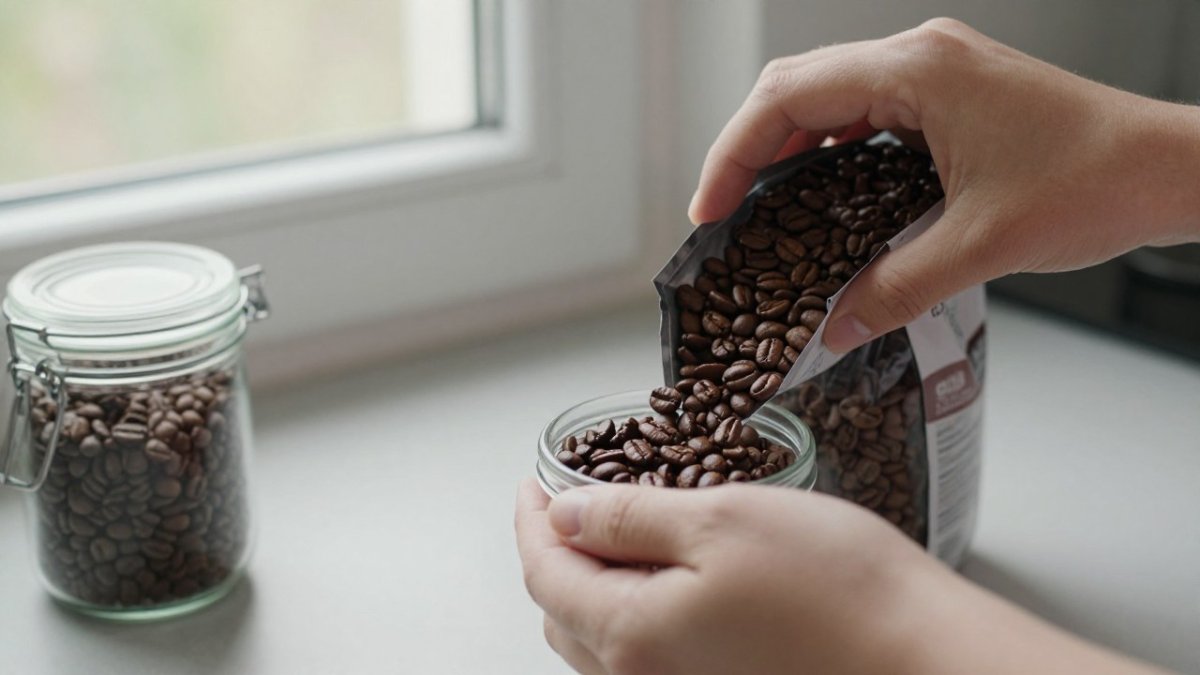
Whole beans generally hold their flavor longer than ground coffee because less surface area is exposed to air. Grinding exposes more of the bean, so ground coffee loses its character faster.
-
Whole beans, opened and stored well: best within about 1 to 3 weeks
-
Whole beans, opened and stored poorly: noticeable decline within days
-
Ground coffee, opened: best used within a few days
-
Washed (wet-processed) beans tend to be denser and cleaner in flavor. Many practitioners find they hold their peak a little longer after opening, but their clarity makes staleness easier to taste.
-
Natural (dry-processed) beans often carry more fruit-forward aromatics on the surface. Those aromatics can fade faster once the bag is opened, even though the beans may still taste sweet.
-
Honey-processed beans sit between the two: moderate density and moderate surface aromatics, with a decline that is usually gradual rather than sudden.
-
High-density beans from higher elevations tend to be more compact and resist oxygen penetration slightly better than lower-density beans, though the difference is modest compared with storage habits.
-
Dark roasts are more porous and release oils to the surface, so they often decline faster after opening than light roasts of the same origin.
A practical way to judge an opened bag is to taste it at several points over the first two weeks. If the cup still shows bright acidity and sweetness, the beans are holding well. If the flavor has flattened, the peak has passed even though the coffee may remain drinkable.
Do Coffee Beans Go Bad Once Opened?
Opened coffee beans do not go bad in the way food spoils. They become stale, meaning they lose aroma and flavor. Mold is rare but possible if beans get wet, which is why dry storage matters.
If beans smell sour, musty, or like cardboard, the flavor is gone. If they smell flat and only slightly dull, they are still usable for a simple brew.
How to Keep Coffee Beans Fresh for Months: Storage Workflow
Most people can keep coffee fresh longer with a simple routine. The goal is to limit air, light, heat, and moisture every time you open the bag. The steps below turn that goal into a repeatable workflow.
- Keep beans in their original bag if it has a one-way valve, and press out extra air before sealing. The valve lets carbon dioxide escape while limiting oxygen ingress.
- Transfer to an airtight container when the original bag is hard to reseal. Use opaque, food-safe containers with a tight lid. A clear jar on a sunny counter exposes beans to light that speeds oxidation.
- Store at room temperature, away from the stove, sunny windows, and the dishwasher. Heat drives the same oxidation reactions that air does.
- Scoop, don't pour from a larger container so you limit air exposure. Pouring agitates the beans and exchanges more air in the headspace.
- Buy smaller bags so you open each one within about two to four weeks. A bag you finish in two weeks stays closer to peak than a large bag you open for months.
- Grind right before brewing whenever possible. Ground coffee exposes far more surface area to air, so the clock runs much faster after grinding.
A dark cabinet away from the oven is a good place to store beans. A clear jar on a sunny counter exposes them to light.
For single-origin coffee specifically, the workflow should account for how the beans were processed. Washed beans are denser and tolerate a slightly slower opening cadence, while natural and honey-processed beans carry more surface aromatics that fade faster once the bag is opened. If you buy a natural single origin, plan to finish it sooner rather than stretching it over months.
A practical portioning habit is to split a large bag into smaller portions as soon as it arrives. Seal each portion in an airtight container, press out the air, and open only one at a time.
Storing beans in the refrigerator can expose them to moisture and odors from other food.
Freezing Single Origin Coffee: Trade-Offs and Safe Handling
Freezing can extend the life of beans you won't use within a month, but condensation can form as frozen beans warm up, and that moisture can harm flavor.
If you freeze beans, divide them into single-use portions before freezing. Seal each portion in an airtight bag, press out the air, and freeze it. Take out only what you need and let it come to room temperature in its sealed bag before opening, so condensation doesn't form on the beans.
Do not refreeze thawed beans. Freezing is best for beans you won't otherwise finish within a few weeks, and it works best when you handle the portions carefully.
Decide Which Bag to Buy and How to Use It Before It Fades
Pick a bag with a recent roast date and a single origin you enjoy. Our guide to choosing high quality coffee beans lists the criteria to judge bean quality before you buy. Our fresh roasted coffee beans buyer's guide explains how to check roast dates before you buy. Crazy Coffee Co offers single-origin Colombian coffee, and pricing and bag sizes depend on quantity and delivery, so check the Crazy Coffee Co website for current options before ordering.
Once the bag arrives, note the roast date, open it when you're ready to use it, and follow the storage steps above. For more detailed tips on extending shelf life beyond the basics, see how to keep coffee fresh longer. For a longer look at keeping beans at their best, see how to keep coffee fresh at home, and for a checklist on judging quality, see how to tell if coffee beans are stale.
Frequently Asked Questions
How long do roasted coffee beans stay fresh after opening?
Once opened, whole beans lose aroma over time, and how air and light are kept out affects how quickly. Reseal the bag tightly after every use, press out extra air, and store it in an airtight container away from heat and light to get the most out of the bag.
How long do whole coffee beans last unopened?
An unopened bag of roasted whole beans gradually loses flavor over time, so the cup will taste flatter the longer it sits. Check the roast date on the bag rather than the best-by date, since roast date is the more useful freshness marker.
How can you tell if coffee beans have gone stale?
Stale beans smell muted or cardboard-like instead of sweet and aromatic, and the brewed cup tastes flat, sour, or papery. Beans that have lost their oils often look dull rather than glossy. Stale coffee is not usually unsafe to drink, but it will not deliver the flavor you paid for, so the simplest test is to grind a small amount and compare its aroma to a fresh bag.
Should you keep coffee beans in the fridge or freezer?
Refrigerators add moisture and odors that hurt beans, so they are usually a poor choice. Freezing can extend freshness if the beans are sealed well and portioned so you only thaw what you need. Once thawed, do not refreeze, and let the beans come to room temperature in the sealed bag before opening to prevent condensation.