 How-to
How to Tell If Coffee Beans Are Stale: A Step-by-Step Check
Last Updated: November 14, 2026
Quick Summary
How to tell if coffee beans are stale: smell whole beans before grinding, check the roast date, and brew a small cup to compare. Stale beans taste flat, dull, or woody but are still safe to drink. Mold or a sour, musty smell means the beans are spoiled and should be thrown out.
- Check the roast date first, since a far-off best-by date tells you little about flavor.
- Unopened whole beans stored well keep peak flavor for about 2 to 4 weeks after roasting.
- Stale beans smell faint or flat, while fresh beans smell rich, sweet, and clearly aromatic.
- Brew two cups side by side, one from the suspect beans and one from fresh, to compare flavor.
- Any mold, dampness, or rotten smell means spoiled beans, which should be discarded.
Table of Contents
- Stale Coffee Beans vs. Spoiled Coffee: Know the Difference
- Step 1: Check the Roast Date and Bag Timeline
- What Does Stale Coffee Taste Like?
- Step 2: Run a Smell and Visual Check
- Step 3: Brew a Side-by-Side Taste Test
- How Long Do Whole Coffee Beans Last Once Opened?
- What to Do With Stale Coffee Beans (and Keeping Future Batches Fresh)
- Frequently Asked Questions
Stale Coffee Beans vs. Spoiled Coffee: Know the Difference
Customers often ask how to tell if coffee beans are stale without throwing out a good bag. Stale beans and spoiled coffee are not the same thing. Stale beans have lost their aroma and flavor, but they are still safe to use. Spoiled coffee is a different problem, and it is rare.
Stale beans taste flat, dull, or woody. They can still brew into a drinkable cup. Spoiled beans, which usually means moisture or mold got into the bag, can smell sour, musty, or moldy. If you see visible mold or smell something rotten, throw the beans out.
Keep the two ideas separate as you read. A stale bag is a quality problem. A spoiled bag is a safety problem.
Step 1: Check the Roast Date and Bag Timeline
The roast date is a more useful freshness marker than a "best by" date, which can be a year or more away and tells you very little about flavor.
Here is a simple timeline to use:
- Whole beans, unopened and stored well: Best within about 2 to 4 weeks of roasting for peak flavor, and still good for several months.
- Whole beans, after opening: Flavor fades faster once air gets in. Plan to finish the bag within a few weeks.
- Ground coffee: Loses flavor much faster than whole beans because more surface area meets air.
Find the roast date on the bag. If there is none, the beans are harder to judge, and you should assume they may be past their best.
Watch out: A bag with only a best-by date a year away can still hold beans that went stale months ago. Look for the roast date first.
What Does Stale Coffee Taste Like?
Stale coffee tastes muted, as the bright fruit notes and sweetness tend to fade first, leaving a flat cup. Many people describe it as dusty, cardboard-like, or woody. Some cups turn bitter or sour because the flavor compounds break down unevenly.
Brightness and acidity usually disappear before anything else. If a coffee you once loved now tastes like plain brown warmth, the beans have likely gone stale. Body and sweetness can also thin out.
The change is gradual. You may not notice it until you compare an old bag with a fresh one.
Step 2: Run a Smell and Visual Check
Most guides stop at "smell the beans." That single cue is subjective and easy to misread, so use a short, repeatable checklist instead. The goal is to gather several independent signals, smell, appearance, grind, and a consistent brew, and judge them together rather than trusting one.
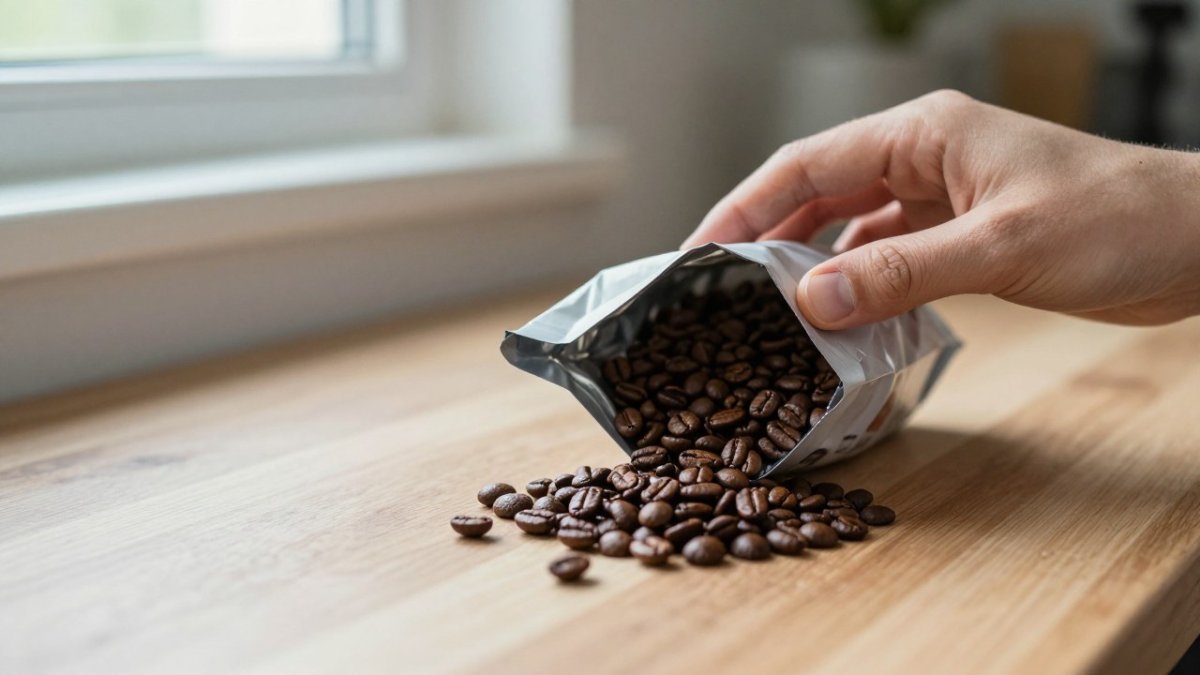
The at-home freshness test
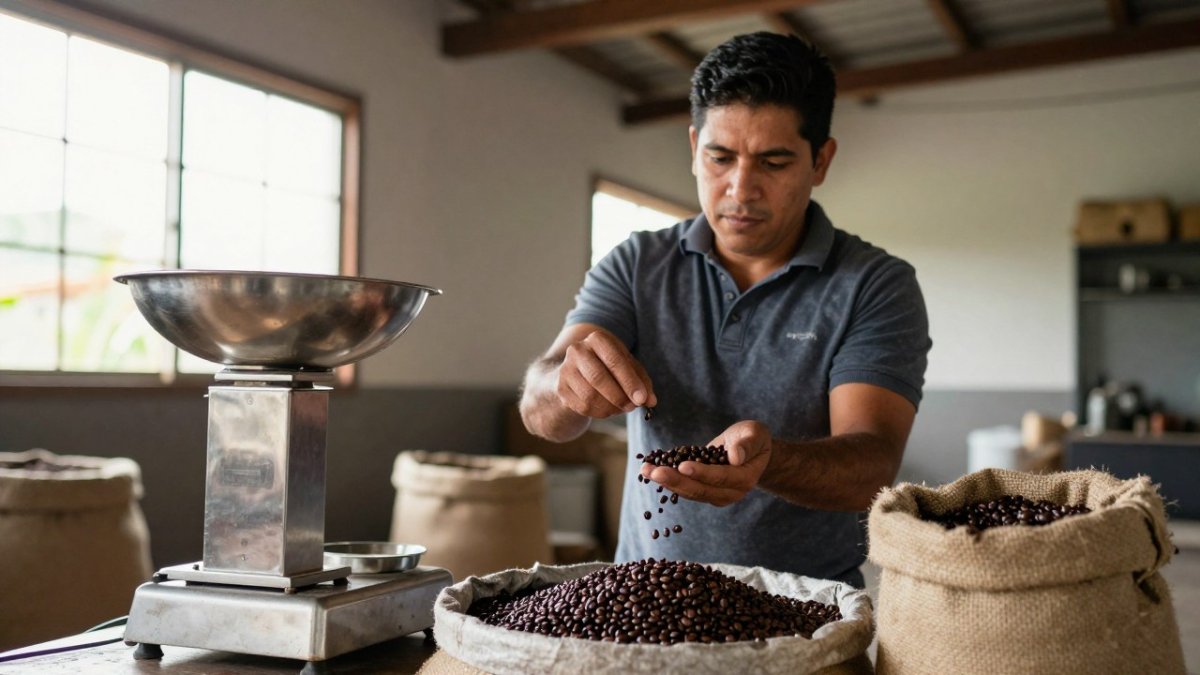
- Smell the whole beans first. Open the bag and take a slow sniff before grinding. Fresh beans smell rich, sweet, and clearly aromatic. Stale beans smell faint, flat, or like almost nothing. A sour, musty, or moldy smell is a different signal, see the spoiled-coffee check below.
- Look at the surface. Fresh beans have a slight natural sheen from their oils. Very dry, matte beans have usually lost much of their aroma. Oily, shiny beans on a dark roast are normal, but a rancid or paint-like smell is a warning sign.
- Check for mold or moisture. Any fuzzy growth, damp spots, or sticky clumps mean the beans are spoiled, not just stale. Set those aside and discard them.
- Grind a small portion and smell again. Grinding releases aroma, so a stale bag often smells even flatter right after grinding. Fresh beans smell stronger, not weaker, when ground.
- Brew a small, consistent cup. Use the same method, water, and dose you normally use. A flat, dusty, or cardboard-like cup confirms what your nose suspected.
Use the checks together. A bag can look fine and still smell flat, or smell fine and look wrong. When two or three signals point the same way, you have a reliable answer.
Watch out: A single weak smell is not proof. Beans that have been in a cold cupboard or a sealed bag can smell muted until they warm up and are ground, so repeat the smell check after grinding before you decide.
How roast level changes the cues
Light roasts show staleness most clearly, because their bright fruit and acidity fade fast. Dark roasts can taste heavier and less obviously stale, so lean on aroma and the grind check more than taste. Espresso is less forgiving than drip: stale beans often pull thin, blond, and fast, while a fresh bag pulls a thicker, slower shot. If you brew espresso, judge freshness by how the shot runs as much as by how it tastes.
Use these checks together to judge whether your beans are stale:
| Check | Fresh signal | Stale signal |
|---|---|---|
| Smell whole beans | Rich, sweet, clearly aromatic | Faint, flat, or almost nothing |
| Look at surface | Slight natural sheen from oils | Very dry, matte beans |
| Check for mold | No fuzz, damp spots, or clumps | Mold means spoiled, discard |
| Smell after grinding | Stronger aroma | Even flatter than before |
| Brew a small cup | Clear, balanced flavor | Flat, dusty, or cardboard-like |
Step 3: Brew a Side-by-Side Taste Test
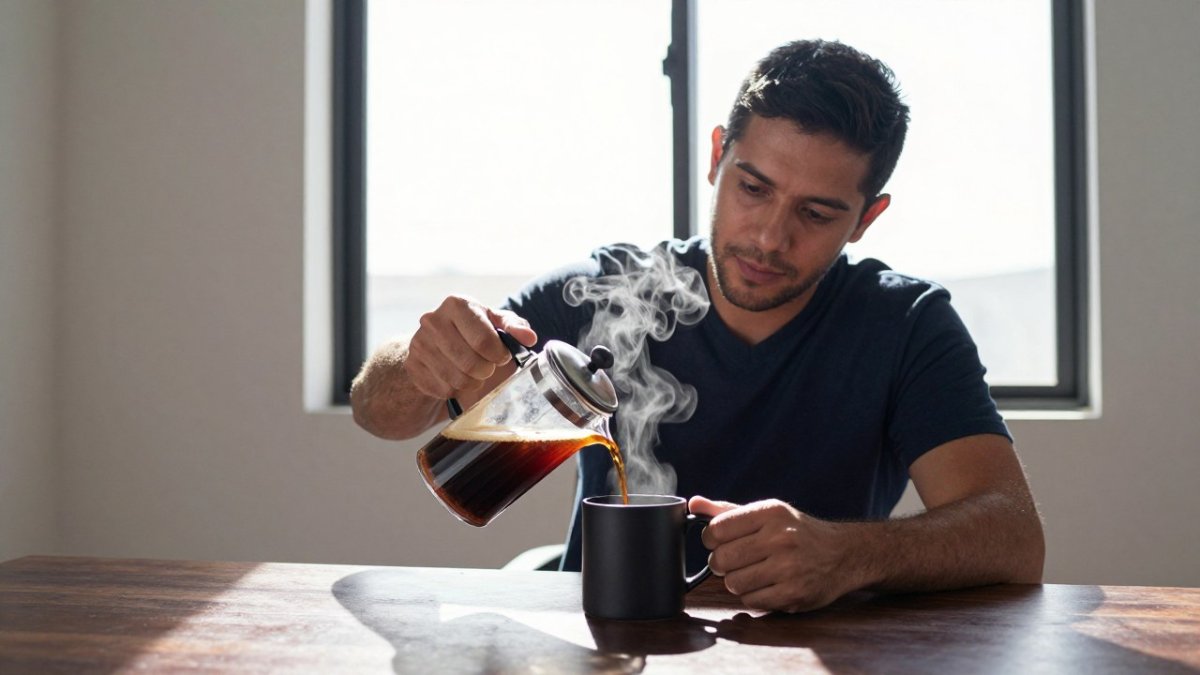
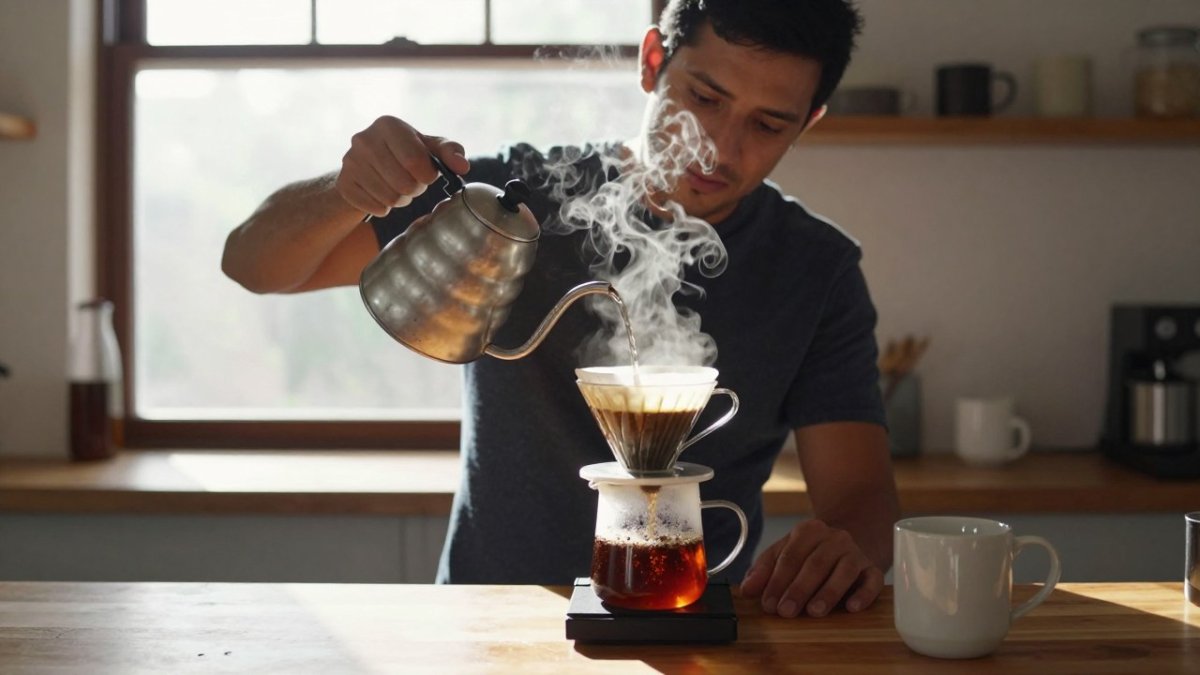
The most reliable test is a taste test. Brew two cups with the same method, the same water, and the same amount of coffee. Use one cup from the suspect beans and one from a fresh bag if you have one.
Taste both right away. Look for these differences:
- Aroma: Does the cup smell rich or faint?
- Brightness: Is there any fruit or acidity?
- Sweetness: Does the cup taste sweet, or does it stay flat?
- Bitterness: Does the cup taste sharp or burnt in a way the fresh one does not?
If the fresh cup clearly tastes better, your beans are stale. If both taste similar, your beans are probably still fine.
Roast level changes the result. Light roasts show staleness most clearly, because their bright notes fade fast. Dark roasts can taste heavier and less obviously stale, so rely on aroma more than taste.
How Long Do Whole Coffee Beans Last Once Opened?
Whole beans last longer than ground coffee, but the clock depends on three things: the roast date, whether the bag is opened or unopened, and how it is stored. Treat the roast date as the start of the clock, not the day you bought the bag.
Freshness timelines by condition
- Whole beans, unopened, stored well: Peak flavor for about 2 to 4 weeks after the roast date, and still good for several months. After that the cup flattens but stays safe.
- Whole beans, opened: Flavor fades faster once air gets in. Plan to finish the bag within a few weeks of opening, and expect the brightest notes to go first.
- Ground coffee, unopened: Loses flavor much faster than whole beans because more surface area meets air. Count on weeks, not months, for peak flavor.
- Ground coffee, opened: The shortest window of all. Use it within days to a couple of weeks for the best cup.
These are flavor windows, not safety deadlines. Stale beans are still safe to brew; they just taste dull. The timelines shift with storage: beans kept sealed, cool, and dark stay closer to the long end, while beans left in a warm, clear bag on the counter fall to the short end.
Watch out: A bag with only a best-by date a year away can still hold beans that went stale months ago. Look for the roast date first, and if there is none, assume the beans may be past their best.
Air, light, heat, and moisture speed up the process. Each time you open the bag, fresh air gets in. This is why a bag you finish quickly tastes better than one you dip into for months. Many people assume a bag stays fresh until its best-by date. That is rarely true once the bag is open. Treat the opening date as the start of the clock, and portion beans into smaller airtight containers so you open the main bag less often.
What to Do With Stale Coffee Beans (and Keeping Future Batches Fresh)
Stale beans are not wasted. They are still safe, so you have options:
- Brew stronger. Add a little more coffee or brew a slightly longer cup to bring back some body.
- Use them in cold brew. The long steep can pull out enough flavor to make a smooth drink.
- Mix with a fresh bag. Blending stale beans with fresh ones can rescue a bag you would otherwise toss.
- Try them for compost or cleaning. Used or old grounds work in the garden, and some people use them to scrub pots.
To keep future batches fresh, store beans in an airtight container away from heat, light, and moisture. Keep them at room temperature in a cupboard, not in the fridge, where condensation can form. Buy smaller bags you can finish within a few weeks.
Fresh roasted beans make a real difference. Crazy Coffee Co offers single-origin Colombian coffee, so you can check the roast date and start brewing at peak flavor. You can order fresh roasted coffee beans when your current bag is running low, or read how to keep coffee fresh longer to make a bag last.
If you want more detail on warning signs, our guide on signs of stale coffee beans goes deeper. For the difference between stale and truly spoiled coffee after the roast date, see how to tell if coffee goes bad after the roast date, and for the reasons flavor fades, read why coffee loses flavor after roasting.
Frequently Asked Questions
How do you know if your coffee beans are stale?
Stale beans usually show a muted or flat aroma when you open the bag, dull or flat flavor in the cup, and a loss of brightness and sweetness. Beans that were once shiny may look dry or dusty, and the crema on a shot of espresso may disappear quickly. Run a simple smell test and a side-by-side brew with a fresh bag to confirm. Staleness is a quality issue, not a safety one, so the beans are usually still safe to drink even when the flavor is gone.
Are 3-year-old coffee beans still good?
Three-year-old coffee beans are very unlikely to taste good. Roasted coffee starts losing aromatic compounds within days to weeks of roasting, and by three years the flavor is typically flat, woody, or cardboard-like. Coffee that has been stored sealed, cool, and dry may still be safe to drink, but expect little resemblance to fresh coffee. Use it for cold brew or compost it rather than expecting a quality cup.
Can you drink 10-year-old coffee beans?
You can usually drink 10-year-old coffee beans without a safety risk if they show no mold, a rancid or sour smell, or visible moisture, but the taste will be very poor. Ten years of age means almost all aroma and sweetness have faded, leaving a dusty or musty cup. If you see any mold or the beans smell off, throw them away. Otherwise, treat them as a compost candidate rather than a brewing candidate.
How long do whole coffee beans last once opened?
Whole coffee beans lose flavor after the bag is opened, so it is best to finish them within a reasonable time and store them well. Store them in an airtight container away from heat, light, and moisture, and avoid the refrigerator, since condensation can damage them. Grinding right before brewing preserves far more flavor than grinding in advance, so buy only as much as you can use within a few weeks.