 How-to
How to Brew Single Origin Coffee Without a Machine
Quick Summary
To brew single origin coffee without a machine, weigh about 28 grams of coarse ground coffee and 475 grams of water heated to 195 to 205 degrees Fahrenheit, steep for about 4 minutes, then strain through a fine mesh strainer or paper filter. Adjust grind and steep time to suit the roast.
- Use a 1:16 to 1:17 coffee-to-water ratio as a starting point.
- Heat water to 195 to 205 degrees Fahrenheit, never a rolling boil.
- Steep 4 to 5 minutes for light roasts, 4 minutes for medium, and 3 to 3.5 minutes for dark.
- Grind coarser for immersion methods and finer for pour-over.
- If the cup tastes sour, grind finer or steep longer; if bitter, grind coarser or steep shorter.
Table of Contents
- What You'll Need to Brew Single Origin Coffee Without a Machine
- How to Make Coffee With Ground Coffee No Machine Using a Saucepan
- How to Make Ground Coffee Without a Coffee Maker or Filter
- Coffee-to-Water Ratio for Manual Brewing of Single Origin Beans
- How Long to Steep Coffee Without a Machine and Adjust for Roast
- Water Temperature, Water Quality and Grind Size Troubleshooting
- Your Next Cup: Starting With a Single-Origin Bag From Crazy Coffee Co
- Frequently Asked Questions
What You'll Need to Brew Single Origin Coffee Without a Machine
Last Updated: November 15, 2026
You do not need an espresso machine or drip brewer to learn how to brew single origin coffee well. At Crazy Coffee Co, we know that most people brew their first cup without a machine using only a kettle, a jar, and a strainer. The right gear simply makes the process cleaner and more repeatable.
That clarity is worth protecting. Use simple tools that do not add odd flavors or mute the beans.
Here is the basic kit most people need:
- A kitchen scale that reads in grams
- A kettle that can heat water to just under boiling
- A burr grinder, which gives a more even grind than blade grinders
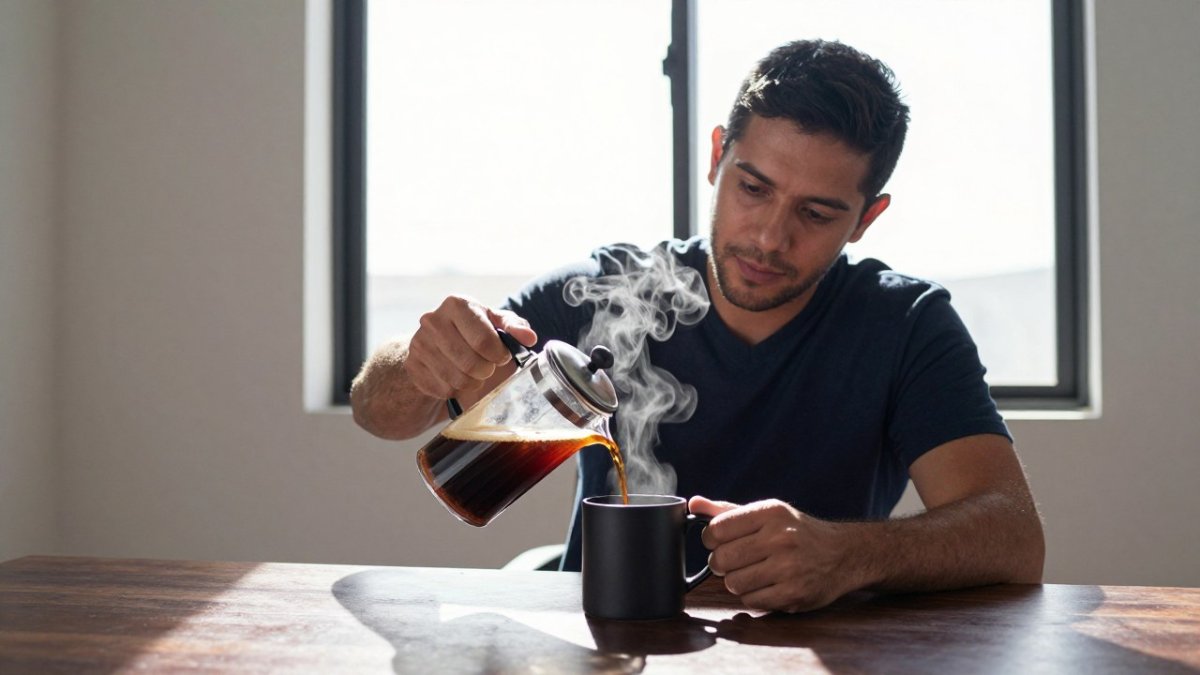
- A heat-safe glass jar, mug, or French press
- A fine mesh strainer or paper filter
- A spoon for stirring and a timer
Freshly ground coffee matters more with single origin beans. Grind right before you brew, and aim for a coarse grind if you use immersion methods or a medium grind for pour-over styles. A blade grinder chops unevenly, so some grounds over-extract while others taste sour.
Avoid cheap plastic tools when you can. Heat can pull flavors from plastic, and that taste can cover up the bright notes you paid for.
Keep a small notebook or note app open while you brew. Write down your dose, water weight, grind size, and steep time. Those notes make it easy to repeat your best cup.
How to Make Coffee With Ground Coffee No Machine Using a Saucepan
A saucepan is the simplest no-machine method, and it is also the easiest to make repeatable if you measure instead of eyeball.
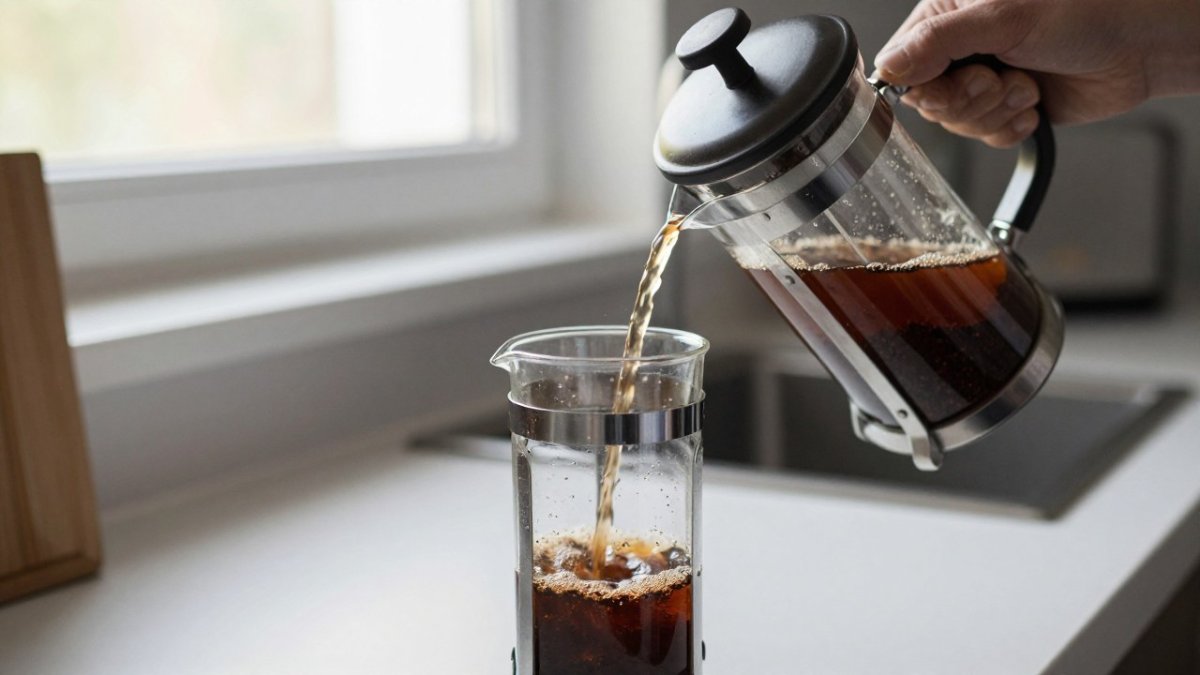
Saucepan immersion recipe (one large mug):
- Weigh 16 ounces (about 475 grams) of filtered water into a saucepan.
- Heat until steaming and just beginning to shimmer, roughly 195 to 205 degrees Fahrenheit. Do not let it reach a rolling boil.
- Remove from heat and add 1 ounce (about 28 grams) of coarse ground coffee, roughly the texture of sea salt.
- Stir gently for 10 seconds so every ground is saturated, then cover.
- Steep 4 minutes for a medium roast, 4 to 5 minutes for a light roast, or 3 to 3.5 minutes for a dark roast. For more precise immersion timing, see our French press steeping guide.
- Pour slowly through a fine mesh strainer or a paper filter into your cup.
That dose lands near a 1:17 ratio, which is a good starting point for a single origin you have not brewed before.
Jar or French press immersion recipe (two cups):
Use 20 grams of coarse coffee and 320 grams of water at 195 to 205 degrees Fahrenheit. Add the grounds, pour all the water at once, stir once, and steep 4 minutes. Press or strain slowly.
Improvised pour-over recipe (one mug):
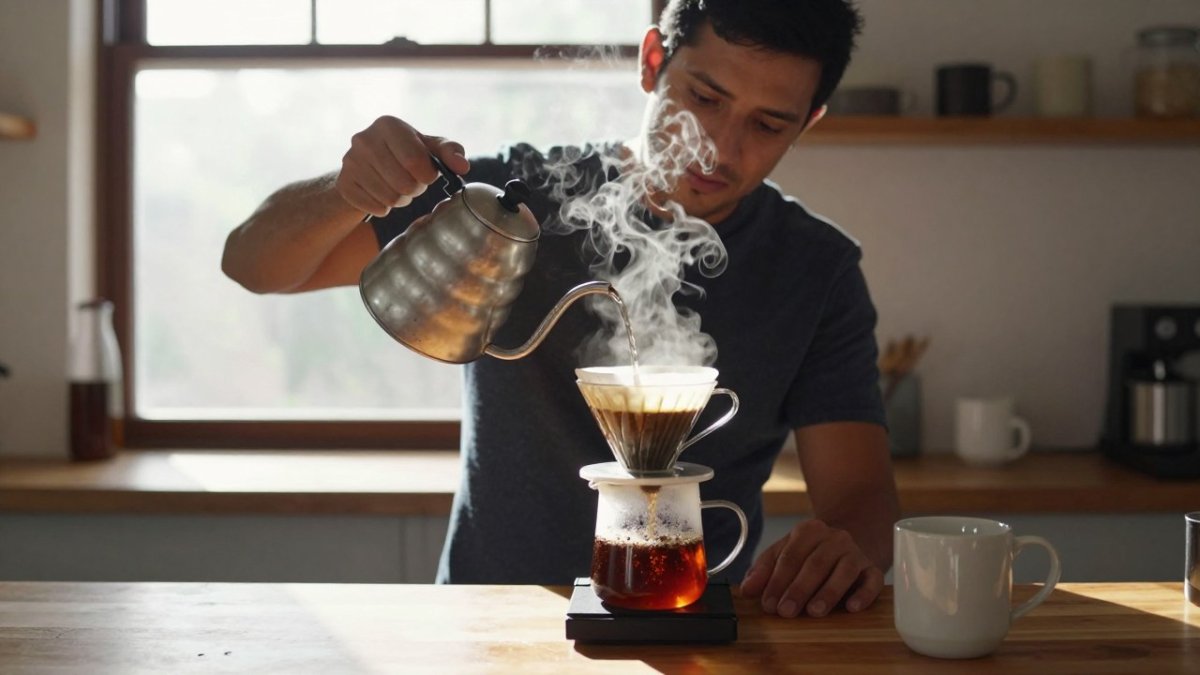
Set a fine mesh strainer or a paper filter lined with a rinsed cotton cloth over your mug. Use 15 grams of medium grind and 250 grams of water at 195 to 205 degrees Fahrenheit.
Cold brew concentrate (makes about four servings):
Combine 100 grams of coarse coffee with 400 grams of cool filtered water in a jar. Stir once, cover, and refrigerate 12 to 16 hours.
Adapting to roast and processing:
Light roasts are denser and extract more slowly, so they usually need the longer end of the steep range or a slightly finer grind. Dark roasts extract faster and can turn bitter, so start shorter.
Watch out: if you leave the grounds in the pot after pouring, the coffee keeps extracting and turns bitter within a couple of minutes.
How to Make Ground Coffee Without a Coffee Maker or Filter
You can make coffee with no filter at all. The trade-off is sediment: fine grounds stay suspended in the cup, which some people enjoy and others find gritty. With single origin beans, sediment matters more than usual because the fine particles keep extracting in the cup and can flatten the delicate notes you paid for.
Which household filters actually work:
- Paper coffee filters: The cleanest option. Rinse the filter with hot water first to remove paper taste, then pour the brewed coffee through it. Expect a slower flow and a lighter body.
- Fine mesh strainer: Catches most coarse grounds but lets fine particles through. Line it with a paper filter or a rinsed cotton cloth for a cleaner cup.
- Cotton cloth or nut milk bag: Works in a pinch. Rinse thoroughly before use so it does not taste of previous meals, and wash it promptly after.
- Clean cotton T-shirt or dish towel: A last resort. Use undyed, unperfumed fabric, rinse it well, and accept that some sediment will pass through.
- Permanent metal filter from a drip brewer: If you own one, it fits over most mugs and catches more than a tea strainer.
How to avoid grounds in the cup:
Grind coarser than you would for a paper-filter brewer. A French press grind leaves fewer fines than a medium grind, and fewer fines means less sludge. After steeping, wait 2 to 3 minutes before pouring so the bed settles, then pour slowly and stop before the last ounce. Do not stir right before pouring, which re-suspends the grounds.
When no filter is available:
Let the brew settle undisturbed for 3 to 4 minutes, then ladle or pour from the top rather than tipping the vessel. Sip from the top of the cup and leave the last spoonful behind. If you have a clean spoon, you can skim the floating grounds off the surface before pouring. A second settle in the cup for a minute before drinking also helps.
Managing sediment by method:
Immersion methods like the saucepan and jar produce more sediment than pour-over because the grounds sit in the water the whole time. Pour-over through a paper filter produces the least.
Watch out: a cloth or towel that still smells of detergent or food will transfer those flavors to the coffee, so rinse until the water runs clear before you use it.
Coffee-to-Water Ratio for Manual Brewing of Single Origin Beans
A good starting ratio for most manual brews is 1:15 to 1:17, meaning 1 gram of coffee for every 15 to 17 grams of water. Weigh both if you can. Scoops vary, and a scale keeps every cup consistent.
Starting points by size:
- 15 grams of coffee with 250 grams of water makes one large mug
- 20 grams of coffee with 320 grams of water makes a strong two-cup batch
- 30 grams of coffee with 480 grams of water makes a full carafe
Begin at 1:16 with a single origin you have not brewed before. If the cup tastes thin or sour, use a little more coffee. If it tastes harsh or muddy, use a little less or brew for a shorter time.
Single origin beans often reward a slightly lighter dose so the origin character comes through. To understand what each bean should taste like, see how to identify single-origin flavor profiles. Adjust in small steps, changing only one variable at a time.
The ratio and batch sizes below summarise the starting points covered in this section.
| Batch | Coffee | Water |
|---|---|---|
| Starting ratio | 1 part | 15 to 17 parts |
| One large mug | 15 grams | 250 grams |
| Strong two-cup batch | 20 grams | 320 grams |
| Full carafe | 30 grams | 480 grams |
How Long to Steep Coffee Without a Machine and Adjust for Roast
Steeping time depends on grind size and roast level. For a coarse grind in a French press or jar, 4 minutes is a reliable start.
General guide:
- Light roast: Steep 4 to 5 minutes. Light roasts are denser and extract more slowly.
- Medium roast: Steep 3.5 to 4 minutes.
- Dark roast: Steep 3 to 3.5 minutes. Dark roasts extract faster and can turn bitter if steeped too long.
Taste as you go. If the cup is weak, add a little steep time. If it is harsh, cut time or use a coarser grind.
Plan your timer before you pour the water. Starting late throws off the whole brew.
Water Temperature, Water Quality and Grind Size Troubleshooting
Most brewing problems come down to three things: water temperature, water quality, and grind size.
Water temperature:
Aim for water between 195 and 205 degrees Fahrenheit. Water that is too cool under-extracts and tastes sour. Water that is too hot can scorch the grounds and taste bitter. If you do not have a thermometer, let boiling water sit for about 30 seconds before pouring.
Water quality:
Use filtered or bottled water with little chlorine. Chlorine and heavy minerals can flatten the flavors of single origin beans. Hard water can also leave scale in your kettle over time.
Grind size troubleshooting:
- Sour, thin, or grassy taste: Grind finer or steep longer.
- Bitter, dry, or muddy taste: Grind coarser or steep shorter.
- Uneven taste with both sour and bitter notes: Your grinder is likely inconsistent. Use a burr grinder, which gives a more even grind than blade grinders.
Change one thing at a time. Adjust grind, then time, then temperature, so you know what made the difference.
Your Next Cup: Starting With a Single-Origin Bag From Crazy Coffee Co
Once you have the basics, a good single origin bag is the fastest way to see what manual brewing can do. At Crazy Coffee Co, Our single-origin Colombian coffee is built for bold, focused flavor. Pick a bag, start with a 1:16 ratio and 4-minute steep, and adjust from there. To keep those beans tasting fresh once the bag is open, follow this step-by-step freshness guide.
Pricing depends on quantity, dates, and delivery, so check the Crazy Coffee Co website for current prices or a quote before you order.
Brew one cup this week using the steps above, and write down what you taste. To make the whole bag last, check these longer-term freshness tips. Your notes will guide your next brew and help you find the single origin that suits you best.
Frequently Asked Questions
How do you make coffee with ground coffee without a machine?
Add coarsely ground coffee to a heatproof jar or French press at about 1 to 2 tablespoons per 6 ounces of water. Pour water heated to just off the boil, roughly 195 to 205 degrees Fahrenheit, stir gently, and let it steep for 4 minutes. Press or pour slowly through a strainer, then serve. This method suits single-origin beans because the immersion gives you full control over extraction and flavor.
How long should you steep coffee without a machine?
For most immersion methods, steep single-origin coffee for 4 minutes with a coarse grind. Lighter roasts often benefit from 4 to 5 minutes to draw out their acidity and fruit notes, while darker roasts can be pulled at 3 to 4 minutes to avoid bitterness. Taste at 4 minutes first, then adjust time by 30 seconds in either direction on your next brew until the cup tastes balanced.
Can you make coffee without a filter?
Yes. Immersion brewing in a French press uses a metal mesh plunger instead of paper, and a saucepan method can be strained through a fine mesh sieve or a clean cloth. Expect more sediment than paper filtering gives you. Letting the grounds settle for a minute after pouring, or pouring the top portion slowly, reduces the grit that reaches your mug.
How much ground coffee should you use per cup?
A starting point of roughly 1 to 2 tablespoons of ground coffee per 6 ounces of water works for most people, which is close to a 1:15 to 1:17 coffee-to-water ratio by weight. Single-origin beans vary in density and roast, so weigh your dose on a kitchen scale if you have one. Increase the coffee slightly for a bolder cup and reduce it if the flavor tastes harsh or overly strong.